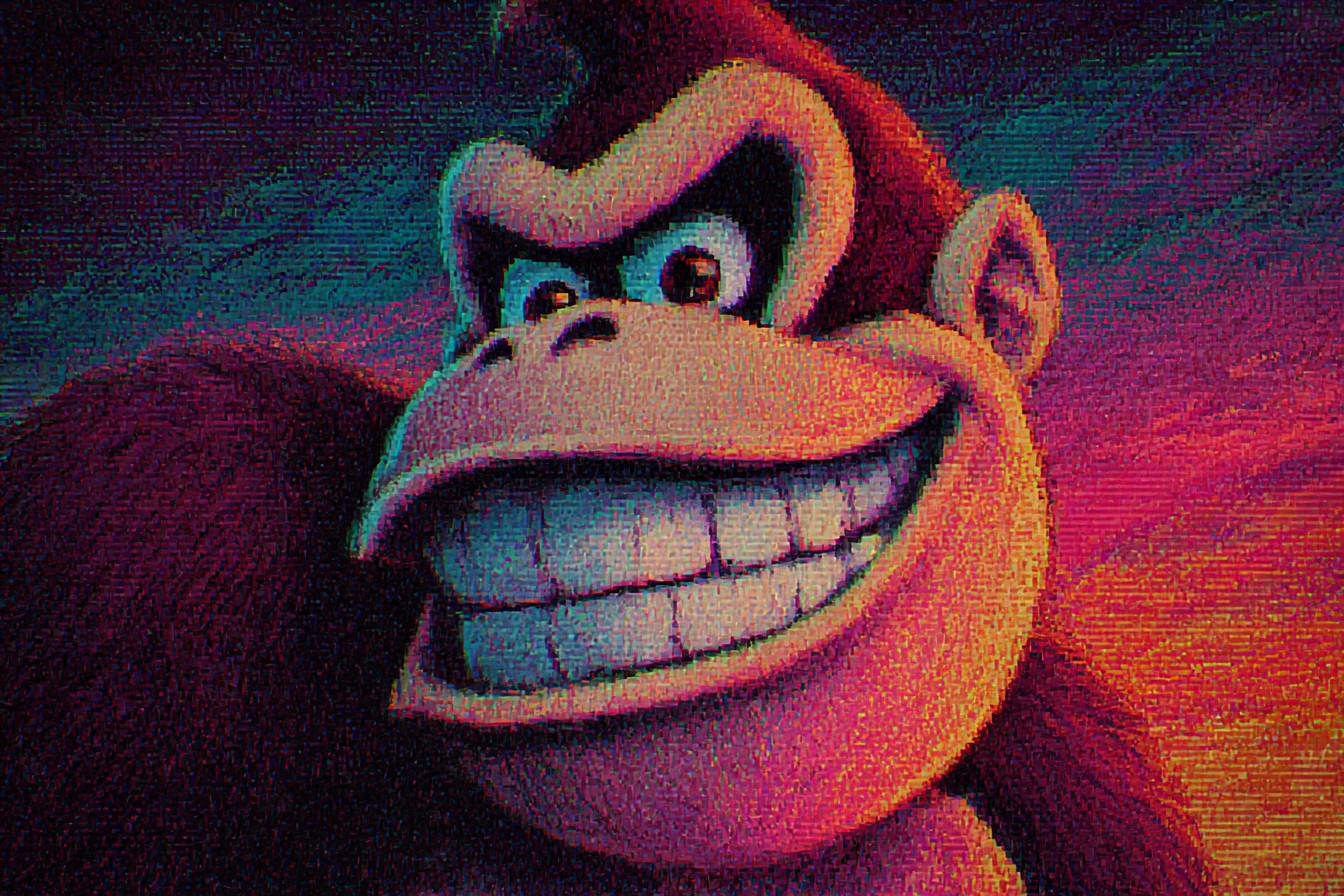
Christ, where do I even start with King K. Rool’s laugh? I mean, we’re talking about a sound that’s been rattling around in my head for twenty-five years now, and it still makes me want to check over my shoulder. This was back in ’99 – I was about twenty-five myself, working my first proper IT job and still living in a grotty flat share in Fallowfield. My flatmate Dave had somehow convinced his girlfriend to let him blow his entire month’s beer money on Donkey Kong 64, and honestly? Best financial decision the man ever made.
Now, I need to be upfront here – I was never really a Nintendo kid growing up. While my mates were banging on about Mario this and Zelda that, I was deep in Amiga territory, playing Speedball 2 until my joystick died. The whole N64 thing had passed me by initially because, well, I was a broke student and then a broke graduate. But Dave’s setup in our living room became my gateway drug into what I’d been missing, and bloody hell, what an introduction K. Rool turned out to be.
The first time that maniacal cackle echoed through our tinny television speakers, I genuinely thought something had gone wrong with the console. It wasn’t just evil – though it was definitely that – it was this perfect storm of pantomime villain meets genuine psychological menace. You know that feeling when you’re watching a kids’ show and suddenly realize the baddie is actually quite disturbing? That’s K. Rool’s voice work in a nutshell. Chris Sutherland managed to create something that sounded like it belonged in a Saturday morning cartoon but felt like it had crawled out of your worst childhood nightmare.
I’d seen K. Rool before, obviously. Had a go on the SNES Donkey Kong Country games at mates’ houses, knew he was the big bad crocodile with the crown and the attitude. But those were different times – sprite-based affairs where character came through animation and design rather than actual voice acting. DK64 was my first proper encounter with a fully voiced, 3D-rendered K. Rool, and the difference was like night and day. This wasn’t just a boss sprite with a pattern to memorize; this was a character with genuine presence.
The visual design helped, of course. That golden belly plate catching the light, making him look simultaneously regal and absolutely barmy. The crown perched at that perfect angle that screamed ‘delusional monarch.’ And those eyes – Jesus, those bloodshot, bulging eyes that seemed to follow you around the room. But it was the voice that really sold the whole package. Every ‘Mwahahaha!’ felt like it was coming from someone who genuinely enjoyed making people miserable, not in a safe, predictable way, but in a way that suggested K. Rool might actually be having the time of his life ruining yours.
I remember that first boss battle like it was yesterday. Dave had been stuck on it for days, swearing at the telly in ways that would make a docker blush. When I finally had a go myself, K. Rool filled the entire screen – this massive, imposing presence that somehow managed to be both utterly ridiculous and genuinely intimidating. The whole boxing ring setup was brilliant, very WWF, very theatrical. And when he started taunting between rounds? My palms were sweating just from the tension.
What really got me was how the multi-phase structure worked. Just when you thought you’d sussed him out, K. Rool would switch costumes, change tactics, throw something completely mental at you. Mad scientist K. Rool with those shock gloves was properly unsettling – that laugh taking on this more manic quality as he zapped about like a deranged Tesla experiment. Then there was the helicopter bit, which felt like something out of an action film, all dramatic music and last-second escapes.
But through it all, that laugh remained the constant. Each phase brought out different aspects of K. Rool’s personality – the boxer was proud and showy, the scientist gleefully unhinged, the pilot desperate and dangerous – but that cackle tied it all together. It was the thread running through this completely mental final boss sequence that somehow made sense of the whole thing.
Dave’s younger sister used to leg it out of the room whenever we got to K. Rool. Not because it was scary in a horror game sense, but because his presence was just so… intense. The combination of that booming laugh, the way he’d gesture and posture, the sheer scale of him on screen – it created this perfect storm of cartoon menace that even managed to unnerve adults.
Looking back now, the technical side was pretty impressive for 1999. The lip-sync wasn’t perfect – this was the N64, after all, not exactly known for its cinematic cutscenes – but it was good enough to sell the illusion. K. Rool felt like he was actually speaking to you, not just playing pre-recorded samples over a static model. The way his expressions would shift, the little details in his animations… Rare really went all-out to make him feel like a proper character rather than just an obstacle with hit points.
I’ve been through DK64 more times than I probably should admit over the years. Different platforms, emulation, sometimes on original hardware just to hear that laugh through the same type of speakers that first delivered it to my twenty-something ears. And every single time, without fail, K. Rool’s first appearance still gives me goosebumps. That laugh still cuts through whatever else is going on and demands attention.
There’s something about villains from that era that modern gaming sometimes struggles to capture. They had personality in spades, but they weren’t trying to be deep or complex or relatable. K. Rool was just properly, enthusiastically evil, and his laugh was the perfect expression of that gleeful nastiness. Pure cartoon villainy, but delivered with enough skill and technical nous to make it genuinely memorable.
That’s what I miss about late-90s gaming sometimes – the willingness to just go completely over the top without feeling the need to justify it or ground it in some sort of gritty realism. K. Rool’s laugh was ridiculous, theatrical, and absolutely perfect for what it was trying to achieve. No deeper meaning, no tragic backstory explaining why he cackles like a maniac – he just does, and that’s enough.
Even now, if someone mentions DK64 in conversation, I can hear that laugh clear as day. It’s burned into my memory right alongside the Amiga boot-up sound and the satisfying clunk of inserting a Mega Drive cartridge. Some sounds just stick with you, and K. Rool’s demented cackle is definitely one of them. Twenty-five years later, and it’s still as gloriously unhinged as ever.

John grew up swapping floppy disks and reading Amiga Power cover to cover. Now an IT manager in Manchester, he writes about the glory days of British computer gaming—Sensible Soccer, Speedball 2, and why the Amiga deserved more love than it ever got.