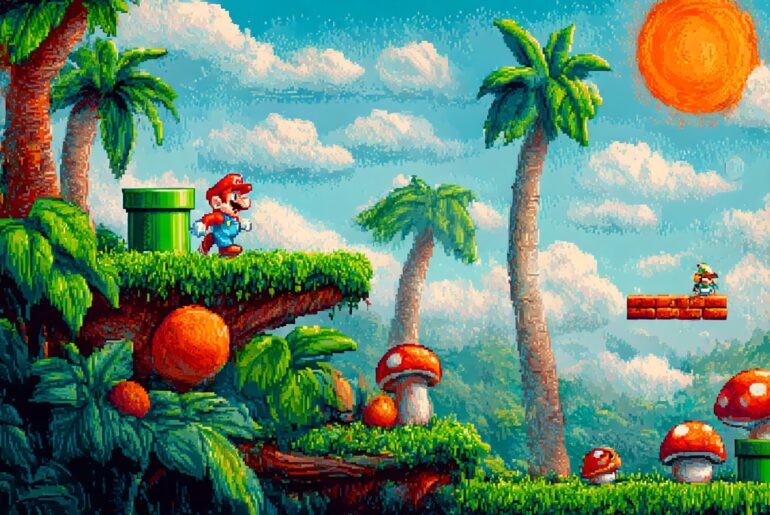
You know what I miss about being thirteen? The absolute certainty that a thirty-second TV advert could change your entire worldview. I'm talking about those Sega commercials from the early '90s—the ones that didn't just sell you games, they sold you an entire identity wrapped in attitude and blast processing.
Picture this: Saturday morning, I'm sprawled on the carpet with a bowl of Frosties going soggy, when suddenly the telly explodes with speed lines and that kid screaming "SEGA!" like his life depends on it. The Genesis (or Mega Drive, if you're properly British like me) is tearing across the screen, Sonic's spinning through loops, and some American voice is yelling about how Nintendo's for babies while blast processing makes everything faster, cooler, more… well, more Sega.
I had no clue what blast processing actually meant—turns out it was mostly marketing nonsense about how the Genesis handled scrolling backgrounds—but bloody hell, it sounded important. Like turbo boost for your console. My mate Dave's older brother claimed it meant the processor literally went faster when you pressed the buttons harder, which we absolutely believed because Dave's brother had seen Robocop and therefore knew about technology.
Those ads were pure playground ammunition. You'd roll into school Monday morning, and the Sega kids would be doing that thing where they'd make the "SEGA!" noise whenever someone mentioned Nintendo. The Genesis crew had attitude because the adverts told them to have attitude. We weren't just playing games—we were part of some kind of console revolution where speed was everything and Mario was basically your gran's cup of tea.
The thing is, Sega's marketing team understood something Nintendo absolutely didn't: teenagers don't want to be told games are fun. They want to be told games are cool, rebellious, maybe slightly dangerous. Nintendo's ads were all "Look, Mario's having a lovely time!" while Sega's were basically "Your parents won't understand this, and that's exactly the point."

Remember that "Welcome to the Next Level" campaign? Christ, they made it sound like joining a secret society. The ads had this gritty, almost underground feel—like they were filmed in some warehouse where the cool kids hung out after dark. Meanwhile, Nintendo's commercials looked like they were shot in a toy shop during a particularly cheerful Sunday afternoon.
And the music! Sega's ads had these pumping soundtracks that made every game look like an action movie. Streets of Rage 2 adverts sounded like they were selling you a night out rather than a beat-'em-up. Even bloody Ecco the Dolphin managed to look hardcore when they put it to the right backing track and added enough quick cuts to make your eyes water.
The genius bit was how they positioned themselves as the underdog with the bigger personality. Nintendo had market share, sure, but Sega had swagger. They'd run comparison ads showing how Genesis games were faster, louder, more colorful—often stretching the truth until it snapped, but doing it with such confidence that you wanted to believe them anyway.
I actually fell for it completely. Saved up my paper round money for months to get a Mega Drive specifically because the adverts made it seem like the only choice for someone who wasn't completely tragic. The day I finally plugged it in, I half expected my bedroom to transform into one of those neon-lit battlegrounds from the commercials. Instead, I got Sonic 1 running on our ancient Bush telly with the dodgy aerial, but you know what? It still felt like joining the resistance.
The Mortal Kombat campaign was particularly mental. Sega didn't just advertise the game—they advertised the controversy. Those ads practically dared you to buy it, like they were selling forbidden fruit rather than a fighting game. "Get over here!" wasn't just a catchphrase, it was a recruitment slogan for kids who thought they were hard enough to handle real violence. Never mind that the blood looked like red pixels having a small disagreement—it was the principle of the thing.
What's mad is how those commercials created this whole tribal identity that lasted way beyond the actual console war. Even now, you meet someone who had a Genesis back in the day, and there's this little nod of recognition. We were the kids who chose attitude over polish, speed over sophistication. We probably made the wrong choice half the time—let's face it, Super Mario World was objectively better than most of what we were playing—but we made it with style.

The irony is that Sega's best games often succeeded despite the marketing, not because of it. Phantasy Star IV didn't need attitude; it was brilliant on its own merits. Same with Panzer Dragoon or Streets of Rage 2. But those ads created an ecosystem where being different was automatically better, where technical specs mattered less than having the right vibe.
Looking back, it's obvious that Sega's advertising strategy was equal parts genius and desperation. They couldn't compete with Nintendo's established characters or software lineup, so they competed on personality instead. They turned their smaller market share into a badge of honor—we weren't mainstream, we were elite. We had blast processing, whatever that meant, and that made us special.
Those commercials taught me something important about marketing: sometimes selling the feeling is more powerful than selling the product. I probably spent more time thinking about how cool I looked playing Sonic than actually enjoying the game itself. The adverts sold me an identity, and I wore it like armor against playground hierarchy.
Nowadays, when I fire up my MiSTer and load up some Genesis ROMs, I can still hear that "SEGA!" scream echoing in my head. It's pure nostalgia, sure, but it's also a reminder of when marketing could make you believe that owning the right console was basically a lifestyle choice. Simpler times, maybe. Definitely louder ones.