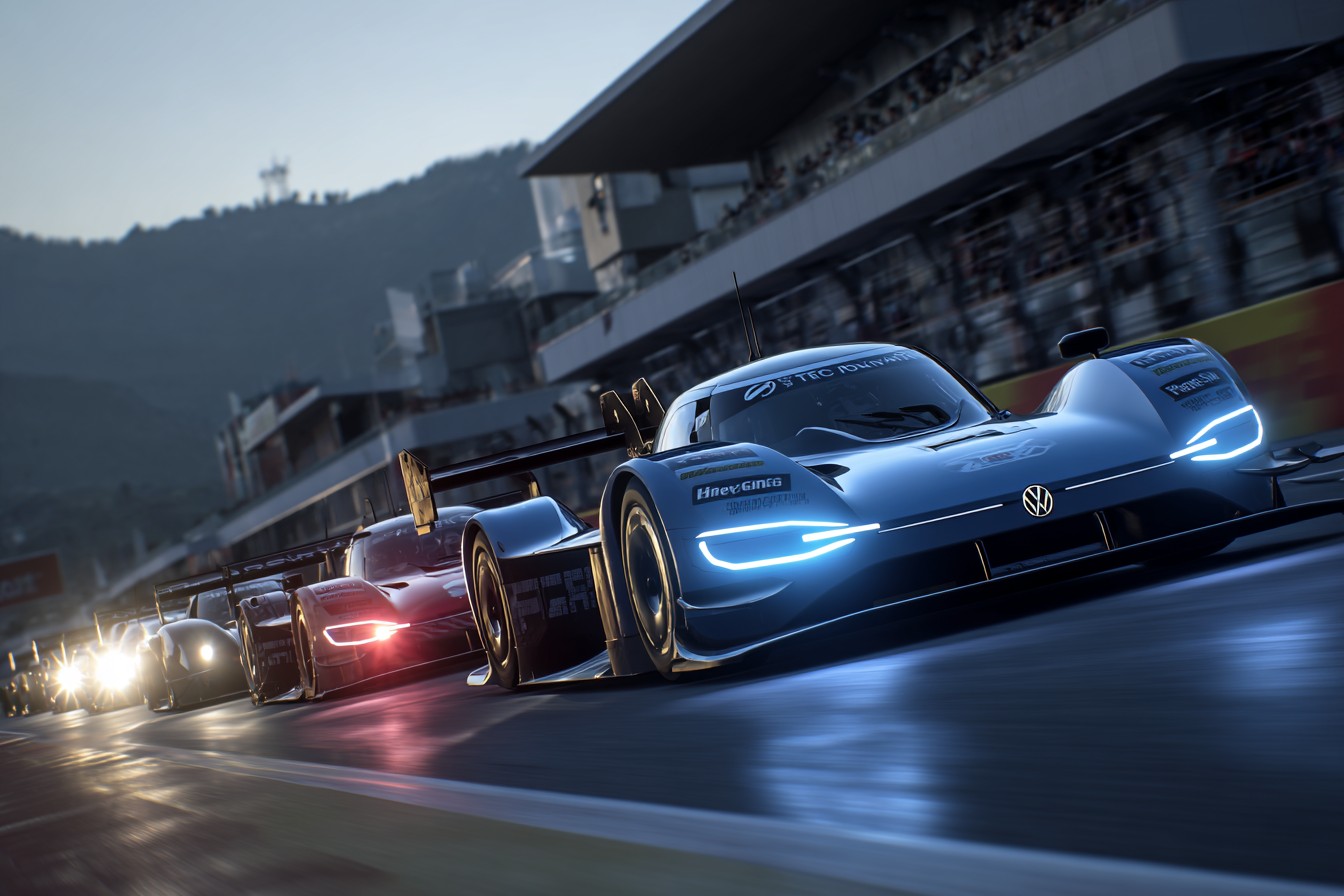
I’ve been gaming since 1982, and I’ve watched how racing games evolved from pure arcade simplicity to serious simulations. Gran Turismo is the moment console racing games proved they could be serious simulations. Over 150 cars with distinct handling characteristics. Dozens of tracks. A career mode spanning 60+ hours. This is racing design that respects the driver’s skill and understands racing as a complex discipline.
The driving physics are weighty. Cars respond to input with real momentum. Braking requires planning several turns ahead. Cornering is about understanding your vehicle’s limits. The suspension setup matters. Tire choice affects performance. This is racing design where driver skill is deterministic, not luck.
What Gran Turismo Actually Does
You start in amateur racing with entry-level cars. You progress through racing licenses that test your skills. You compete in different racing series – circuit racing, time trials, endurance races. You gain prize money and unlock better cars. You customize vehicles through tuning. You work toward becoming a professional racing driver.
The career progression is structured. You’re not thrown into random races – you’re working through series that build your skills. Early races teach racing fundamentals. Later races demand racing excellence. The progression respects player skill while gradually increasing challenge.
The tuning system is extensive but not mandatory. You can complete the game with basic vehicles if you’re skilled. But understanding suspension, gear ratios, and tire management creates deeper engagement. The system rewards learning without punishing those who don’t.
The track variety keeps racing fresh. Street circuits, road courses, oval tracks, rain conditions, night racing. The AI adapts to different track types. You’re constantly facing new challenges.
Why Racing Simulation Matters
Here’s what Gran Turismo understood that arcade racers miss – racing is a discipline with rules and physics. Weight transfer matters. Braking points matter. Racing lines matter. Understanding these concepts creates engagement because you’re competing against yourself as much as opponents. Can you execute a perfect lap? Can you manage tires over an endurance race?
The difficulty is well-balanced. Easy mode lets you focus on learning. Hard mode demands precision. The AI races intelligently – they take racing lines, they compete fairly, they don’t rubber-band artificially. You’re racing against opponents that drive realistically.
The progression through racing licenses is brilliant. The 200cc class license teaches basic racing. The 800cc class teaches advanced techniques. The 10,000cc class tests mastery. You’re progressively learning what it means to be a racing driver.
The Technical Achievement
The graphics are good for 1997 but not cutting-edge. The car models are detailed. The tracks are meticulously recreated from real racing circuits. The draw distance is good. The frame rate is consistent. The technical accomplishment is less about flashy graphics and more about efficiently creating believable racing.
The AI racing intelligence is genuinely impressive for 1997. The cars take racing lines. They manage corners differently based on car handling. They compete fairly without artificial bonuses. They adapt to track conditions. This required genuine technical expertise in AI programming.
The physics simulation is complex. Tire grip varies based on temperature. Suspension geometry affects handling. Weight distribution matters. Gear ratios affect acceleration and top speed. This is racing simulation complexity that demands player engagement.
Does Gran Turismo Still Hold Up?
The graphics are obviously dated. The car models are basic by modern standards. But the racing design is still solid. The physics still feel weighty. The AI still races intelligently. The track design still challenges. Playing this now, you understand why racing simulation matters.
The career progression still feels satisfying. The tuning system still creates engagement. The variety of racing types still keeps things fresh. The difficulty is still well-balanced.
The endurance races that span virtual hours are genuinely challenging and satisfying. The progression feels earned because you’ve worked for every promotion.
Why This Game Changed Racing Games
Gran Turismo proved that console racing could be simulation instead of just arcade. It proved that physics complexity could be accessible. It proved that racing players wanted depth and authenticity. Every racing game since has learned that racing simulation is viable.
Modern Gran Turismo games have become increasingly sophisticated, but the foundation – physics-based racing simulation with progression and customization – comes directly from this original. The series created the template that defined console racing for the next 25 years.
The Verdict
Gran Turismo is a racing game that proves simulation and accessibility aren’t mutually exclusive. The physics feel weighty and authentic. The difficulty is well-balanced for different skill levels. The progression is satisfying. The variety keeps racing fresh. The tuning system rewards learning without punishing those who don’t engage deeply.
This is a game where player skill is deterministic. You’re competing against the AI but also against yourself – trying to execute perfect laps, manage tires perfectly, achieve victory. That engagement comes from the physics and progression design, not from arbitrary difficulty.
If you’ve never played it, approach it as a racing simulation. If you’re interested in how racing games should balance accessibility and depth, study Gran Turismo because it’s the template that still works.
Rating: 9/10 – The racing simulation that proved console racing could be serious
Return to our full PlayStation 1 rankings →

Samuel’s been gaming since the Atari 2600 and still thinks 16-bit was the golden age. Between accounting gigs and parenting teens, he keeps the CRTs humming in his Minneapolis basement, writing about cartridge quirks, console wars, and why pixel art never stopped being beautiful.