I came to Spyro the Dragon expecting a charming but simple 3D platformer. What I found was a game that understands that elegance beats complexity every single time. Coming from construction, I appreciate something about how the best solutions are often the simplest ones that do exactly what they’re supposed to do without overcomplicating things.
Spyro is tiny, he breathes fire, he charges with his horns, he can fly short distances. That’s the entire mechanical toolkit. No complicated power-ups. No complex special attacks. Just those four mechanics used in increasingly creative ways across progressively more challenging levels. This is design that respects both the player’s intelligence and their time.
What Spyro The Dragon Actually Does
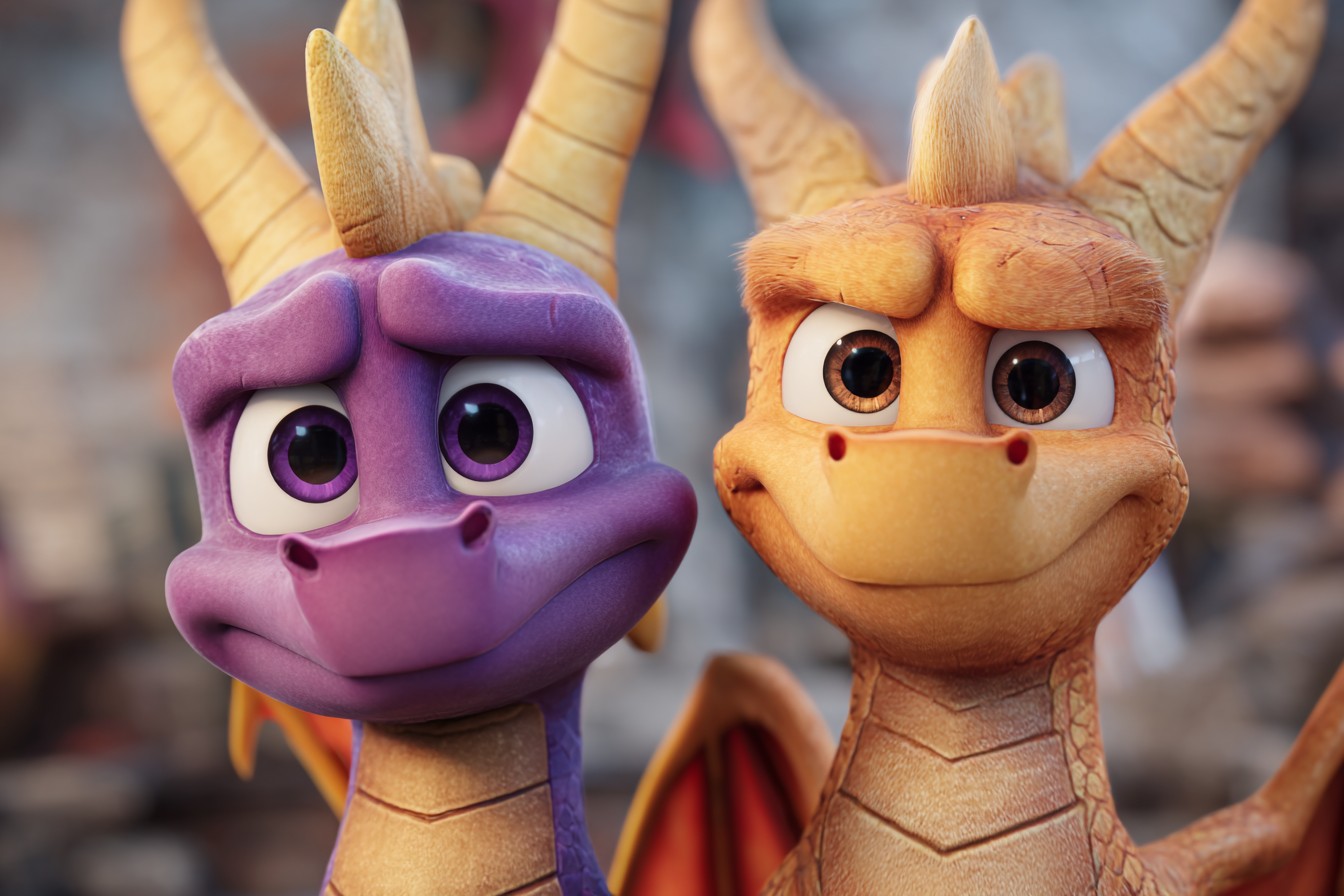
You’re a small purple dragon named Spyro running through colorful worlds breathing fire on enemies, charging with your horns, and flying short distances. The controls are simple – movement, jump, attack. Within thirty seconds, you understand the entire game mechanically. The fun comes from how those simple mechanics are applied across increasingly complex level design.
The worlds are vibrant and detailed. Every area feels distinct visually and thematically. The level design is clever without being obtuse. You’re navigating platforms, solving simple puzzles, collecting gems. The goals are clear – defeat enemies, find hidden areas, collect treasure.
The progression is steady. Early levels are gentle introductions. Later levels demand precision and good understanding of your abilities. The difficulty curve is perfect – you’re constantly challenged without ever feeling punished unfairly.
The Design Philosophy Of Elegance
What impresses me about Spyro is the understanding that simpler mechanics allow for more creative level design. If Spyro had twenty different abilities, levels would need to accommodate that complexity. With four core mechanics, level designers can be endlessly creative about combining those mechanics in different ways.
The four mechanics interact in interesting ways. Fire breathing is range combat. Charging is melee combat and environmental puzzle-solving. Jumping is platforming. Flying is traversal and aerial combat. Every ability is useful. Nothing is wasted or extraneous.
The difficulty curve respects the game’s audience. It’s clearly designed for younger players – the bright colors, the charming story, the forgiving difficulty. But it’s polished well enough that older players can engage with it. The optional challenges are genuinely challenging, proving that depth exists for those who want to engage deeply.
The Charm That Comes From Commitment
What strikes me about Spyro is how completely the game commits to being charming. The character designs are expressive. The animation is smooth and communicates personality through movement. The dialogue is light and playful without being obnoxious. The world feels lived-in because the designers clearly cared about making it feel that way.
The music by Kees Brouwer and others is genuinely excellent. Each world has distinct music that establishes tone without being intrusive. The sound effects are satisfying. Enemy sounds are distinct. Dragon sounds communicate threat appropriately. This is audio design that supports the experience.
The story is straightforward – evil Gnasty Gnorc is turning dragons into crystal and you need to stop him. That’s all the story needs to be. The game doesn’t waste time with exposition. It presents the problem and lets you solve it.
The Technical Achievement
The graphics are dated but the aesthetic holds up well. The character designs are memorable. The animation is smooth and expressive. The environments are detailed and colorful. The effect work creates visual clarity without overwhelming gameplay information.
The frame rate is consistent. The controls are responsive. The collision detection is fair. These technical basics that seem obvious now were genuinely impressive in 1998.
Does Spyro The Dragon Still Hold Up?
Completely. The controls are still tight. The level design is still clever. The charm is still genuine. The challenge is still appropriate. Playing this now, you understand why people loved this game.
The difficulty is well-balanced for the age group the game targets while remaining engaging for older players. The progression feels satisfying. The optional challenges are genuinely rewarding. There’s no artificial padding – every moment is meaningful.
The boss fights are creative and fun. They teach mechanics while testing your mastery. The final boss is a great capstone – genuinely challenging but fair.
Why This Game Proved Simplicity Could Excel
Spyro the Dragon proved that you don’t need mechanical complexity to create engagement. You need clear controls, good level design, fair difficulty, and charm. Spyro has all of those things. The mechanical simplicity allows the level design to shine.
Every platformer since has learned from Spyro that sometimes the best approach is to master a few core mechanics rather than trying to do everything. The simplicity frees designers to focus on level design and pacing rather than managing mechanical complexity.
The Verdict
Spyro the Dragon is a 3D platformer that proves elegance beats complexity. Simple controls. Clever level design. Fair difficulty curve. Genuine charm. Memorable music. Satisfying progression.
This is a game where every system serves the goal of creating engaging platforming wrapped in charm. You’re not playing this for story or mechanical depth – you’re playing this because the fundamentals are perfect and the charm is genuine.
If you’ve never played it, play it and appreciate how much depth exists within apparent simplicity. If you make platformers, study Spyro because it’s proof that sometimes the best solution is the simplest one executed perfectly.
Rating: 9/10 – The platformer that proves elegance beats complexity every time
Return to our full PlayStation 1 rankings →

Timothy discovered retro gaming at forty and never looked back. A construction foreman by day and collector by night, he writes from a fresh, nostalgia-free angle—exploring classic games with adult curiosity, honest takes, and zero childhood bias.