You know how sometimes you stumble across an old box in your mum's loft and suddenly you're twelve again, arguing with your brother about who gets to be Yoshi? That happened to me last weekend when I found my N64 controller collection—four original grey pads, one with a wonky stick that drifts left like it's permanently steering into a skid. The muscle memory kicked in immediately. That three-pronged alien spaceship design that everyone mocked until they actually held one properly.
I fired up Mario Kart 64 for the first time in ages, and bloody hell—it still works. Not just "works" like it functions, but works like a Swiss watch made of pure Saturday afternoon joy. Four-player split screen on a 32-inch CRT that weighs more than my nephew, everyone crammed on the sofa with barely enough room to gesture wildly during those inevitable blue shell moments.
The thing about Mario Kart 64 isn't just that it's good—it's that it solved problems we didn't even know we had. Take the rubber band AI, for instance. Everyone moans about it now, calling it artificial or unfair, but they're missing the point entirely. That system where CPU racers catch up when you're miles ahead? It's not broken—it's brilliant. Without it, you'd have one decent player lapping everyone else while three mates sit there feeling like plonkers. Instead, you get chaos. Beautiful, democratic chaos where my gran could theoretically win a race despite driving like she's still figuring out what the accelerator does.
I remember the first time we discovered Battle Mode. Four tiny arenas, three balloons each, last person standing wins. Sounds simple until you're in Block Fort with sweaty palms, creeping around corners, listening for engine sounds like you're hunting velociraptors. The tension was incredible—proper edge-of-your-seat stuff. We'd play for hours, developing weird strategies and unspoken truces that would inevitably crumble when someone launched a perfectly timed green shell.
The tracks themselves are masterpieces of design. Rainbow Road isn't just a rainbow-colored road in space—it's a twenty-minute endurance test that either bonds friendships or destroys them entirely. No barriers, just you and the void and the constant threat of being bumped into the cosmos by a mate who's been saving that mushroom for exactly this moment. Wario Stadium with its jumps and walls that could be shortcuts if you're brave enough. Yoshi Valley where the paths split and merge like some twisted choose-your-own-adventure book played at 60mph.
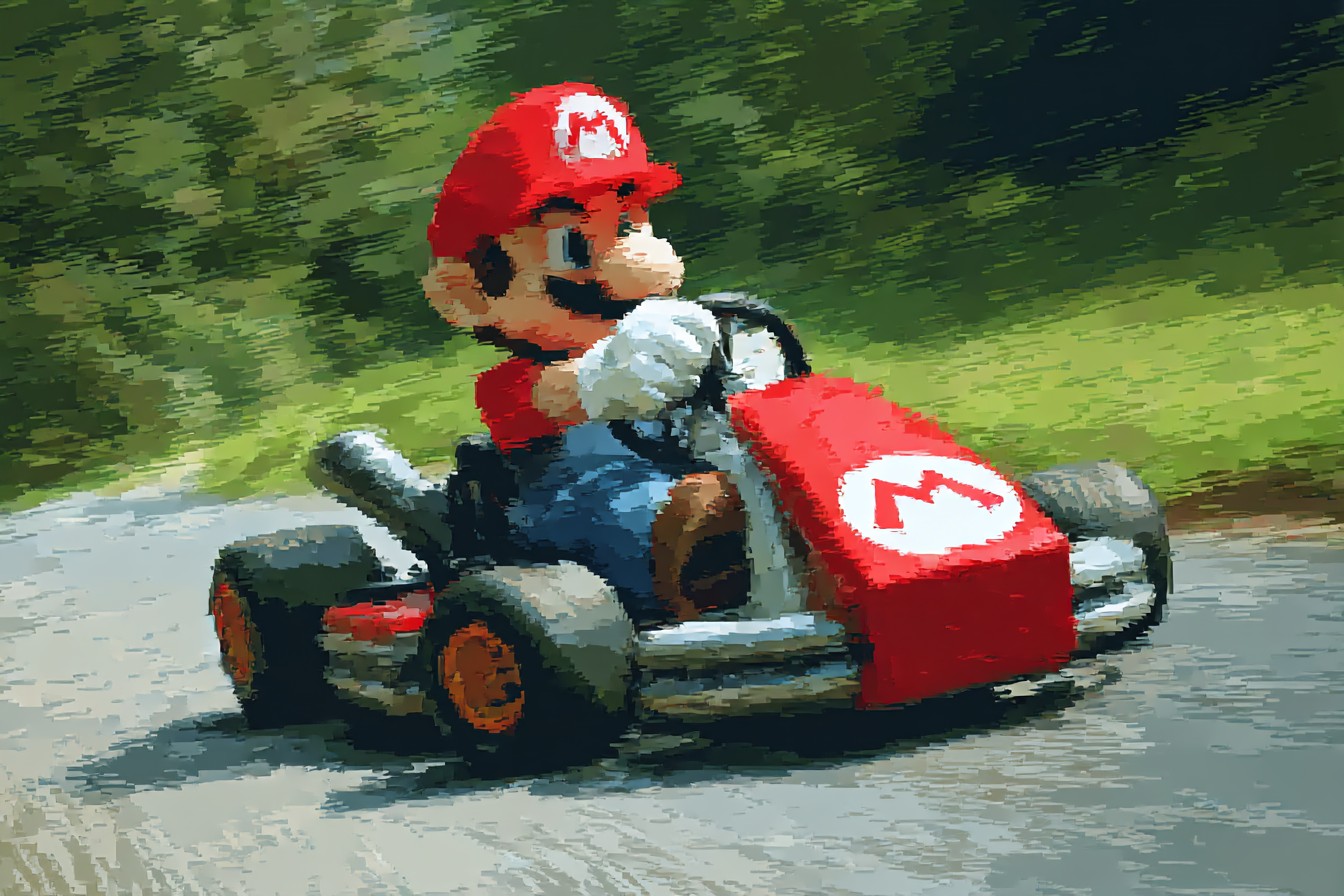
But here's what really makes Mario Kart 64 special: it's genuinely fair while feeling completely unfair. The items are perfectly balanced chaos engines. Getting hit by a blue shell when you're in first place feels like the universe conspiring against you, but you know—absolutely know—that shell is coming for whoever's winning when you're not. Lightning that shrinks everyone just as they're about to hit a jump. Bananas placed with surgical precision on narrow bridges. Stars that turn you into an unstoppable golden bulldozer for exactly long enough to cause maximum carnage.
The learning curve is perfect too. Anyone can pick up a controller and have fun immediately—the controls are intuitive, the tracks are readable, the basic concept is "go fast, don't fall off." But underneath that simplicity is a game with proper depth. Learning to powerslide boost around every corner. Discovering shortcuts that feel illegal but absolutely aren't. Mastering the art of dragging items behind you as shields. Figuring out exactly when to use that mushroom you've been hoarding like it's made of gold.
I've probably spent more time on Royal Raceway than any other virtual location in gaming history. Something about that castle shortcut—threading the needle between those walls, knowing that messing up means watching everyone overtake you while you reverse out of trouble like a muppet. The risk versus reward calculation happens in microseconds, usually while someone's shouting encouragement or abuse from the sofa cushion next to you.
The soundtrack deserves its own paragraph. Those cheerful, bouncy melodies that somehow never get annoying even after the thousandth lap. The way the music shifts when you're underwater in Roo's Tubes, or speeds up during the final moments of a race. The victory fanfare that still makes me grin like an idiot. Nintendo's composers understood that racing games need music that celebrates speed and competition without being aggressive or stressful.
Split-screen is where this game truly shines, and it's something modern gaming has largely abandoned in favor of online play. There's something magical about four people sharing one screen, all visible to each other, all equally handicapped by the limited view. No one gets an advantage. Everyone's squinting at their corner of the display, occasionally glancing at the others' sections to see who's gaining ground. The social element is immediate and visceral—groans of frustration, shouts of triumph, the occasional gentle elbow to the ribs during a particularly tight corner.
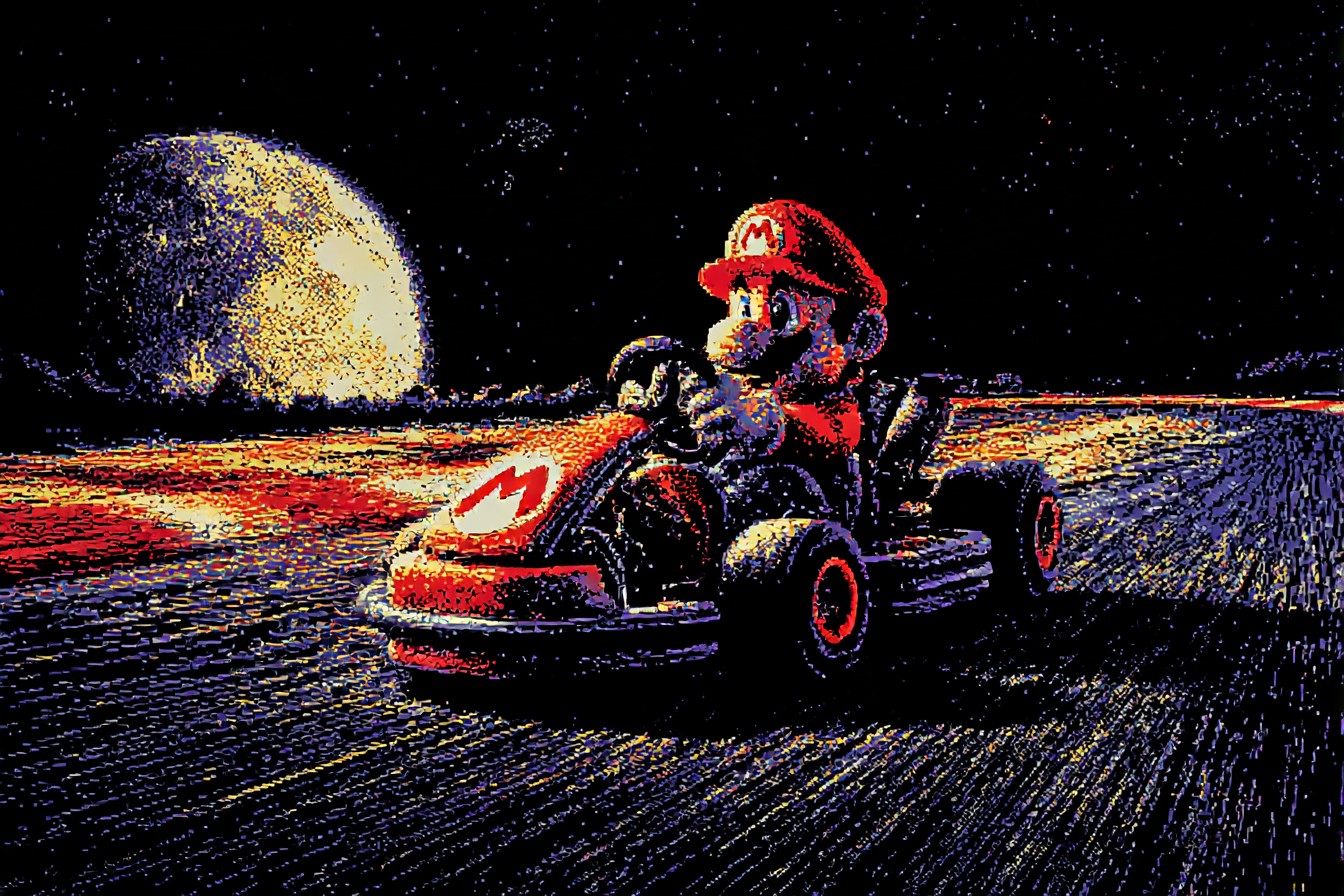
Playing it now, decades later, I'm struck by how well it holds up. Sure, the graphics look like chunky polygons compared to modern racers, but the gameplay is timeless. The physics feel right in a way that's hard to quantify—cars have weight and momentum, but they're still bouncy and arcade-perfect. Crashes are spectacular without being punishing. Everything moves at exactly the right speed to feel fast without being overwhelming.
The legacy is undeniable. Every kart racer since has borrowed from this playbook. The item system, the track design philosophy, the rubber band AI—they've all been copied, refined, and iterated upon, but never quite perfected like they were here. This is the template, the gold standard, the game that proved arcade racing could be deep without being complicated.
When people ask me about the greatest multiplayer games ever made, Mario Kart 64 is always in my top three. Not because it's technically superior to everything that came after, but because it understands something fundamental about fun. It knows that the best competitive experiences aren't about finding the most skilled player—they're about creating moments of shared joy, frustration, and triumph that stick with you for decades.
That wonky controller with the drifting stick? I'm never fixing it. It's perfect exactly as it is.


