I remember the exact moment my childhood died. Not in some dramatic, tear-jerking way—more like watching your favorite teddy bear get caught in a washing machine and come out looking… different. I was nineteen, home from university for the weekend, and my mate Dave had brought round this game he'd bought from some bloke at a car boot sale. "It's got a squirrel," he said, like that explained everything.
Conker's Bad Fur Day wasn't supposed to exist. Not on Nintendo's wholesome, family-friendly N64 anyway. The same console that gave us Mario's cheerful "wahoo!" and Link's earnest quest to save Hyrule had somehow spawned this foul-mouthed, beer-swilling rodent who treated the fourth wall like a suggestion and innuendo like an art form.
See, I'd been following Conker since his early days. Twelve Tales: Conker 64 was going to be another cutesy platformer from Rare—you know, the studio that made Banjo-Kazooie feel like Saturday morning cartoons in interactive form. I'd seen the screenshots in N64 Magazine, all bright colors and collecting mechanics. Safe. Predictable. The sort of game you'd play with your little sister without worrying about explaining why the bear was teaching her new vocabulary.
Then something happened at Rare. Maybe they got tired of making games for kids. Maybe they looked at the sales figures for mature content on other platforms and felt a pang of jealousy. Or maybe—and I suspect this is closer to the truth—they just wanted to see if they could get away with it.
What they created was gaming's equivalent of a Trojan horse. On the surface, Conker looked every inch the Nintendo mascot: big eyes, fluffy tail, colorful world straight out of a fairy tale. Then he opened his mouth, and suddenly you're playing something that would make a sailor blush. The first time Conker dropped an F-bomb, I actually looked over my shoulder to check my mum wasn't within earshot. I was nineteen years old and living in a flat with three other lads, but twenty years of Nintendo conditioning runs deep.
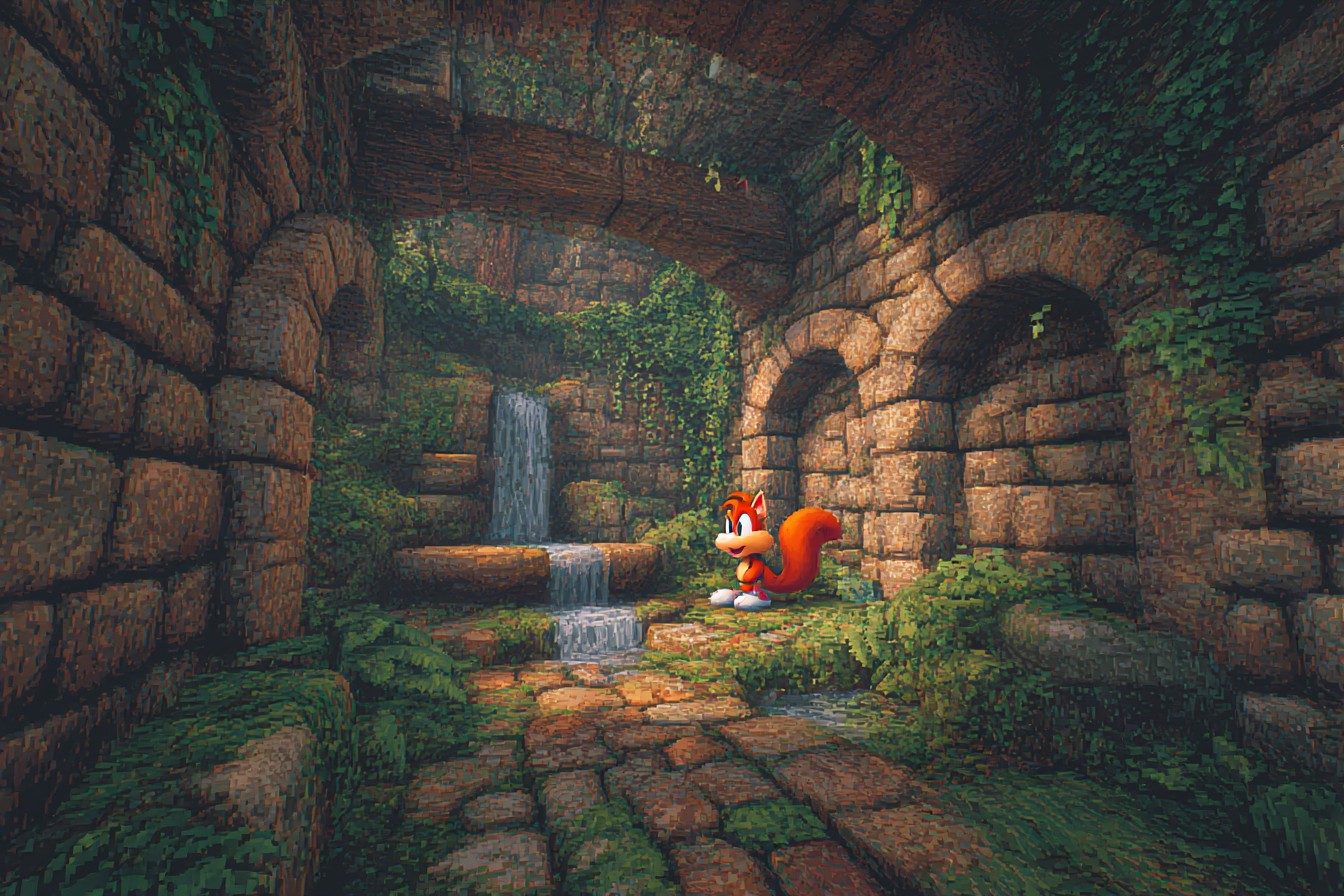
The genius wasn't just in the shock value, though. Rare understood something about mature gaming that most developers completely missed: being adult doesn't mean being miserable. Conker swore like a trooper, drank like a fish, and spent most of his adventure trying to get home to his girlfriend after a particularly heavy night out. But he was also genuinely funny—not in that try-hard, "look how edgy we are" way, but with proper comic timing and clever writing that actually earned its rating.
I'll never forget the Great Mighty Poo. There's a sentence I never thought I'd write, but here we are. Fighting a giant singing turd while he serenades you with opera might sound like the sort of juvenile nonsense you'd expect from a bunch of programmers who'd discovered they could get away with toilet humor. But the execution was so polished, so unexpectedly musical, that it transcended its own stupidity. My flatmate Mark walked in during that boss fight, watched for about thirty seconds, and then sat down without saying a word. We ended up playing through the entire sequence three times because we couldn't stop laughing.
The technical side was properly impressive too, in that understated Rare way. The character animations had this rubber-hose cartoon quality that made every movement feel exaggerated and expressive. Conker's facial expressions alone conveyed more personality than most entire casts of characters. When he was hungover, you could feel the headache. When he was scheming, that little smirk was absolutely perfect. And the voice acting—every character felt like they'd wandered in from a different genre entirely, which somehow worked brilliantly in context.
But what really made Conker special was how it played with expectations. The multiplayer modes were absolutely mental—Beach racing, World War Two parodies, zombie survival horror. None of it made any logical sense, and all of it was stupidly entertaining. The war simulation in particular was this bizarre mix of Saving Private Ryan and Monty Python, complete with Conker in military fatigues trying to storm a beachhead while cracking jokes about the absurdity of it all.
Nintendo's reaction was… interesting. They published it, but you could tell they weren't entirely comfortable with what they'd unleashed. The advertising was weirdly subdued for such a groundbreaking game. No massive TV campaigns, no cereal box promotions, no happy meal toys. Just a quiet release and a sort of collective holding of breath to see what would happen.
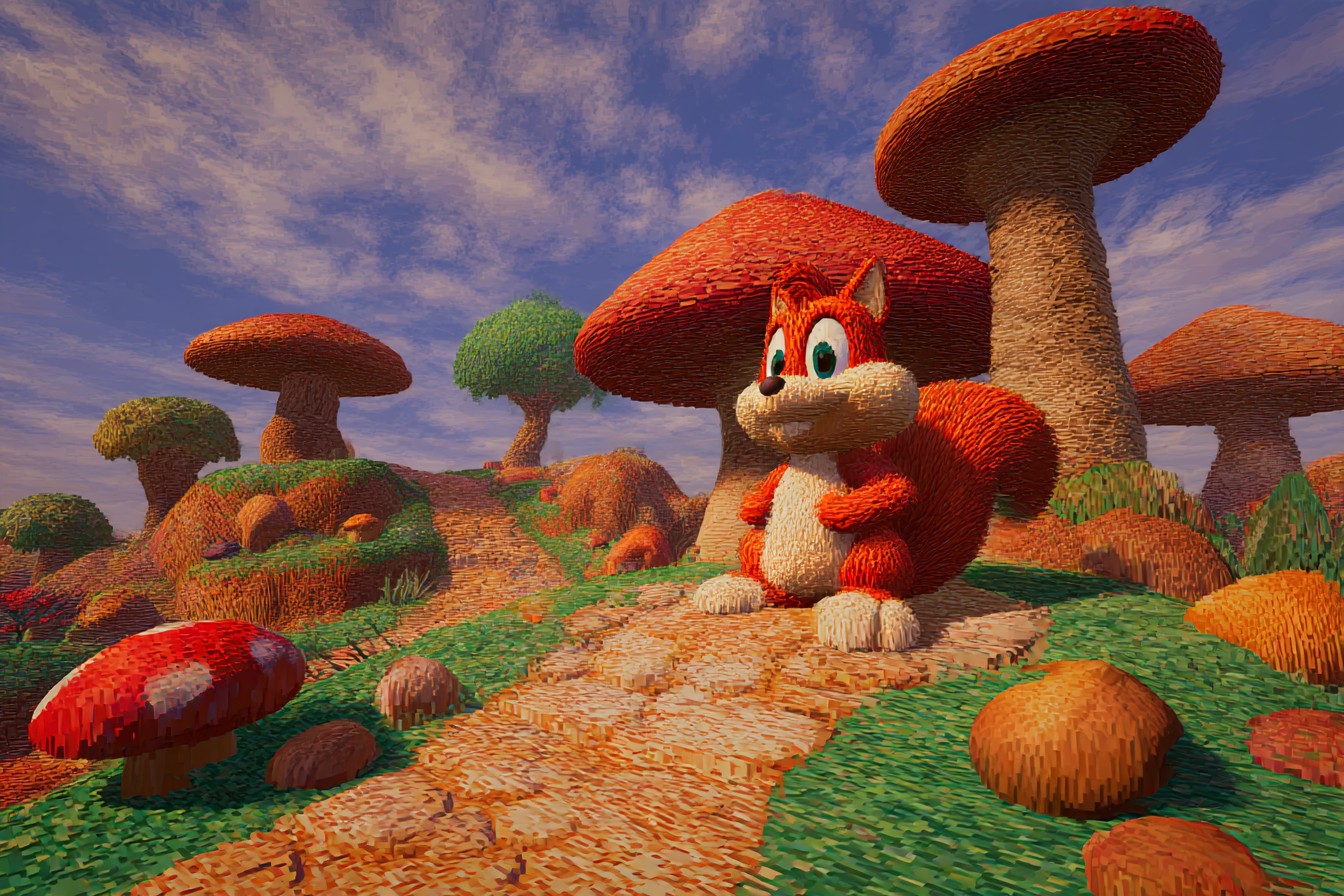
What happened was that gaming grew up a little bit. Not in the self-serious, "games are art" way that some people were pushing, but in a more natural evolution. Conker proved that you could have mature themes without losing the joy and playfulness that made games special in the first place. It was crude, yes, but it was also clever. Juvenile, absolutely, but in the best possible way.
The strangest thing about replaying it now—and yes, I've still got my original cart, slightly yellowed with age but still working perfectly—is how fresh it feels. The humor hasn't aged the way you'd expect from a game that was pushing boundaries twenty-odd years ago. If anything, some of the movie parodies and cultural references feel even funnier now that they've had time to ferment.
There's something beautifully ridiculous about a game that can make you laugh at poo jokes one minute and genuinely impressed by clever level design the next. Conker's Bad Fur Day wasn't just Rare's most controversial experiment—it was their most human one. Flawed, funny, occasionally brilliant, and absolutely unapologetic about what it was trying to do.
That weekend, Dave and I stayed up until about four in the morning, passing the controller back and forth and slowly realizing we were witnessing something genuinely unique. Gaming had found its voice for talking to grown-ups without forgetting how to have fun. Sometimes the best way to push boundaries is to do it with a smile and a wink.