You know what's weird? I can still remember the exact moment I realized Dash Rendar wasn't just some random smuggler they threw into the Star Wars universe. It was probably the third or fourth time through Shadows of the Empire on my N64, and I'd just nailed that speeder bike chase on Ord Mantell without hitting a single tree. Something about the way his ship, the Outrider, felt different from the Millennium Falcon in other games—more angular, more aggressive, like it was designed by someone who actually understood that not every freighter needed to look like a flying hamburger.
Shadows of the Empire hit the N64 in December 1996, right in that sweet spot where the console was still proving itself but had figured out what it wanted to be. I'd already been blown away by Mario 64's camera work and the way GoldenEye made split-screen feel like a science, but this was different. This was Star Wars in proper 3D, not just sprites pretending to have depth or that weird pseudo-3D thing the SNES Super Star Wars games did with Mode 7.
The opening level on Hoth still gives me chills. Not the good kind—the "oh god, AT-ATs are huge and I'm in a tiny snowspeeder" kind. That first moment when you realize the scale they've managed to pull off with the N64's limited memory, watching these massive walkers lumber across the snow while TIE fighters zip around like angry wasps… I mean, we'd seen the Battle of Hoth in Empire Strikes Back countless times, but this was the first time it felt like you could actually fail at it. Luke made it look easy in the film. Turns out, wrapping tow cables around AT-AT legs while dodging laser fire is considerably harder when you're the one holding the controller.
What really got me about Shadows of the Empire wasn't just that it was a decent Star Wars game—though it absolutely was—but that it felt like genuine expanded universe content. See, this was back when the EU was still this wild west of novels, comics, and games that felt equally canonical. Timothy Zahn's Thrawn trilogy had shown us that Star Wars could work beyond the films, and here was a game that slotted right into that same space between Empire and Jedi. Dash wasn't trying to be Han Solo. He had his own ship, his own attitude, his own slightly different relationship with the Force and the Rebellion.
Playing through the Mos Eisley cantina level, I remember thinking how perfectly they'd captured that seedy, dangerous feel from the films. The lighting was all orange and brown, like someone had soaked the whole place in whiskey, and the way NPCs moved around felt genuinely alien rather than just… different-colored humans. Plus, that moment when you first encounter IG-88—proper intimidating droid bounty hunter, not the brief glimpse we got in Empire. The N64's controller actually worked brilliantly for the third-person combat sections. That Z-trigger for targeting felt natural, and the analog stick meant you could actually strafe properly, which was still a novelty back then.

But honestly? The speeder bike sections were what sold me completely. I'd played Return of the Jedi games before, sure, but they always felt like you were on rails, literally or figuratively. Here, you had actual control over Dash's speeder, weaving between trees on Ord Mantell with this sense of speed that the N64 managed despite not exactly being a powerhouse. The draw distance wasn't brilliant—trees would pop in a bit close for comfort—but when you were in the zone, threading between obstacles at full speed, it felt like you were living out that Endor chase scene but with better reflexes than Luke apparently had.
The Outrider sections were where things got really interesting for me. Space combat in Star Wars games had always been a bit hit-or-miss. X-Wing on PC was brilliant but demanded more setup than my family computer could handle, and the console attempts usually felt either too simple or too clunky. Shadows of the Empire found this sweet spot where you felt like you were piloting a proper freighter—not as nimble as an X-wing, but with enough firepower to make up for it. Those battles around Imperial capital ships, weaving between turbolaser fire while trying to take out specific targets… it was the first time I really understood why someone might choose to be a smuggler in the Star Wars universe instead of joining the Rebellion properly.
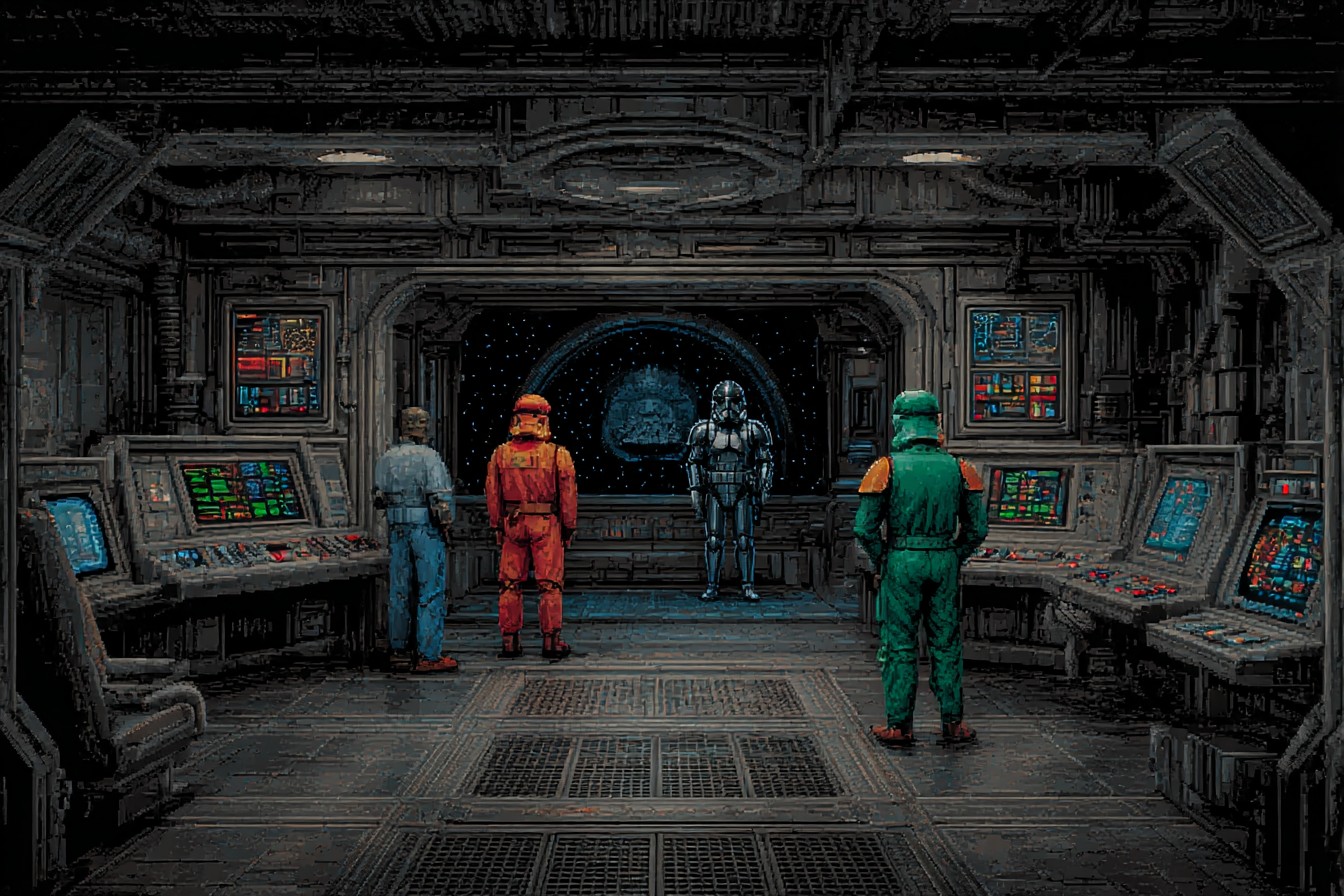
What struck me most about Dash as a character was how he managed to feel like part of the Star Wars universe without feeling derivative. Yeah, he's a smuggler with a fast ship and a devil-may-care attitude, but there's something slightly more mercenary about him than Han. Han had a heart of gold under all that swagger; Dash felt like he was still deciding whether helping the Rebellion was worth the credits. Playing through his story, especially the bits where he's working alongside—but not exactly with—the main characters from the films, gave the whole thing this great sense of being adjacent to the main story rather than trying to retell it.
The game wasn't perfect, obviously. Some of those platforming sections could be genuinely frustrating, and the camera occasionally had opinions about where you should be looking that didn't match where you actually needed to look. The jetpack controls in the Imperial sewers took some getting used to—I definitely fell into more than my fair share of toxic waste pools. But even the rough bits felt like they belonged, you know? Like they were trying to do something ambitious rather than just playing it safe.
Looking back now, Shadows of the Empire represents this perfect moment in gaming where the technology had finally caught up to our imagination about what Star Wars games could be. We could have proper 3D space battles, we could walk around environments that actually looked like they belonged in that universe, and we could play as characters who felt like they had their own stories to tell. It wasn't trying to be Empire Strikes Back: The Game. It was trying to be its own thing that happened to take place in that same universe.
I still fire it up occasionally on my N64—original hardware, because some things deserve to be experienced as they were meant to be. The graphics look pretty rough now, sure, but that sense of being part of the Star Wars expanded universe? That feeling of discovering corners of that galaxy we hadn't seen before? That's still magic, even with all the polygon edges showing.