The smell of a freshly opened game box—you know the one I'm talking about. That slightly plasticky, new electronics scent mixed with the crisp pages of an instruction manual. I was hunched over our coffee table last weekend, carefully lifting the cardboard flaps on a mint-condition Saturn game I'd finally tracked down on eBay, and it hit me like a time machine. Suddenly I'm twelve again, saving pocket money for months just to afford one cartridge, making that choice feel like picking a life partner.
The nineties weren't just a decade for gaming—they were the decade. The era when consoles stopped being toys and became proper entertainment systems that could make your parents genuinely worried about screen time. I lived through every single console war skirmish, watched friendships crumble over Sonic versus Mario debates, and witnessed the birth of polygons with the wide-eyed wonder of someone seeing magic for the first time.
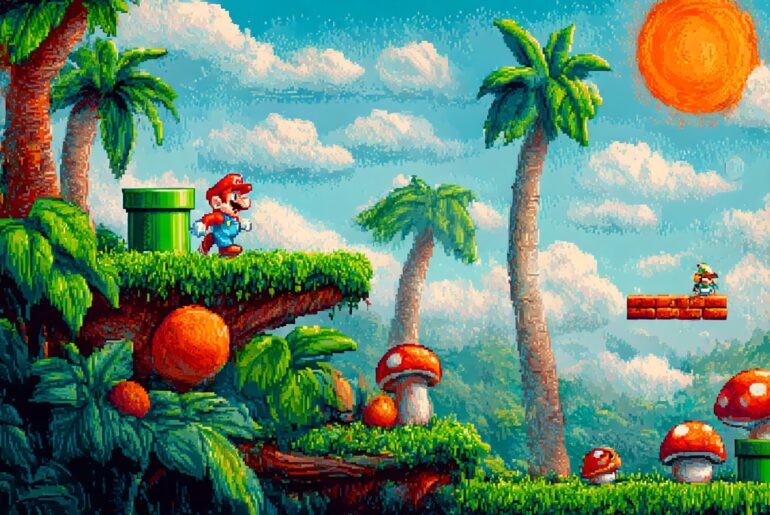
My mate Dave had the Super Nintendo first. God, I was jealous. His mum worked at Woolworths and somehow managed to snag one before the Christmas rush of '91. I remember walking into his living room and seeing Super Mario World for the first time—the way Mario's cape fluttered in the wind, how Yoshi could eat basically anything and somehow make it useful. The SNES had this way of making everything feel… sophisticated? Like Nintendo had taken their toy-making expertise and decided to create something that could genuinely impress adults too.
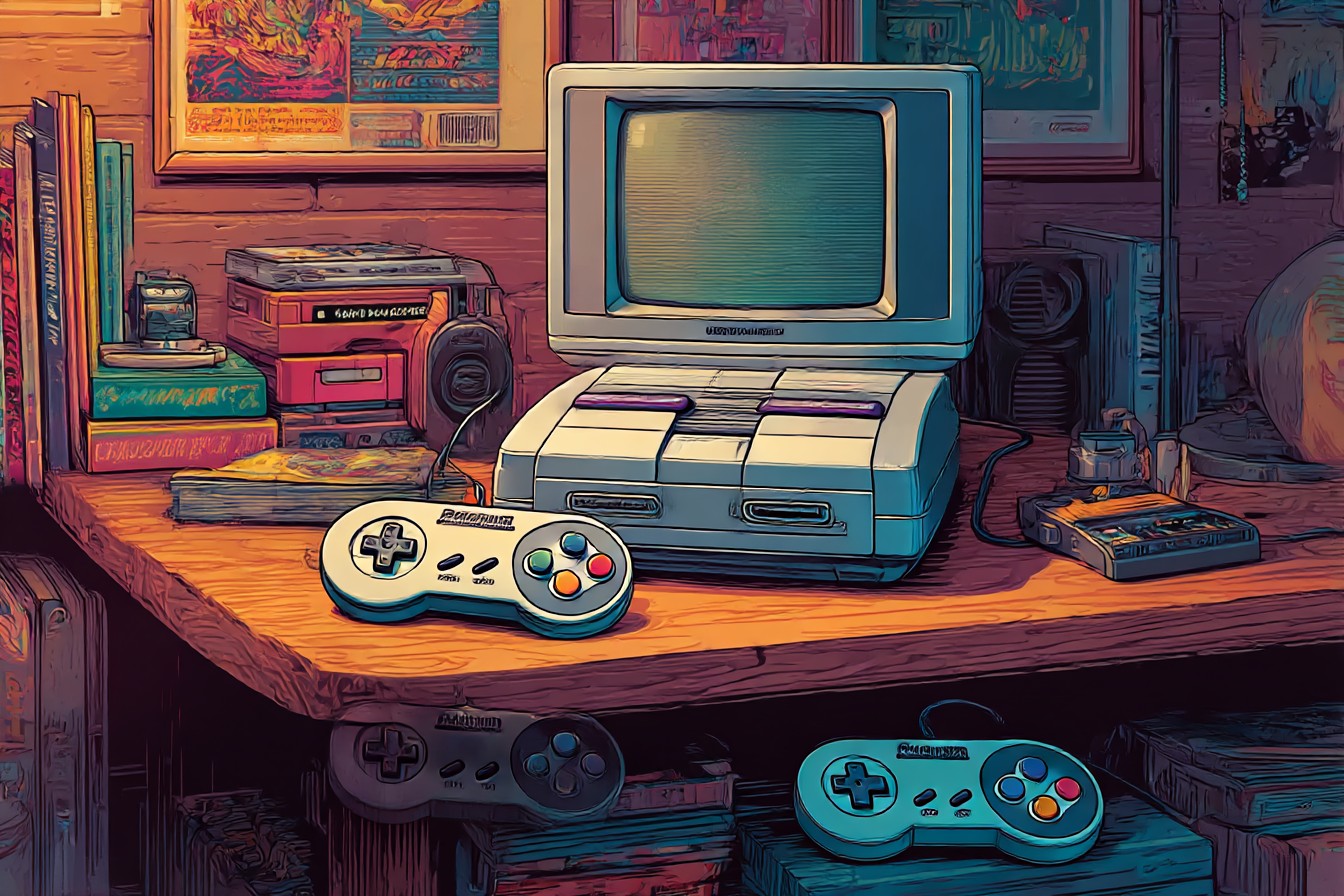
The controller was poetry in plastic. Those purple and grey buttons weren't just functional—they were musical. You could play Street Fighter II and actually pull off Hadokens consistently because the d-pad had this perfect tactile response. No mushy presses, no accidental diagonals when you wanted straight directions. Just pure, responsive control that felt like an extension of your thumbs.
But then Marcus down the street got a Mega Drive, and suddenly our little gaming ecosystem had competition. Sega wasn't messing about—they came out swinging with attitude. Sonic the Hedgehog wasn't just fast; he had personality dripping from every sprite animation. That finger-wagging idle animation, the way he'd tap his foot if you left him alone too long—it was like Sega had created a character who was actively impatient with slow players.

The sound chip in the Mega Drive was something else entirely. Where Nintendo went for orchestral warmth, Sega chose electronic aggression. Streets of Rage 2 sounded like it was broadcast from a nightclub in the year 2000. That FM synthesis had this metallic, almost industrial quality that made every explosion feel like it could crack your television screen.
I ended up with a Mega Drive for my thirteenth birthday—partly because it was slightly cheaper than the SNES, partly because my dad heard "blast processing" in an advert and became convinced it was somehow superior technology. The man could barely program the VCR, but he was absolutely certain that more processing equaled better gaming. Fair enough, dad.
Sonic 2 consumed my summer holidays. I'd wake up at half past seven, tip-toe downstairs before anyone else was awake, and spend hours perfecting my run through Chemical Plant Zone. The two-player mode with Tails following behind was revolutionary—finally, a game where your little brother could "help" without actually being able to mess things up too badly. Genius design, really.
Then 1995 happened, and everything changed. The PlayStation landed like a meteor, bringing CD-quality audio and those mind-bending 3D graphics that made everything else look ancient overnight. I saved up for months, doing paper rounds in the rain, washing cars for neighbors who probably didn't need their cars washed but took pity on a teenager with obvious gaming addiction issues.
Ridge Racer came bundled with my PlayStation—which was lucky, because I couldn't afford another game for about six weeks. I must've played that opening race a hundred times, jaw permanently unhinged at how realistic those cars looked bouncing around the track. The loading times were brutal by today's standards, but back then they felt like anticipation building before a movie started.
Sega Saturn owners were a different breed entirely—passionate, slightly defensive, absolutely convinced they owned the superior machine. They weren't wrong about the 2D capabilities. Watching Saturn run perfect arcade ports of Street Fighter Alpha or Virtua Fighter 2 was like seeing magic happen in real-time. But trying to explain why Saturn was brilliant to PlayStation owners felt like speaking a foreign language. Nobody wanted to hear about superior 2D sprite handling when Crash Bandicoot was spinning around in full 3D.
The Nintendo 64 arrived fashionably late to the party, but it brought something nobody else had—that controller. Three handles, an analog stick that felt like steering a spaceship, and enough buttons to confuse anyone over thirty. Super Mario 64 wasn't just a game; it was a demonstration of possibility. Running around that castle courtyard, moving the camera manually for the first time, jumping in directions that weren't just left or right—it felt like stepping into the future.
Four-player GoldenEye sessions became weekend religion. We'd argue about screen-peeking, ban Oddjob on principle, and inevitably someone would rage-quit after getting spawn-killed for the fifth time running. But those memories—cramped around a single TV, controllers with increasingly sticky buttons, the smell of pizza and teenage desperation—they're carved into my brain with the precision of a laser etcher.
Looking back now, each console had its own personality, its own tribe of devoted followers. The SNES crowd were the sophisticates, appreciating intricate RPGs and polished platformers. Mega Drive fans were the rebels, loving fast action and electronic soundtracks. PlayStation owners were the early adopters, embracing the CD-ROM future with open arms. Saturn enthusiasts were the connoisseurs, seeking out import gems and appreciating technical excellence over mass appeal.
These weren't just gaming machines—they were cultural touchstones that defined how we spent our free time, who we became friends with, even how we learned to handle disappointment when our favorite console didn't win the sales war. Every cart insertion, every controller grip, every late-night gaming session was building something bigger than entertainment. We were creating a shared language of digital experiences that would last well beyond the nineties.
That Saturn game I bought last weekend? Guardian Heroes. Still brilliant, still uniquely Sega in all its chaotic, beautiful complexity. Some things never get old—they just get more appreciated.