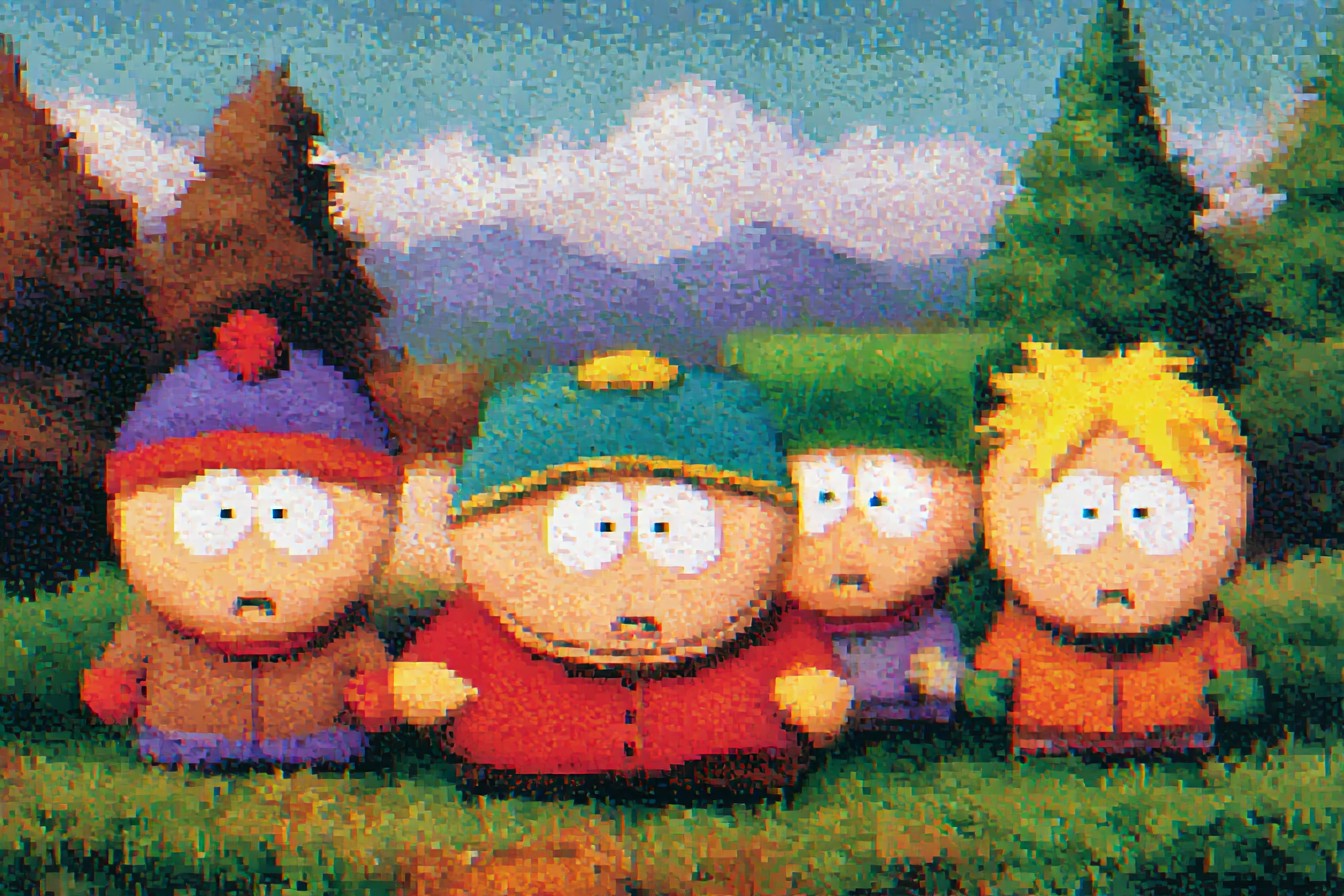
I remember walking into Electronics Boutique in 1998, scanning the shelves for something different. The usual suspects were there—GoldenEye, Mario Kart 64, Star Fox 64—but then I spotted it. A bright orange cartridge with four familiar faces grinning back at me: Stan, Kyle, Cartman, and Kenny. South Park, the TV show that made my parents cringe and my teenage self laugh until my sides hurt, had somehow made it onto the Nintendo 64.
The bloke behind the counter gave me this knowing look when I picked it up. "Mature content," he said with a smirk, like he was selling contraband rather than a video game. I was seventeen, old enough to buy it without parental supervision, but young enough to feel like I was getting away with something.
South Park on the N64 wasn't trying to be the next GoldenEye or redefine the first-person shooter genre. It was pure, unadulterated chaos wrapped in Comedy Central's signature crude humor, and honestly? That's exactly what made it brilliant. The game knew what it was—a silly, irreverent tie-in that didn't take itself seriously for even a nanosecond.
The setup was classic South Park madness. Aliens have invaded the quiet mountain town, turning residents into mutant versions of themselves. You pick one of the four boys and grab weapons ranging from dodgeballs to Terrance and Phillip dolls (complete with fart attacks) to fight through familiar locations like South Park Elementary, Chef's house, and the infamous UFO. The weapons were absolutely mental—a cow launcher that fired actual bovines, yellow snowballs that… well, you can guess what they were made of, and plungers that made satisfying pop sounds when they hit enemies.
What struck me first was how perfectly they'd captured the show's paper cutout animation style in 3D. The characters moved with that same stiff, construction-paper feel, but somehow it worked in the game's favor. Kenny still mumbled through his orange parka, Cartman still wheezed when he ran (which wasn't very fast), and Kyle maintained his perpetual state of exasperation. The voice acting was spot-on too—Trey Parker and Matt Stone didn't just phone it in for a quick payday.
The single-player campaign was decent enough, but where this game really shined was four-player split-screen mayhem. My mates and I would crowd around my tiny 14-inch bedroom TV, controllers tangled like Christmas lights, absolutely losing it at the ridiculous weapons and sound effects. There's something magical about landing a perfect plunger shot on your best friend's face while he's trying to line up a cow launcher attack on someone else entirely.
The multiplayer modes were wonderfully absurd. "Grudge Match" was your standard deathmatch, but with South Park's twisted sense of humor cranked to eleven. "Capture the Flag" became "Capture Fluffy," where teams competed to steal a pink poodle. Then there was "Dawn of the Dead," a survival mode where one player starts as a zombie and tries to convert everyone else. Simple concepts, but the South Park treatment made them feel fresh and hilarious.
I'll be honest—the graphics weren't going to win any awards. Even by 1998 standards, it looked a bit rough around the edges. The frame rate could get choppy when too much was happening on screen, which was most of the time in multiplayer. But none of that mattered when you were laughing too hard to aim properly anyway. The game's charm wasn't in technical prowess; it was in pure, stupid fun.
The sound design deserves special mention. Every weapon had its own distinctive audio cue, from the satisfying splat of a yellow snowball to the moo-ing trajectory of launched cattle. Chef would pop up randomly to offer helpful advice in Isaac Hayes' unmistakable voice, usually something completely inappropriate for the situation. And the music? Perfectly captures that South Park vibe—a mix of folksy acoustic guitar and electronic beats that somehow made shooting aliens with toilet plungers feel epic.
Looking back, South Park on N64 was ahead of its time in weird ways. The four-player split-screen chaos predated the online multiplayer madness we take for granted now, but it captured that same energy. You needed to be in the same room, sharing the same couch, arguing over who got which character and whether using the cow launcher three times in a row was considered cheap.
The game wasn't without its problems, mind you. The single-player campaign was pretty short—you could finish it in an afternoon if you were determined. Some of the level design was a bit bland, essentially corridor shooting with South Park characters pasted on top. And yes, it was crude for the sake of being crude sometimes, without the clever writing that made the TV show genuinely satirical rather than just shocking.
But here's the thing—none of those flaws really mattered when you were playing with friends. We weren't analyzing the level architecture or critiquing the AI behavior. We were fourteen guys in a bedroom, eating too many Doritos and laughing at Kenny getting repeatedly flattened by farm animals. It was gaming as pure social experience, which is something you can't really replicate with modern online play, no matter how good the netcode is.
The legacy of South Park on N64 is complicated. It wasn't a critical darling, and it certainly wasn't a commercial blockbuster. But for those of us who experienced it at the right time, with the right people, it represents something valuable about gaming in the late '90s. Games didn't always have to be serious or groundbreaking. Sometimes they could just be wonderfully, stupidly entertaining.
These days, I fire it up occasionally on my old N64, usually when someone mentions it at a party or I'm feeling particularly nostalgic. The graphics look even worse on a modern TV, and the humor feels a bit dated now that we've all grown up. But there's still something infectious about its gleeful irreverence, that willingness to be completely ridiculous in service of a good laugh.
South Park on Nintendo 64 wasn't comedy gold because it was sophisticated or clever. It was comedy gold because it knew exactly what it was and never apologized for it. Sometimes that's enough.