I’ve been analyzing fighting game balance since Street Fighter II in 1991, which means I understand when a fighting game is genuinely balanced versus when it just appears balanced. Soul Calibur on Dreamcast is legitimately balanced. Not “balanced for 1999,” not “balanced considering the hardware,” just genuinely balanced. Every character is viable. Every matchup is winnable. The frame data works. The physics work. Everything works.
Coming from an accounting background, I appreciate systems that are elegant because they’re efficient, not because they’re overcomplicated. Soul Calibur is that fighting game – it solves the problem of “how do you make eight characters all viable” by understanding what makes each character distinct and letting those distinctions matter without any single character having an unbeatable advantage.
What Soul Calibur Actually Is
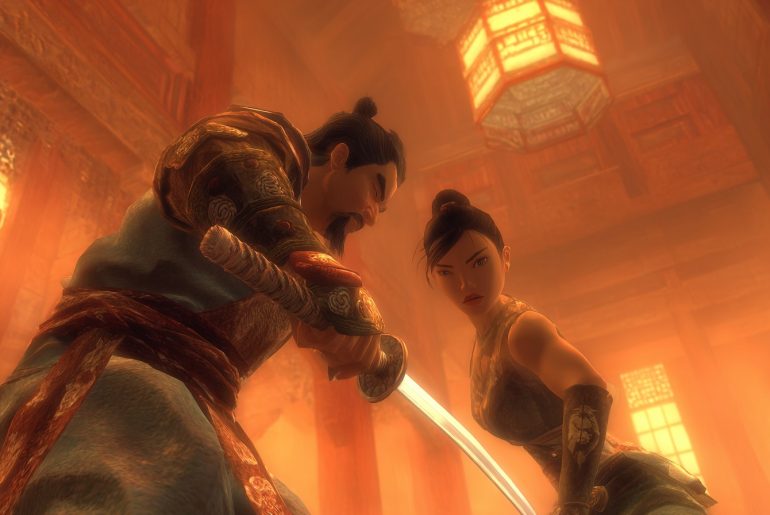
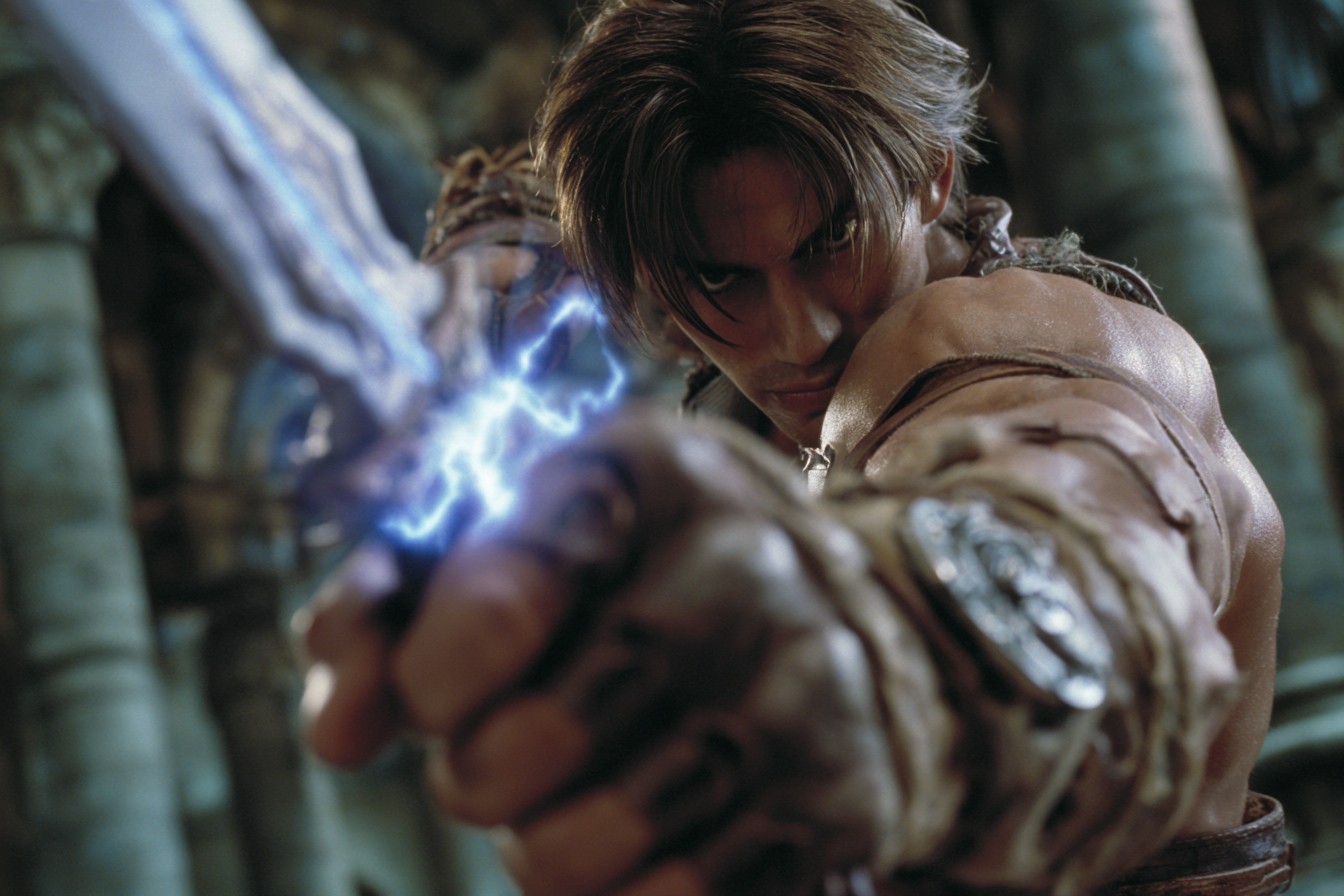
Eight fighters with weapons. That’s the entire pitch. Sophitai has a sword. Mitsurugi has a katana. Voldo has a pair of blades. Cervantes has cutlasses. Ivy has a whip-sword. Astaroth has an axe. Xianghua has a jian. Maxi has nunchaku. The weapons aren’t cosmetic – they change how each character plays fundamentally.
The ring-out mechanic is crucial. This is a 3D fighting game where you can knock opponents off the stage to win. That creates spatial strategy that 2D fighters can’t replicate. You’re not just thinking about combos and cancels – you’re thinking about positioning, distance management, and using the stage edges strategically.
The 3D space means movement isn’t just forward and backward. You can side-step and move in full three dimensions. This creates complexity that’s earned, not arbitrary. A high attack can be dodged by sidestepping or ducking. A mid attack can be sidestepped but not ducked. A low attack can’t be sidestepped. The game teaches these mechanics through play and then rewards your understanding of them.
The Balance That Actually Works
Here’s what impresses me about Soul Calibur’s balance – it achieves balance through diversity rather than homogenization. Every character is different in fundamental ways. Sophitai is all-around solid but has no extreme strengths or weaknesses. Mitsurugi is aggressive but shorter-range. Ivy is technical but slower. Astaroth is powerful but slow. Xianghua is fast but does less damage.
The frame data works. Moves have specific startup and recovery frames. Combos are executable but not infinites. The risk-reward is balanced – powerful attacks leave you vulnerable. Fast attacks do less damage. Everything has tradeoffs that force you to make decisions.
The special moves are diverse. Some are powerful but slow. Some are fast but weak. Some launch for air combos. Some are defensive. Each character has a toolkit that’s completely distinct from other characters. This creates variety in how you approach matchups and forces adaptation.
Why The Arcade Translation Mattered
Soul Calibur started in arcades, and the Dreamcast version is essentially perfect conversion. Same characters. Same balance. Same mechanics. But the home version included additional content – new modes, new character options, adjustments for single-player play that wouldn’t work in arcade tournaments.
This is what a good arcade translation looks like. You’re not compromising the core design. You’re taking what works and building on it for home consumption. The arcade cabinets get tournaments and competitive play. The home version gets depth and single-player content. Both are complete experiences.
The fact that tournament players accepted the Dreamcast version as equivalent to arcade versions tells you everything about how well-translated this was. Fighting game communities are notoriously protective of their arcade sources. If Soul Calibur Dreamcast had any significant changes, competitive players would’ve rejected it. They didn’t.
The Technical Achievement
The 3D graphics look good for 1999. Not cutting-edge, but clean and readable. The character models are detailed. The animation is smooth. The effects are impressive. The backgrounds are detailed without being distracting. Everything is optimized for clarity – you need to see attacks coming in a fighting game, and Soul Calibur prioritizes readability.
The online capability on Dreamcast was technically demanding. Getting a fighting game netcode to work in 1999 was genuinely challenging. The fact that Soul Calibur had online multiplayer on Dreamcast proves Sega understood online gaming infrastructure.
The sound design is excellent. The weapon clashes have impact. The voicework is competent. The music creates atmosphere without being intrusive. Audio feedback is immediate and clear, which matters for competitive play where you’re reacting to multiple sources of information simultaneously.
Does Soul Calibur Still Hold Up?
From a mechanical standpoint, absolutely. The balance is still sound. The movement system still works. The combos are still satisfying. Playing this against modern fighting games, the complexity is simpler but the fundamentals are solid. You can pick this up and have a great fighting game experience.
The graphics are obviously dated. The character roster is small compared to modern fighting games. The single-player content is limited compared to modern standards. But the core fighting game experience is still excellent.
The ring-out mechanic that seemed gimmicky in 1999 is now recognized as one of the best innovations in fighting games. It creates genuine strategic depth and prevents matches from becoming purely combo-focused. Modern 3D fighters still haven’t matched what Soul Calibur achieved with this mechanic.
Why This Matters For Understanding Fighting Games
Soul Calibur proved that 3D fighting games could work if designed carefully. The space-based movement, the weapon diversity, the ring-out mechanic – these weren’t compromises or gimmicks. They were genuine innovations that created depth and variety.
Most 3D fighting games that came after tried to replicate Soul Calibur’s formula and mostly failed because they missed that the success came from careful balance and deliberate design, not just the 3D space. Soul Calibur worked because every system served every other system.
The Verdict
Soul Calibur is a fighting game that proves balance through diversity is superior to balance through homogenization. Eight completely distinct characters that are all viable. A mechanical system that rewards understanding positioning and movement. Frame data that works. Physics that make sense. A difficulty curve that teaches without overwhelming.
This is a game you can pick up competitively or casually and have a great experience. Tournament players can study frame data and optimize combos. Casual players can just enjoy the character variety and spatial strategy. Both audiences are served equally well.
If you’ve never played it, play it and understand why 3D fighting games have been chasing Soul Calibur’s balance for twenty years. If you make fighting games, study how Soul Calibur achieves diversity without sacrificing balance.
Rating: 9/10 – The fighting game that proved 3D and balance aren’t mutually exclusive
Return to our full Dreamcast rankings →

Samuel’s been gaming since the Atari 2600 and still thinks 16-bit was the golden age. Between accounting gigs and parenting teens, he keeps the CRTs humming in his Minneapolis basement, writing about cartridge quirks, console wars, and why pixel art never stopped being beautiful.