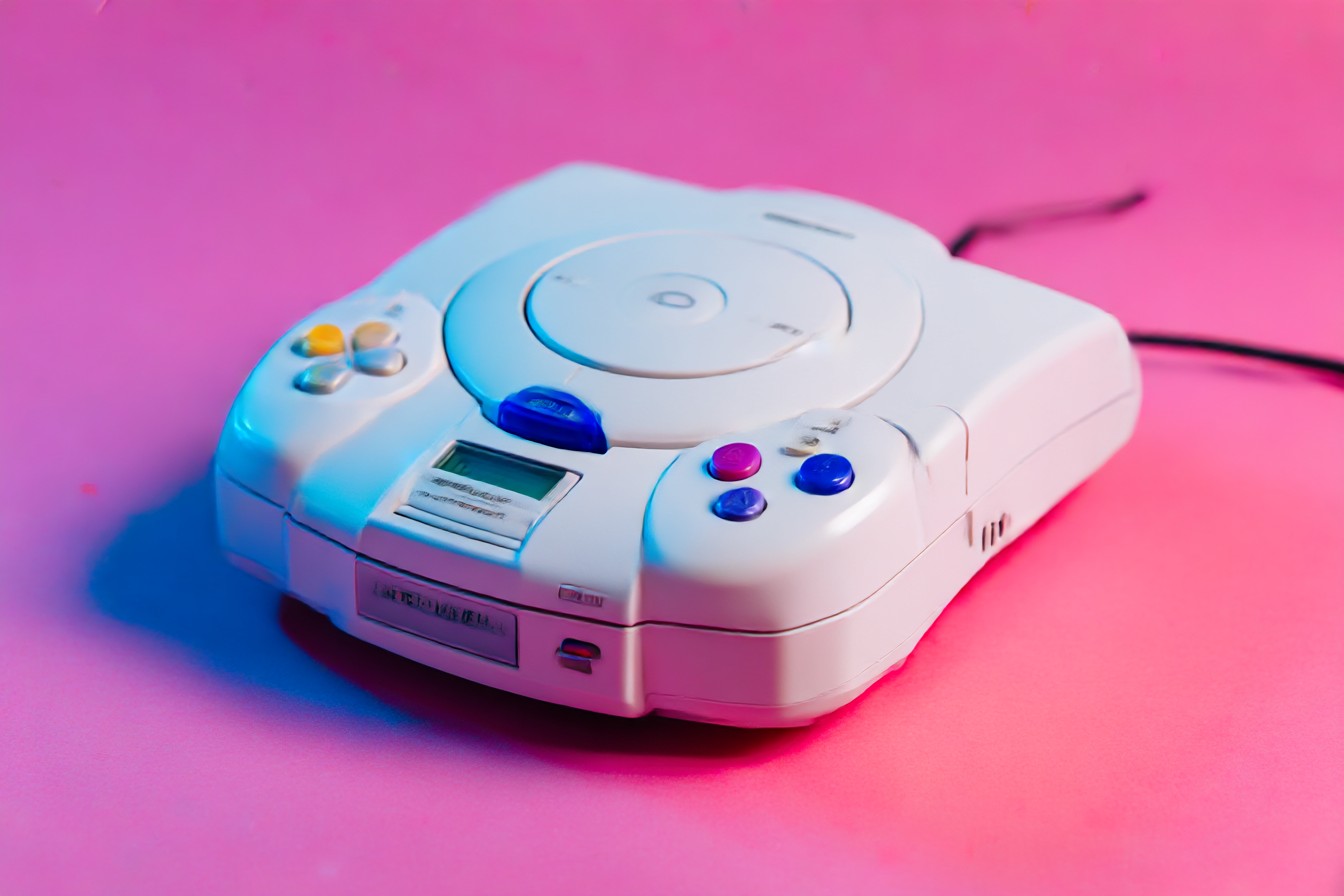
Look, we need to address something immediately – the Dreamcast failed. Commercially, spectacularly, catastrophically failed. Sega released a brilliant console with incredible games at exactly the wrong moment in history. The PlayStation was already entrenched. The PS2 was coming with DVD capability that the Dreamcast didn’t have. The industry had already decided Dreamcast wouldn’t survive, and they were right. By March 2001, Sega had stopped making consoles entirely.
But here’s the thing that makes the Dreamcast fascinating for gaming history – it failed while releasing genuinely excellent software. Not “excellent for a dying console.” Not “impressive given the circumstances.” Just genuinely excellent games that still hold up perfectly. The Dreamcast’s library is small – around 600 games total across its brief existence. But the quality-to-quantity ratio is higher than basically any other console we’ve ranked.
We spent three weeks arguing about which ten games defined the Dreamcast. Not which were most important historically (though they all are). Not which sold best (none of them sold well enough to save the console). But which games represent Sega at their absolute peak – technically, creatively, and philosophically. Because Sega proved something with the Dreamcast that still matters twenty years later: making brilliant games doesn’t guarantee commercial success. Sometimes the market decides your fate before you’ve even shipped.
The Dreamcast launched in 1999 (in Japan) and 1999 (in North America) with a revolutionary approach – built-in modem for internet gaming, GD-ROM media that was cheaper to produce than cartridges, 128-bit power that could compete with PS1 and N64 simultaneously. It was technically impressive. It was commercially doomed.
Quick Rankings
Shenmue – The adventure game that redefined exploration Crazy Taxi – The arcade port that became something more Jet Grind Radio – The art game that influenced an industry Soul Calibur – The fighting game that justified the hardware Power Stone – The 3D fighter that proved innovation matters Skies of Arcadia – The JRPG that competed directly with PlayStation Sonic Adventure 2 – Sonic’s most ambitious 3D attempt Resident Evil: Code Veronica – Survival horror that worked on Dreamcast Phantasy Star Online – The game that created online console gaming Rez – The experimental game that was ahead of everything
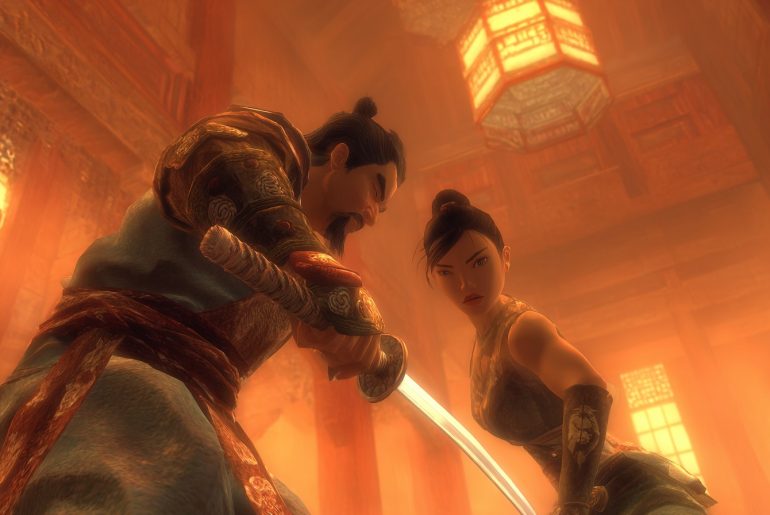
1. Shenmue (1999)
Genre: Adventure | Developer: Sega AM2
Shenmue isn’t just a game – it’s an artifact of what Sega was willing to risk. Yu Suzuki, the legendary designer, got funding for an open-world detective game that would have seemed insane anywhere except Sega. You play Ryo Hazuki, a Japanese teenager whose father was murdered. You’re investigating the murder through a sprawling open world, talking to NPCs, picking up clues, experiencing a story that unfolds across seasons.
What makes it untouchable: The sheer scale of what it attempted. Full voice acting. Day-night cycles. NPC schedules that actually matter. Quick-time events that were genuinely innovative at the time (now they’re everywhere, but Shenmue basically invented them). The stubble system where Ryo ages visibly. Side quests that are actually character stories. A complete world that responds to your actions. The fact that none of it was necessary but all of it was included anyway.
The game isn’t perfect – there’s padding, the pacing drags at points, some mechanics feel clunky. But Shenmue wasn’t trying to be perfect. It was trying to be ambitious, and it absolutely was.
Still holds up? The visuals are dated but charming. The pacing is slower than modern games. The controls are occasionally awkward. But the ambition is undeniable and the story is genuinely engaging. This is a game you play to experience a moment in gaming history where a developer said “we’re going to do something nobody’s asked us to do and we’re going to do it completely.”
Read Carl’s analysis of Shenmue as Sega’s most ambitious risk →
2. Crazy Taxi (2000)
Genre: Arcade | Developer: Sega-AM
Crazy Taxi is an arcade game. That’s the point. Sega took their arcade cabinet and brought it home perfectly. You’re a taxi driver in a colorful city with customers waiting at bus stops. Pick them up, drive them to destinations, get paid based on how fast you complete the ride. Repeat endlessly with increasing difficulty.
What makes it untouchable: The arcade perfection. There’s no story. There’s no complex mechanics. There’s just pure gameplay – pick up passengers, drive fast, get money. The controls are responsive. The game is immediately understandable but mastering it requires genuine skill. The licensed music (The Offspring, Bad Religion, and others) creates atmosphere. The exaggerated driving physics make every turn satisfying. The addictive gameplay loop that keeps you “one more run” playing for hours.
Still holds up? Completely. This is arcade design translated to home console perfectly. Modern games try to add depth to arcade games through mechanics and progression. Crazy Taxi proves that sometimes the arcade formula is perfect as-is.
Read Joe’s defense of Crazy Taxi as the arcade port that elevated its source →
3. Jet Grind Radio (2000)
Genre: Action | Developer: Sega AM2
Jet Grind Radio – or Jet Set Radio in later releases – is a game about graffiti tagging in a colorful stylized city. You’re a street gang member spray-painting buildings, fighting rival gangs, and just causing chaos. On paper, it sounds immature. In execution, it’s genuinely artistic.
The cel-shading visual style was revolutionary. Characters are drawn like living comic book panels. The city is bright and colorful in a way video games weren’t being at the time. The camera pulls back and frames action cinematically. Everything about the presentation said “this is an art game” before art games were really a thing.
What makes it untouchable: The cel-shading that influenced gaming’s entire visual direction afterward. The soundtrack by Hideki Naganuma that’s genuinely excellent. The graffiti mechanics that create actual artistic expression. The style that was so confident it didn’t need realism. The fact that it proved visual innovation could drive a game forward as much as mechanical innovation. This game influenced art direction across the entire industry.
Still holds up? The cel-shading is timeless – it doesn’t look dated because it’s stylistic. The camera is occasionally awkward (a running theme with Dreamcast games). The story is charming without being deep. But the experience is unique and creative in ways most games aren’t even attempting.
Read Timothy’s analysis of Jet Grind Radio’s visual innovation →
4. Soul Calibur (1999)
Genre: Fighting | Developer: Namco
Soul Calibur is a fighting game that was genuinely arcade-perfect. Namco’s arcade cabinet brought home perfectly – the same combos, the same balance, the same characters, the same depth. Eight fighters with distinct fighting styles. Ring-out mechanics that add spatial strategy. Weapon-based combat that’s genuinely different from traditional fighting games.
What makes it untouchable: The fact that this was essentially arcade-perfect conversion to home console. The balance between the eight characters was perfect – every fighter was viable. The 3D ring-out mechanic created spatial strategy that 2D fighters couldn’t replicate. The visuals were crisp and readable. The soundtrack was excellent. The depth was there for people who wanted it – complex combos and frame-data analysis for tournament players, but accessible enough that casual players could have fun.
Still holds up? The graphics are dated. The roster is small compared to modern fighting games. But the core fighting game design is still solid. Every character is viable. Every match feels competitive. Modern fighting game fans can pick this up and have a great experience.
Read Samuel’s technical breakdown of Soul Calibur’s fighting game perfection →
5. Power Stone (1999)
Genre: Fighting | Developer: Capcom
Power Stone is a 3D fighting game that most people have never heard of, which is a genuine tragedy. You have four characters fighting simultaneously in a 3D arena. Objects are scattered throughout the environment – you can pick them up and use them as weapons. The titular Power Stones are collectibles that grant temporary super mode. The whole experience is chaos but controlled chaos.
What makes it untouchable: The complete innovation. Fighting games at the time were either 2D fighters or occasionally 3D but still fundamentally turn-based one-on-one designs. Power Stone said “what if fighting games were chaotic party games?” and executed it perfectly. The balance is surprising – despite the environmental chaos, matches feel competitive. Four simultaneous players, environmental hazards, collectible power-ups, and somehow it all works without feeling random.
Still holds up? Absolutely. The 3D graphics are dated but the design philosophy is timeless. Playing Power Stone now still feels fresh because the genre hasn’t really been explored much since.
Read John’s passionate defense of Power Stone as the fighting game nobody remembers →
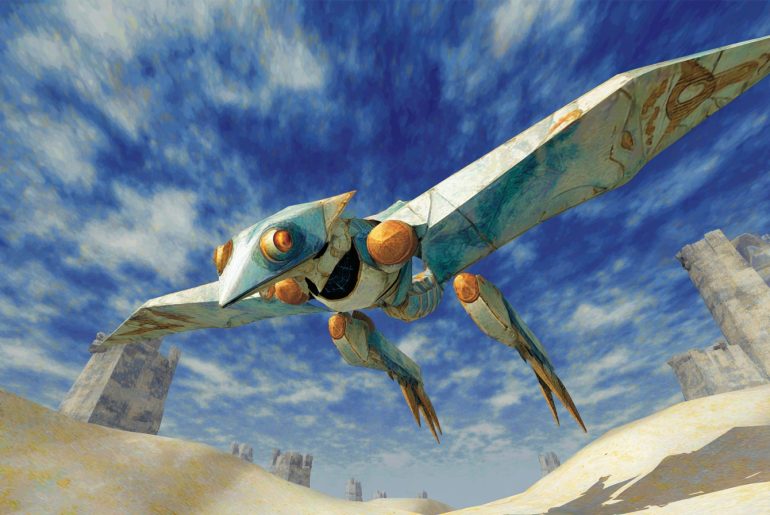
6. Skies of Arcadia (2000)
Genre: JRPG | Developer: Sega
Skies of Arcadia is a JRPG where you’re a sky pirate sailing ships through clouds. It’s genuinely whimsical and earnest in a way that feels almost unique. The story is straightforward – you’re fighting an evil empire – but the execution is charming. Turn-based combat with ship battles. Exploration between battles. Character development through story. This is a JRPG that competed directly with PS1 final fantasies and held its own.
What makes it untouchable: The fact that it’s a genuinely solid JRPG made by Sega on a console everyone thought was failing. The charming world and characters. The ship combat that’s genuinely engaging. The difficulty balance that’s actually fair. The length (40+ hours easily) that respects your time investment. The fact that this exists as proof of Sega’s software competence despite their commercial failure.
Still holds up? Completely. The turn-based combat hasn’t aged. The character development is still engaging. The world is still charming. The pacing is still good. This is a game that should have been played by more people but wasn’t because of console wars and marketing failure.
Read Joe’s historical context on Skies of Arcadia as the JRPG that could’ve been →
7. Sonic Adventure 2 (2001)
Genre: Action | Developer: Sonic Team
Sonic Adventure 2 is Sonic’s most ambitious 3D attempt. Six playable characters with distinct gameplay styles. Treasure hunting stages with Knuckles and Rouge. Shooting stages with Tails and Eggman. Running stages with Sonic and Shadow. The story where Sonic and Eggman are imprisoned and the real villain is something else entirely. The chaos emerald collecting that’s elaborate and rewarding.
What makes it untouchable: The sheer scope and ambition. Not everything works perfectly – the camera gets weird sometimes, some mechanics feel experimental – but the attempt is genuinely bold. The music by Naganuma and others is genuinely excellent. The character variety creates genuine replayability. The fact that Sonic’s 3D adventure had more visual variety and mechanical variety than most action games.
Still holds up? Partially. Some mechanics are awkward. The camera fights you occasionally. But the character variety, the music, the ambition – it all still resonates. This is Sonic at his most creative even if not his most polished.
Read Carl’s analysis of Sonic Adventure 2 as Sega’s bravest Sonic experiment →
8. Resident Evil: Code Veronica (1999)
Genre: Survival Horror | Developer: Capcom
Resident Evil: Code Veronica proved that survival horror could work on the Dreamcast. You’re Chris Redfield (or Claire Redfield) investigating a secret military facility overrun with bioweapon experiments. Tank controls. Item management. Puzzle solving. Survival horror mechanics that were proven on PlayStation but work just as well on Dreamcast.
What makes it untouchable: The fact that it’s a genuinely solid survival horror game made by Capcom that justified Dreamcast’s hardware capability. The environments are detailed. The creature designs are genuinely unsettling. The puzzles are engaging without being frustrating. The difficulty balance is fair. This is what happens when a proven formula gets decent hardware and competent execution.
Still holds up? The controls are tank-based which feels clunky to modern sensibilities. The fixed camera angles can be awkward. But the atmosphere, the design, the execution – it’s still a solid survival horror experience.
Read Timothy’s technical analysis of how Code Veronica worked on Dreamcast →
9. Phantasy Star Online (2000)
Genre: Online RPG | Developer: Sonic Team
Phantasy Star Online is historically important – it was one of the first online console RPGs that actually worked. You create a character, fight monsters, gain experience, improve equipment. Multiplayer where you can team up with other players online. A simple game design that was revolutionary for consoles at the time.
What makes it untouchable: The fact that this created the template for online console gaming. Network adapters, modem connectivity, dedicated servers – PSO proved all this could work on console. The gameplay is straightforward but engaging. The gear progression is satisfying. The boss fights are challenging and rewarding. The fact that this game proved Sega understood online gaming architecture was ahead of its time.
Still holds up? The servers are gone but the game is still technically impressive as a demonstration of online architecture. Playing the single-player offline version shows that the core gameplay loop was solid even without online functionality.
Read Samuel’s technical breakdown of Phantasy Star Online’s online architecture →
10. Rez (2001)
Genre: Rail Shooter | Developer: Sega AM2
Rez is basically an abstract rail shooter where you’re flying through a cyberspace environment destroying obstacles and enemies. Visually it’s minimalist – geometric shapes, bright colors, clean lines. The soundtrack pulses with the action. The game is a synesthetic experience where audio and visuals are completely integrated.
What makes it untouchable: The absolute fearlessness of the design. This is an experimental game made by a major studio on a console that was already failing. Rez could have been a disaster but it’s actually brilliant. The minimalist aesthetic that’s still timeless. The integration of music and gameplay that influenced countless games after. The fact that this game proves Sega was willing to take risks on art games.
Still holds up? Completely. The minimalist aesthetic is timeless. The synesthetic integration of music and gameplay is still effective. The game is short and focused. This is what happens when developers trust players to appreciate experimental design.
Read John’s defense of Rez as the experimental game that was ahead of everything →
The Games That Didn’t Make It (And Why Dreamcast’s Failure Matters More)
Grandia II. Jet Set Radio Future. Shenmue II. F355 Challenge. Evolution. Confidential Mission. Cannon Spike. Propeller Arena. The Dreamcast library has dozens of genuinely good games that didn’t make this top ten. That’s actually remarkable for a console that only existed for two years.
But here’s what we need to acknowledge – the Dreamcast failed not because the games weren’t good. It failed because the market was already decided. The PS2 was coming with DVD capability. The Dreamcast couldn’t compete on hardware advancement. Third-party support was wavering. Sega had financial problems. The math didn’t work no matter how good the software was.
This list is bittersweet because it represents a console that proved one thing definitively – making great games doesn’t guarantee commercial success. The Dreamcast died while releasing gems. Some of those gems influenced the entire industry afterward (Jet Grind Radio’s cel-shading, Phantasy Star Online’s online infrastructure, Shenmue’s ambition). But commercial success? That’s determined by factors outside of developer control.
If you’ve never experienced these games, seek them out. They’re proof of a moment in gaming history when Sega understood software excellence but couldn’t translate that excellence into hardware dominance. It’s a tragedy and a masterclass simultaneously.
Individual game deep-dives written by whichever New Player Ready crew member fought hardest to keep the Dreamcast alive through their passion for these games. Because sometimes the best games exist on the worst-timed consoles, and that’s worth remembering.
New Player Ready