I spent fifteen years in IT management understanding that sometimes the best systems are the ones that embrace constraint rather than fighting it. Rez is a system that embraces its constraints – abstract visuals, minimal gameplay mechanics, heavy musical integration – and creates something that’s more engaging because of those constraints rather than despite them.
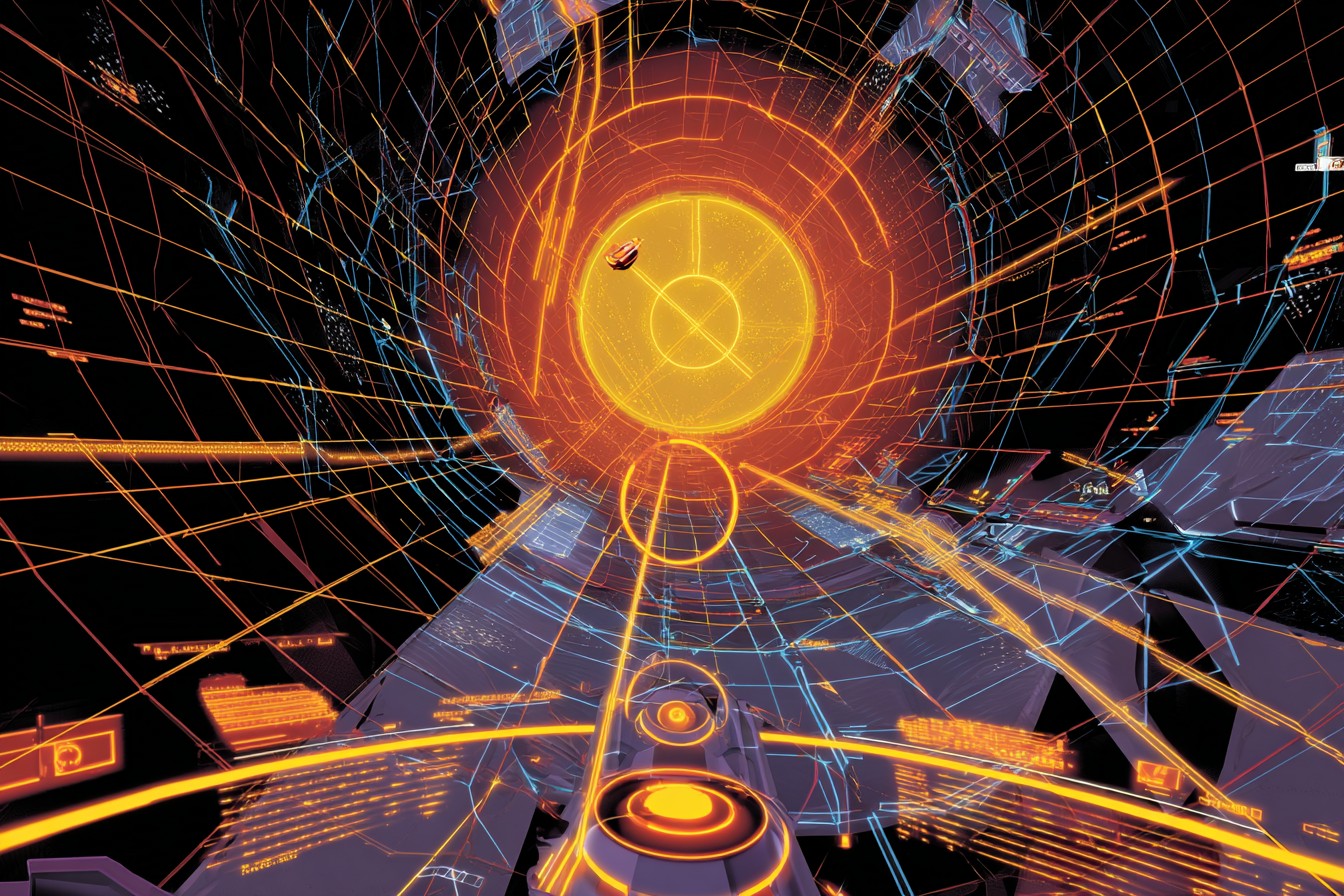
Rez is a rail shooter in an abstract cyberspace environment. You’re flying through geometric shapes and fighting abstract enemies by targeting and destroying them. The entire experience is synchronized with an electronic music soundtrack. The game is basically meditation rendered as gameplay. It shouldn’t work at all. It absolutely does.
What Rez Actually Is
You’re flying through abstract cyberspace destroying obstacles and enemies. The levels progress visually – starting geometric and minimal, gradually becoming more complex and colorful. Each zone has distinct aesthetic and distinct audio. The gameplay is simple but the experience is absorbing.
Targeting system is straightforward – you lock onto enemies and press a button. The more enemies you target simultaneously before firing, the bigger the effect. You’re not just fighting mechanically – you’re creating rhythmic patterns because timing your attacks to the beat of the music is more satisfying. The game doesn’t require this synchronization but naturally encourages it.
The visual language is minimalist. Clean lines. Primary colors. Geometric shapes. Nothing realistic, nothing attempting to be. Everything is abstract and intentional. As you progress, the environments become more detailed and colorful. By the final level, you’re in a riot of color and pattern. It’s not random – it’s carefully choreographed visual progression.
Why Synaesthetic Game Design Matters
Rez understands something that most games ignore – game design can integrate music as a core mechanic rather than just soundtrack. The music doesn’t underscore the action. The music IS the action. You’re responding to rhythm. You’re creating patterns. You’re collaborating with the composer to create the experience.
This is genuinely innovative game design. Not many games since have attempted this level of music integration. Rez basically pioneered the idea that games could be musical experiences rather than just games with music.
The difficulty curve is deliberately flat because Rez isn’t about challenge. It’s about engagement with the system. You’re not trying to win – you’re trying to experience the journey. The game doesn’t punish failure – it just lets you keep playing. You can technically “lose” but the game continues regardless, which removes mechanical threat and focuses you on the experience.
The Design Philosophy Of Fearlessness
What impresses me about Rez is the complete confidence in the concept. This is an experimental game made by a major publisher on a console that’s already dying. Most studios would play it safe. Sega said “let’s make an abstract rail shooter that’s basically a meditation game” and executed it perfectly.
The color palette shifts with the music. The visual intensity correlates with audio intensity. The game’s score by Yoko Shimomura is genuinely excellent – not just effective game music but actually compelling composition that works as standalone music.
The Trance Vibrator accessory that provided haptic feedback is honestly kind of ridiculous in premise but genuinely adds to the experience. Feeling the game pulse with the music is synesthetic design in hardware form.
Does Rez Still Hold Up?
Completely. The controls are responsive. The visuals are timeless because they’re deliberately abstract rather than trying to be cutting-edge realistic. The music is genuinely good. The concept is engaging. Playing this now, you understand why it mattered despite being so experimental.
The difficulty is negligible which some might find frustrating but that’s the entire point. This isn’t meant to be a challenge. It’s meant to be an experience. Understanding that design philosophy changes your perspective on the game dramatically.
The game is short – probably 60-90 minutes – but density of experience matters more than length. You’re not bored during Rez. You’re engaged with the system from start to finish. There’s no padding or unnecessary length.
The Technical Achievement
What’s technically impressive about Rez isn’t flashy – there are no cutting-edge graphics or physics. But the syncing of visuals to audio in real-time while maintaining consistent frame rate is genuinely clever. The particle effects that explode in rhythmic patterns synchronized to the beat. The color shifts that pulse with music intensity.
The minimalist approach actually demands technical competence. Everything visible is intentional. There’s no detail to hide technical limitations. The clarity of the design is achieved through careful optimization and deliberate choices about what matters and what doesn’t.
Why This Matters For Understanding Game Design As Art
Rez proved something important – games can be artistic expression that prioritizes experience over mechanics. This isn’t a game designed around challenge or progression. It’s designed to create a specific emotional and sensory experience. That’s legitimately valid game design even if it violates traditional “game” conventions.
Modern indie games understand this lesson. Games like Journey or Flower or Abzû learned from Rez that games don’t need challenge to be engaging. They need intention and commitment to vision. Rez demonstrated that principle at a time when most people still thought games were just about win conditions.
The Tragedy And Beauty Of Rez
Here’s what makes Rez bittersweet – this shipped on a console that was already dying. Dreamcast’s failure meant Rez didn’t reach the audience it should have. But the people who did experience it were genuinely moved by it. It became a cult classic because it was genuinely unique and genuinely well-executed.
That fate – brilliant game on dying hardware that finds devoted audience years later – is probably the perfect fate for something so experimental. Rez doesn’t need mass market success to matter. It just needed to exist and prove that this approach was possible.
The Verdict
Rez is a game that proves fearless experimental design can create something genuinely engaging even when that design violates conventional game wisdom. The synesthetic integration of music and visuals. The minimalist aesthetic that never feels sparse. The removal of challenge in favor of pure experience. The absolute commitment to concept.
This is what happens when a major developer decides to fund something genuinely artistic and trusts the team to execute it. Rez is proof of that possibility, proof that games can be art without compromise, and proof that commercial failure doesn’t determine artistic success.
If you’ve never played it, seek it out and experience something deliberately different. If you’re creating games, study how Rez commits completely to its vision and executes that vision perfectly. That’s how you make genuinely unique art.
Rating: 9/10 – The experimental game that proved Dreamcast understood artistic vision
Return to our full Dreamcast rankings →

John grew up swapping floppy disks and reading Amiga Power cover to cover. Now an IT manager in Manchester, he writes about the glory days of British computer gaming—Sensible Soccer, Speedball 2, and why the Amiga deserved more love than it ever got.