Here’s the thing about Final Fantasy VII that people who didn’t live through 1997 don’t understand – this game was a cultural moment. Not just in gaming. In mainstream culture. People who’d never played a video game heard about FFVII. Cloud became iconic. Aerith’s death scene had people genuinely devastated. The marketing was everywhere. This wasn’t just a game – it was a phenomenon that proved gaming was ready for mainstream acceptance.
I teach history, so I understand the difference between important and hyped. FFVII is both. It’s genuinely important – it legitimized JRPGs in the west and proved that video games could tell emotionally complex stories. But it’s also become mythologized to the point where some people dismiss it as “hype over substance.” That’s missing the point. The hype was a response to genuine quality, not a substitute for it.
What Final Fantasy VII Actually Does
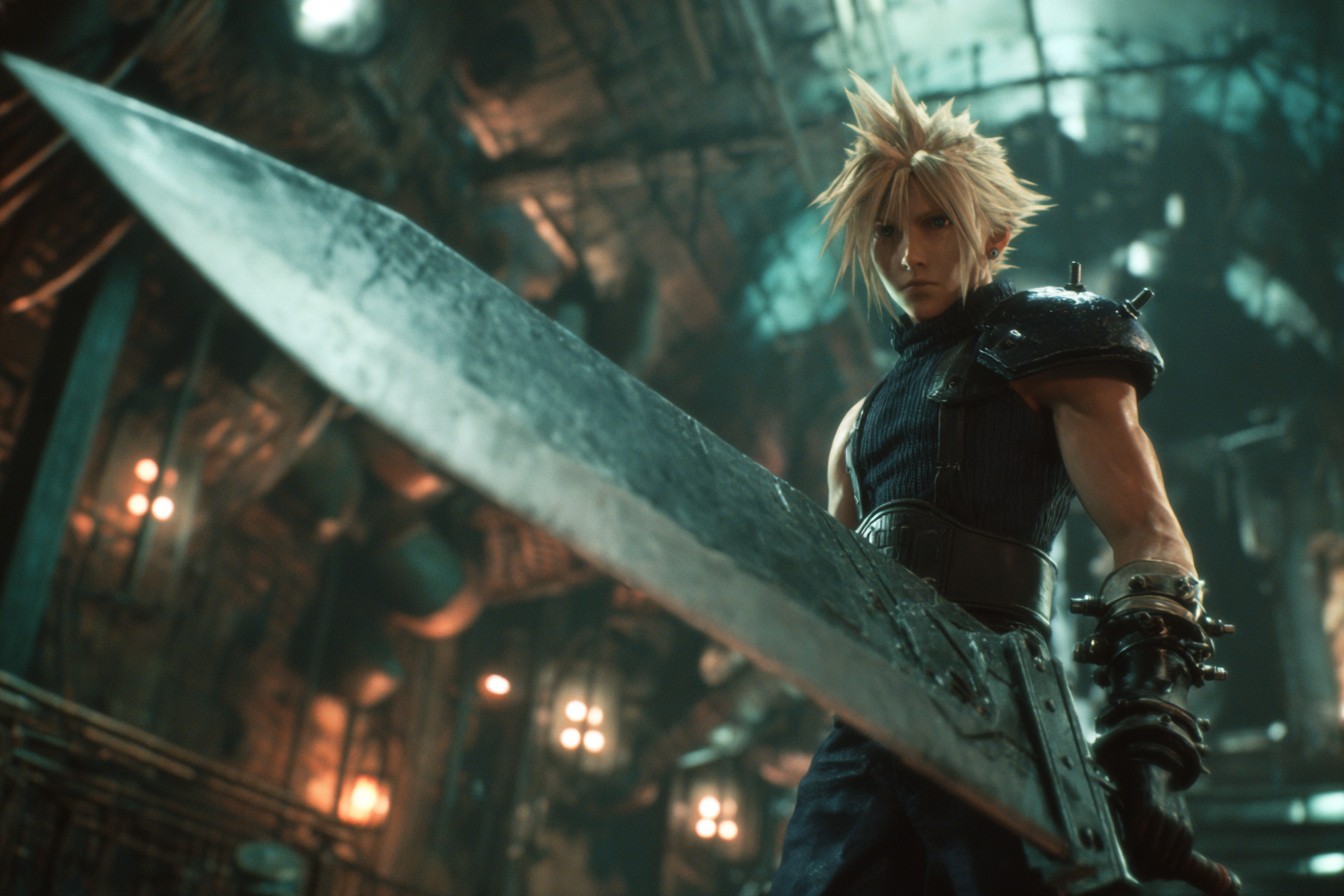
You’re Cloud, a former soldier with complicated feelings about his past and identity, trying to stop Shinra Electric Power Company from destroying the planet. The story spans over 120 hours easily if you’re engaging with content. You travel the world in an airship. You infiltrate enemy bases. You meet allies with genuine character development. The world feels massive and alive because it actually is – there’s always something to discover, some NPC with a story, some hidden area worth exploring.
The Materia system lets you customize magic and abilities however you want. Materia are gems that grant spells and passive bonuses. You equip them on your characters and they learn the spells. Different materia combinations create different builds. You’re not locked into character archetypes – you can make Cloud a mage, Tifa a healer, Aerith a physical attacker. The system respects player agency completely.
The Limit Break system gives each character distinct ultimate abilities tied to their character development. Cloud’s Limit Breaks reflect his struggle with identity. Aerith’s reflect her spiritual nature. Barret’s reflect his protectiveness. These aren’t just mechanical conveniences – they’re character expression through gameplay.
Why The Story Actually Matters
People debate whether FFVII’s story is sophisticated or just emotionally manipulative. I’d argue that distinction misses the point. The story makes you care about these characters through interaction with them across 120 hours. You’re not being manipulated – you’re being invested in their journey. That investment makes the emotional beats land regardless of whether the narrative structure is complex.
Without spoiling anything, there’s a major character death that genuinely devastated players. People talk about it twenty-five years later. That’s not hype – that’s evidence that the story created genuine connection. The main villain, Sephiroth, became iconic because the game committed to making him genuinely threatening and philosophically complex, not just evil for evil’s sake.
The world design creates atmosphere. Each location feels distinct visually and thematically. The pre-rendered backgrounds are beautiful and detailed. The music by Nobuo Uematsu is phenomenal – “One-Winged Angel” is probably the most iconic video game boss theme ever created. “Aerith’s Theme” might be the most emotionally resonant video game music ever written.
The Technical Achievement For 1997
What people sometimes overlook is the technical accomplishment. The game pushed PlayStation hardware hard. Pre-rendered backgrounds that were detailed and beautiful. 3D character models that were detailed considering the constraints. Magic effects that were elaborate. Cutscenes that were actually impressive for 1997. The game looked cutting-edge when it released and the aesthetic holds up because the art direction was strong.
The disc capacity allowed for a massive game with voice acting, cinematics, detailed worlds, and extensive story content. This was what CD-based gaming made possible that cartridges couldn’t – scope without compromise. FFVII represented that capability perfectly.
Does Final Fantasy VII Still Hold Up?
The polygonal character models are dated. Cloud’s hair is famously spiky because that hid technical limitations of the modeling. The character proportions are exaggerated. But the animation is good and the art direction is strong enough that you stop noticing after about an hour.
The story is still engaging. The characters still feel developed. The Materia system is still interesting and rewarding. The difficulty curve is fair – it doesn’t spike brutally and you’re never stuck for long. The pacing is deliberate without being slow. Playing this now, you understand why people were so invested.
The minigames are genuinely good distractions. The weapon upgrade system is satisfying. The side content is optional but interesting. The exploration is rewarded constantly. The game respects your time investment.
Why This Game Mattered Culturally
FFVII proved to mainstream culture that video games could tell sophisticated, emotionally resonant stories. It wasn’t the first game to do this, but it was the first to do it at scale with mainstream appeal. Millions of people who’d never cared about video games suddenly cared. Parents who’d dismissed gaming as childish suddenly understood that games could be art.
This matters because it legitimized the medium. FFVII’s success meant that developers could pursue ambitious storytelling without being dismissed as frivolous. It meant studios would fund JRPGs because they understood the market existed. It meant gaming could grow beyond its niche.
The Verdict
Final Fantasy VII is a game that deserves its legendary status, even if that status sometimes obscures actual appreciation for the design. The story is genuinely engaging. The characters develop meaningfully across 120+ hours. The Materia system respects player agency. The world feels massive and explorable. The difficulty is fair. The music is phenomenal. The pacing is deliberate without dragging.
This is a game where hype and quality actually align. It’s important because it changed gaming culturally and commercially. But it’s also genuinely good as a pure game experience. Both things are true.
If you’ve never played it, play it understanding that it’s a 120+ hour commitment. This isn’t a game to rush through – it’s meant to be experienced slowly. If you played it as a kid, replay it and appreciate how much depth you probably missed. If you dismiss it as overhyped, engage with it on its terms and you might understand why it mattered so much.
Rating: 10/10 – The game that proved video games could change mainstream culture
Return to our full PlayStation 1 rankings →

Joe’s a history teacher who treats the console wars like actual history. A lifelong Sega devotee from Phoenix, he writes with passion, humor, and lingering heartbreak over the Dreamcast. Expect strong opinions, bad puns, and plenty of “blast processing.”