Here’s something I teach in my history classes – innovation requires risk-taking, and risk-taking produces both failures and masterpieces. Chrono Cross is a masterpiece produced through genuine risk-taking. It’s the sequel to Chrono Trigger, one of the most beloved JRPGs ever made. So what does Square do? They make a completely different game that dares to not be Chrono Trigger Part 2.
Instead of one protagonist, you have 45 recruitable party members. Instead of saving the world from apocalypse, you’re navigating political intrigue and philosophical questions about fate and choice. Instead of straightforward story, the narrative is complex and involves parallel dimensions and existential philosophy. This was a bold gamble on a new console generation. The fact that it worked at all is genuinely impressive.
What Chrono Cross Actually Does
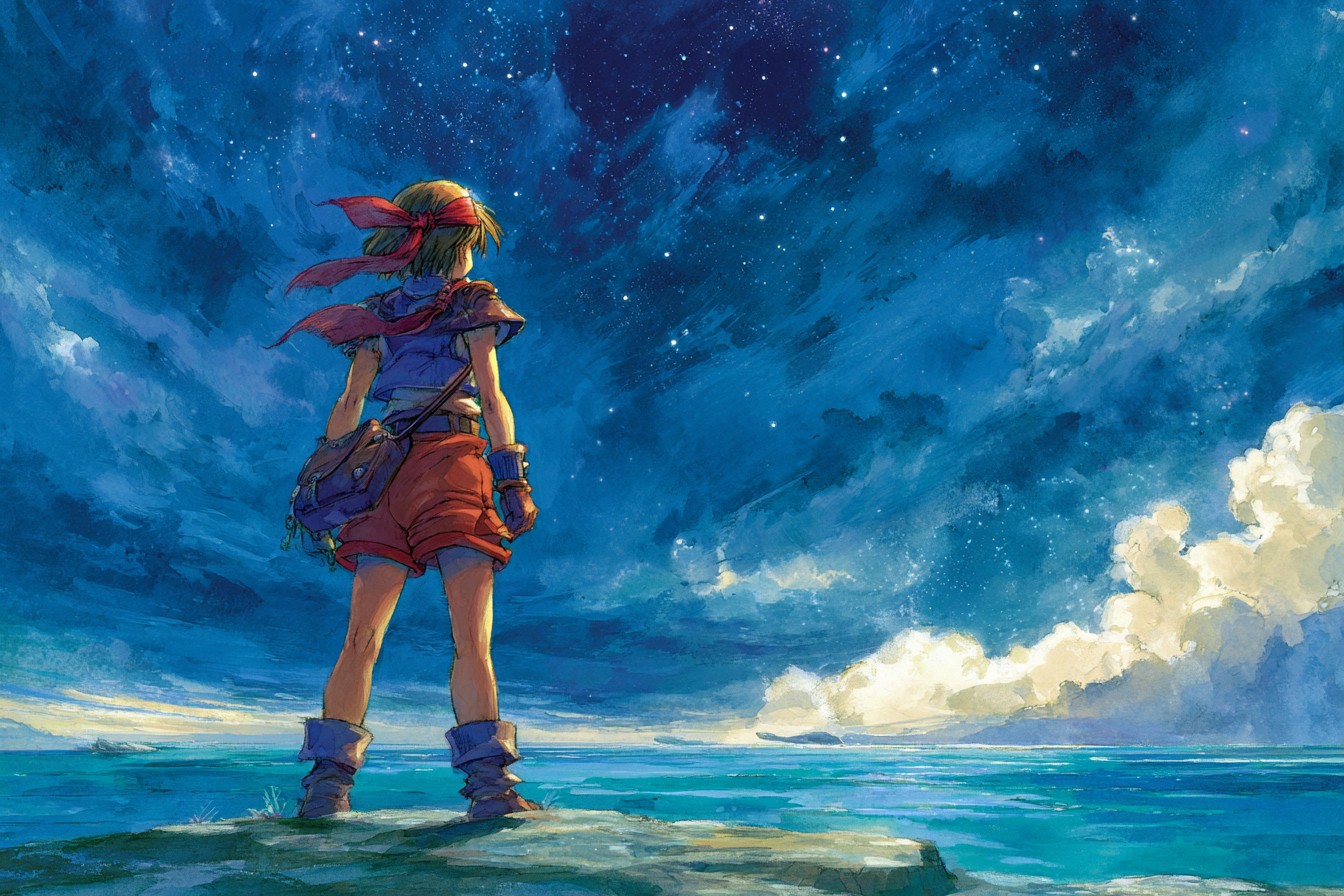
You’re Serge, a young man from a fishing village who gets involved in dimensional travel and political conspiracy. The story spans multiple dimensions – the Home World and the Other World. Characters have different versions in different dimensions. The political conflict between nations creates the backdrop. But the real conflict is about fate versus choice and whether free will is possible.
The element system is unique. Instead of traditional MP, you have elements that grant spells and abilities. The double and triple switches determine which character is active and how they combine their abilities. You can switch characters mid-battle, creating strategic flexibility. The system is complex without being overwhelming.
You recruit 45 different party members. Every single one has personality and character development. Some are recruitable only in specific dimensions. Some require specific conditions to join. Every character has their own backstory and motivations. This creates genuine variety in how you approach the game – different party compositions create different gameplay experiences.
Why This Sequel Dared To Be Different
Here’s what I appreciate about Chrono Cross from a historical perspective – it proved that sequels didn’t have to recapture what made the original special. They could forge their own path and respect the original by being bold rather than by imitating.
Chrono Trigger was about saving the world from apocalypse. Chrono Cross is about whether you can change the past and whether changing it is good. That’s a fundamentally different philosophical question. The game commits to exploring that question through story and mechanics simultaneously.
The element system isn’t just mechanically interesting – it’s philosophically interesting. Elements represent different forces and approaches. Using elements differently creates different strategic approaches. The mechanic serves the narrative philosophy of choice and variation.
The Ambition That Mostly Lands
The story is complex. It involves multiple dimensions, reincarnation, philosophical questions about choice and fate, and genuinely unexpected plot twists. Not every moment lands perfectly – some late-game revelations feel unearned. But the ambition is undeniable. This is a JRPG that’s trying to say something philosophically complex rather than just telling a hero’s journey.
The music by Yasunori Mitsuda is phenomenal. The soundtrack is diverse – from orchestral themes to electronic pieces to cultural instruments. Every piece serves the game’s atmosphere perfectly. The opening theme is iconic and establishes the game’s identity immediately.
The character interactions create genuine personality for the party members. Even though you have 45 characters, none of them feel generic. The writing differentiates them clearly. The voice acting (in some versions) brings personality to characters.
Does Chrono Cross Still Hold Up?
The story is genuinely engaging. The character variety is still impressive. The element system is still interesting. The music is genuinely excellent. The graphics have aged but the art direction is strong.
The pacing is excellent. Story beats hit at the right moments. Character development unfolds naturally. Difficulty escalates appropriately. Playing this now, you understand why people still celebrate this game despite its differences from Chrono Trigger.
The ending is divisive – some find it philosophically satisfying and some find it confusing. But regardless of whether you love it or hate it, it’s clear that the developers were trying to say something meaningful rather than just delivering a conclusion.
Why Risk-Taking Matters
From a history perspective, Chrono Cross matters because it proved that risk-taking on sequels could work. Not every bold gamble succeeds, but refusing to gamble guarantees mediocrity. Chrono Cross gambled on being completely different and mostly succeeded.
The game influenced how developers think about sequels. Innovation doesn’t mean recapturing what worked before – it means pushing in new directions. Modern sequels understand this lesson partly because of Chrono Cross’s willingness to be genuinely different.
The Verdict
Chrono Cross is an JRPG that proves ambitious sequel design can work. The 45 party members create genuine variety. The element system is mechanically and philosophically interesting. The story is complex and philosophically engaged. The music is phenomenal. The characters are well-developed.
This is not Chrono Trigger 2. It’s Chrono Cross – a completely different game that respects the original by being bold rather than by imitating. That boldness creates an experience that’s genuinely unique and genuinely engaging.
If you’ve never played it, approach it as its own game rather than Chrono Trigger’s sequel. If you played it and bounced off the complexity, replay it and try to understand what the designers were trying to say. If you make sequels, study Chrono Cross as an example of how to honor an original while pushing in completely new directions.
Rating: 9/10 – The sequel that dared to be completely different
Return to our full PlayStation 1 rankings →

Joe’s a history teacher who treats the console wars like actual history. A lifelong Sega devotee from Phoenix, he writes with passion, humor, and lingering heartbreak over the Dreamcast. Expect strong opinions, bad puns, and plenty of “blast processing.”