I've got this theory that the best cooperative games aren't the ones where you're constantly in sync, performing some beautiful ballet of coordinated moves. No, the really memorable ones are where you're both slightly out of step, bumping into each other, accidentally ruining each other's stealth approaches, and somehow still managing to pull off the impossible. That's exactly what made Bonanza Bros on the Mega Drive so bloody brilliant.
Picture this: me and my mate Dave, both about twelve, hunched over his older brother's console on a Saturday afternoon that stretched like elastic. The rain was doing that proper British thing where it's not quite heavy enough to call off football but definitely heavy enough to make staying indoors feel like a victory. Dave's mum had made us Ribena that was basically purple sugar water, and we'd nicked a packet of digestives from the kitchen tin. Perfect gaming conditions.
Bonanza Bros wasn't like anything we'd played before. Most games back then, if they bothered with two players at all, either had you taking turns or competing against each other. This was different. You were Mobo and Robo – these weird cartoon burglars who looked like they'd escaped from a Saturday morning cartoon – and you had to work together to pull off heists across thirteen increasingly mental levels.
The genius wasn't in the complexity, though. God knows the Mega Drive had plenty of games trying to be clever with their mechanics. Bonanza Bros was pure in its simplicity: sneak past guards, avoid security cameras, grab the loot, get to the exit. But doing it with two players? That's where the magic happened.
I'll never forget the first time we tried the bank level. There's this guard walking his patrol route, right? Standard stuff. In a single-player game, you'd time his movement, slip past when his back's turned, job done. But with two of you? Dave would be hiding behind one corner, I'd be crouched behind a filing cabinet, and we'd both make our moves at exactly the wrong moment. I'd dart out just as the guard turned around, Dave would panic and run straight into a camera, and suddenly the whole level would be chaos – alarms blaring, security guards rushing about like angry wasps.
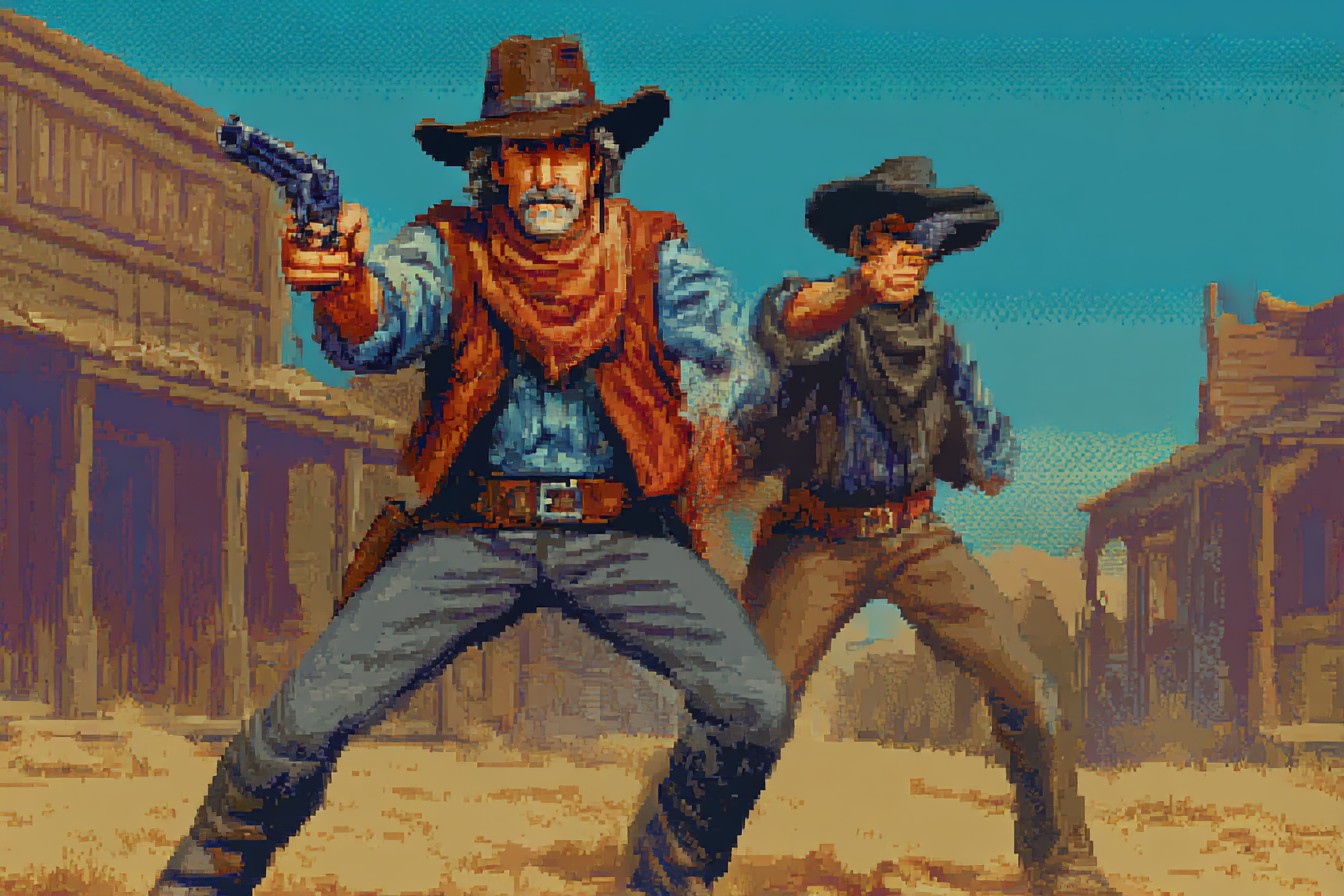
But here's the thing – that chaos was brilliant. The game had this wonderful way of making your mistakes feel like part of the plan. When everything went sideways, you'd end up improvising these ridiculous escape routes. Dave would create a distraction by deliberately setting off an alarm on one side of the building while I grabbed the cash on the other. Or I'd accidentally knock out a guard with a thrown object (the game let you chuck all sorts of random stuff), opening up a path we hadn't even considered.
The sound design deserves a mention here. That Yamaha chip in the Mega Drive had a particular way with percussion, and Bonanza Bros used every bit of it. The footsteps had weight, the alarm sounds were genuinely alarming, and when you successfully grabbed a piece of loot, there was this satisfying little chime that made you feel like you'd actually accomplished something. Even now, decades later, I can hear that exact sound effect in my head.
What really set it apart from other cooperative games was how it handled failure. Most games punished you for messing up – lives lost, progress reset, that sort of thing. Bonanza Bros seemed to understand that half the fun was in the screwups. Getting caught wasn't game over; it was just the start of a different kind of level. Suddenly you're both running like mad, dodging bullets, trying to find another way out. Some of our best gaming memories came from those moments when the careful stealth plan fell apart and we had to wing it.
The variety kept things fresh, too. One minute you're sneaking through a casino, trying to avoid the pit bosses and security cameras. Next, you're infiltrating some kind of research facility with laser barriers and robot guards. Each environment had its own rhythm, its own particular challenges. The shopping mall level was mental – guards everywhere, civilians wandering about, escalators that could help or hinder depending on timing. Dave and I must have played that one fifty times, trying different approaches.
Looking back, I think what made Bonanza Bros special was how it captured something essential about being a kid with a best mate. It wasn't about being perfect or following some predetermined strategy. It was about having a laugh, making mistakes, covering for each other when things went wrong, and celebrating when they went right. The game understood that cooperation doesn't mean moving in perfect harmony – it means adapting to whatever chaos your partner creates.
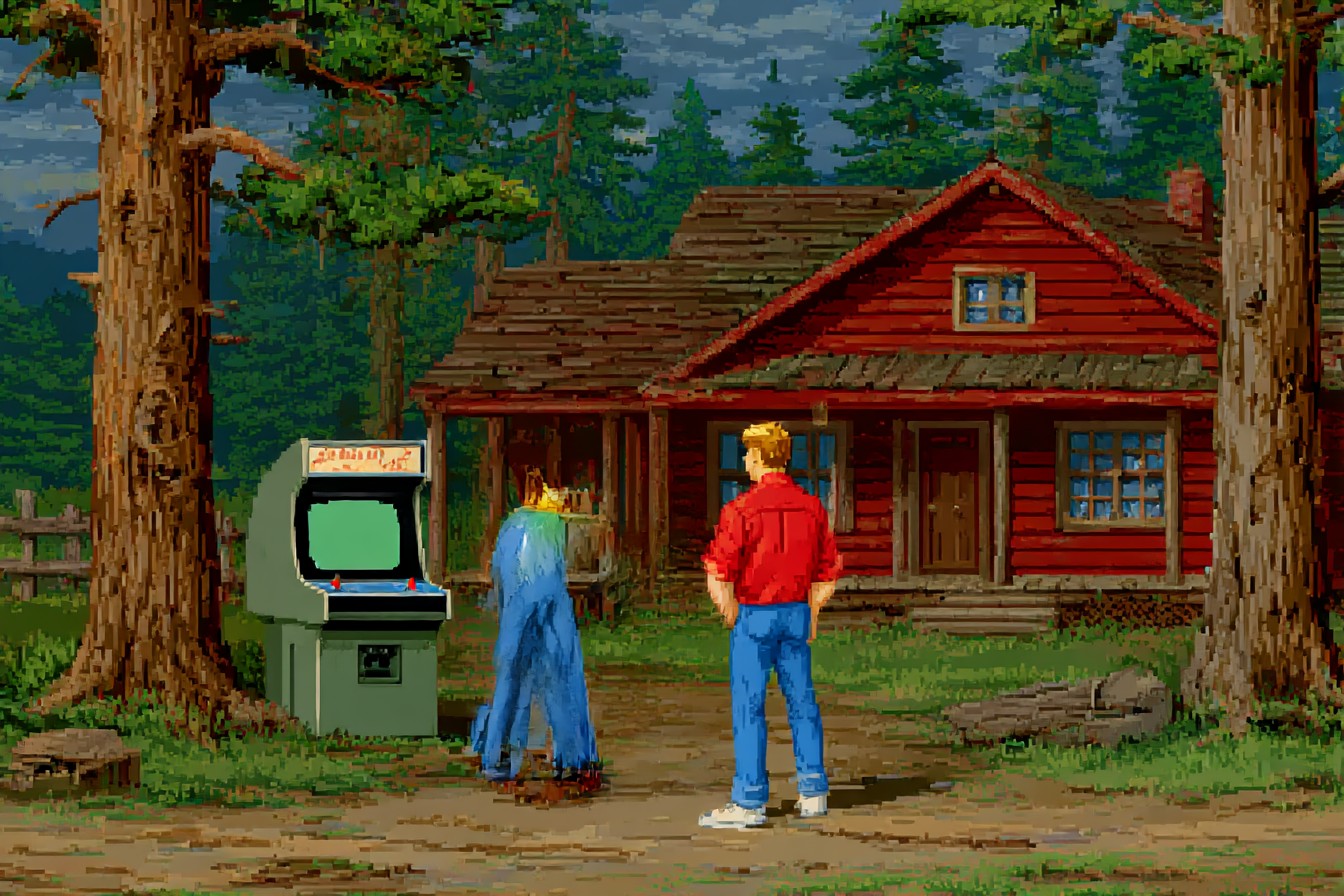
The graphics had this lovely cartoony style that perfectly matched the tone. Nothing too serious, nothing too violent – just two goofy characters having adventures. The animation was smooth, the colors were bright, and everything moved with a kind of bouncy energy that made even failure feel lighthearted. It looked like the kind of caper movie we'd watch on a Sunday afternoon, all bumbling criminals and slapstick escapes.
Years later, I tried playing it on emulation, just for nostalgia's sake. It still held up, but something was missing. The magic wasn't really in the game itself – it was in that shared experience, that specific combination of friendship and discovery and too much sugar on a rainy afternoon. You can't emulate that, no matter how perfect your scanline filters are.
But that's what makes games like Bonanza Bros so valuable. They remind us that the best gaming experiences aren't always about the latest graphics or the most complex mechanics. Sometimes they're about finding the perfect balance between challenge and fun, between individual skill and teamwork. Sometimes they're about creating space for laughter, for mistakes, for those moments when everything comes together in ways you never expected.
Dave and I are still mates, by the way. We don't see each other as much as we used to – life, jobs, families, the usual. But whenever retro gaming comes up in conversation, one of us always mentions Bonanza Bros. "Remember that mad escape from the museum level?" "What about when you got stuck in that lift?" The game gave us a shared language of ridiculous moments, and that's worth more than any high score.