Here’s something I teach in my history classes – sometimes the best adaptations of existing franchises come from developers who aren’t afraid to ignore the source material’s most famous characters. Knights of the Old Republic proves this perfectly. BioWare made a Star Wars game that’s excellent not because it leverages Luke Skywalker or Darth Vader, but because it creates genuinely compelling original characters and tells a story that respects player agency through moral choice.
Before KOTOR, Star Wars games had been hit-or-miss. Some were decent action games that happened to have Star Wars branding. Some were forgettable tie-ins designed to capitalize on film releases. KOTOR said “what if we made a genuinely excellent RPG that happens to be set in the Star Wars universe?” The result is an RPG that stands on its own merits while creating a world that feels authentically Star Wars.
The story is genuinely engaging. You’re a character waking up with amnesia, discovering your identity through the game’s progression. The moral choice system isn’t just mechanical – your choices affect party member reactions, story direction, and character development. This creates genuine investment in your decisions rather than making moral choice feel like an optional cosmetic layer.
What Knights Of The Old Republic Actually Does
You create a character and begin on a ship under attack. You escape and gradually assemble a party. You travel across planets recruiting allies and completing quests. The story unfolds gradually, revealing layers of conspiracy and personal history. The campaign is substantial – 30+ hours easily. The pacing is excellent – there’s always something new to discover or someone new to recruit.
The turn-based combat is snappy without dragging. Your party coordinates attacks. You’re managing resources – health, Force points, special ability cooldowns. The difficulty scales appropriately. Early fights teach mechanics. Later fights demand strategic thinking about party composition and ability usage. The boss encounters are genuinely challenging and require understanding enemy patterns.
The moral choice system is integrated throughout. You don’t just make binary good/evil decisions. You make character-driven choices that feel natural to the story. Helping someone versus asking for payment. Lying versus telling truth. These choices accumulate and affect how characters perceive you. Party members react to your morality. Your Force abilities shift based on your alignment. The system feels integrated rather than bolted-on.
The character interactions are genuinely engaging. Your party members have personalities and backstories. They interact with each other, not just with you. Conversations are well-written and voice acted competently. You’re learning about these characters through interaction rather than exposition dumps. The relationships feel earned through shared experience.
Why Star Wars Needed This Game
Before KOTOR, Star Wars games assumed players wanted to be recognizable characters – Jedi knights, Sith lords, pilots with famous ships. KOTOR said “what if you got to be yourself and discover who that self actually is?” That shift in perspective created investment. You’re not roleplaying as Luke – you’re creating your own character and experiencing their journey.
The Old Republic setting was brilliant. It’s Star Wars but unfamiliar. No films to compete with. No established characters you’re expected to meet. Just the history and lore of the universe in a period when things were different. That freedom meant BioWare could tell original stories without constantly comparing to the films.
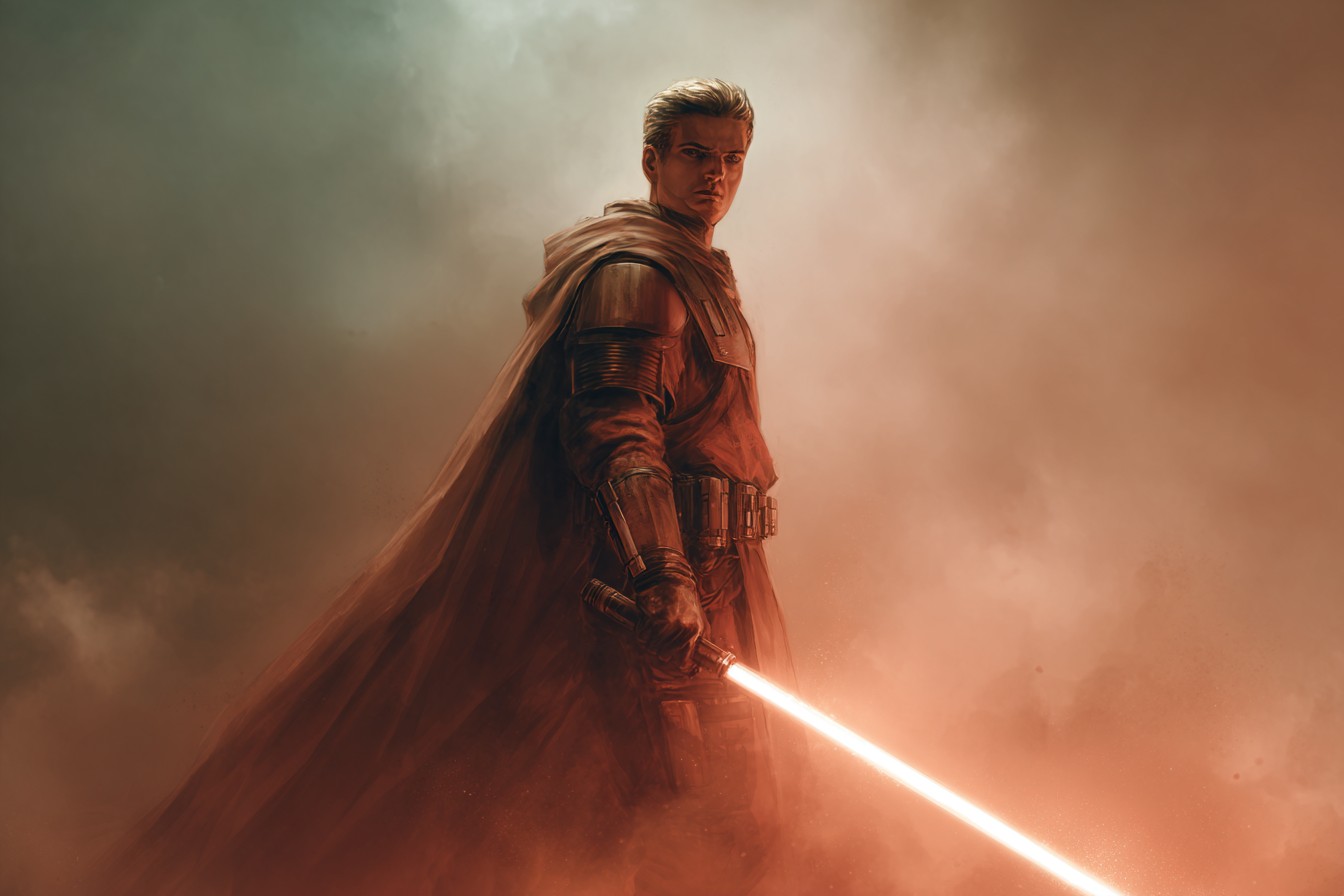
The Jedi/Sith conflict is central but not simplistic. You can be a Jedi committed to the light side. You can be a Sith committed to the dark side. You can be something in between – pragmatic, conflicted, struggling with temptation. The game respects moral complexity rather than forcing neat categories.
The Technical Achievement
The graphics are good for 2003. The character models are detailed and animate well. The environments are varied and detailed. The special effects for Force powers are impressive. The art direction creates distinct visual identity for different planets. The character design for party members is memorable.
The voice acting is solid throughout. The main character isn’t voiced, which lets you project yourself onto the role. The supporting cast has competent voice work that brings personality to characters. The writing supports the voice acting – dialogue sounds natural and conversational rather than stilted.
The sound design supports immersion. The music shifts based on location and situation. Lightsaber ignition sounds are iconic. Force power effects have distinct audio. Combat has satisfying audio feedback. The soundscape communicates game state constantly.
Does Knights Of The Old Republic Still Hold Up?
The graphics are dated but the art direction carries them. The character models are simple by modern standards but the animation is smooth. The environments are less detailed than modern games but communicate their purpose clearly.
The turn-based combat still works. The difficulty is still fair. The pacing is still good. The story is still engaging. The character interactions are still compelling. Playing this now, you understand why people still celebrate this game.
The moral choice system still feels meaningful. Your choices still affect the world and characters. The alignment system still creates investment. The party interactions still carry weight. The ending revelations still feel earned.
The campaign length is substantial without padding. There’s always content ahead. The side quests are engaging. The optional content enriches experience. The progression is satisfying.
Why This Game Mattered For Star Wars Gaming
KOTOR proved that Star Wars games could be genuinely excellent RPGs that respect the source material while creating something original. It proved that moral choice systems could feel integrated rather than cosmetic. It proved that BioWare understood how to tell compelling stories.
The franchise would continue with KOTOR 2, which expanded on these foundations. The Old Republic MMO would eventually happen. But KOTOR established the template – good writing, meaningful choices, engaging characters, and deep respect for player agency.
The Verdict
Knights of the Old Republic is an RPG that proves Star Wars games can be genuinely excellent without relying on existing characters or film plots. The story is engaging and respects player agency. The moral choice system creates genuine investment. The character interactions are compelling. The turn-based combat is tactical without dragging. The difficulty scales beautifully. The progression is satisfying.
This is a game where every system serves creating an engaging RPG experience set in Star Wars. The developers understood how to balance respecting the source material while creating something original and excellent.
If you’ve never played KOTOR, play it and understand why Star Wars fans still celebrate it. If you played it when it released, replay it and appreciate how well the story and character work still holds up. If you make RPGs, study KOTOR because it’s proof that moral choice systems can feel integrated when designed thoughtfully.
Rating: 10/10 – The Star Wars RPG that proved great games need great stories and meaningful choice
Return to our full Xbox rankings →