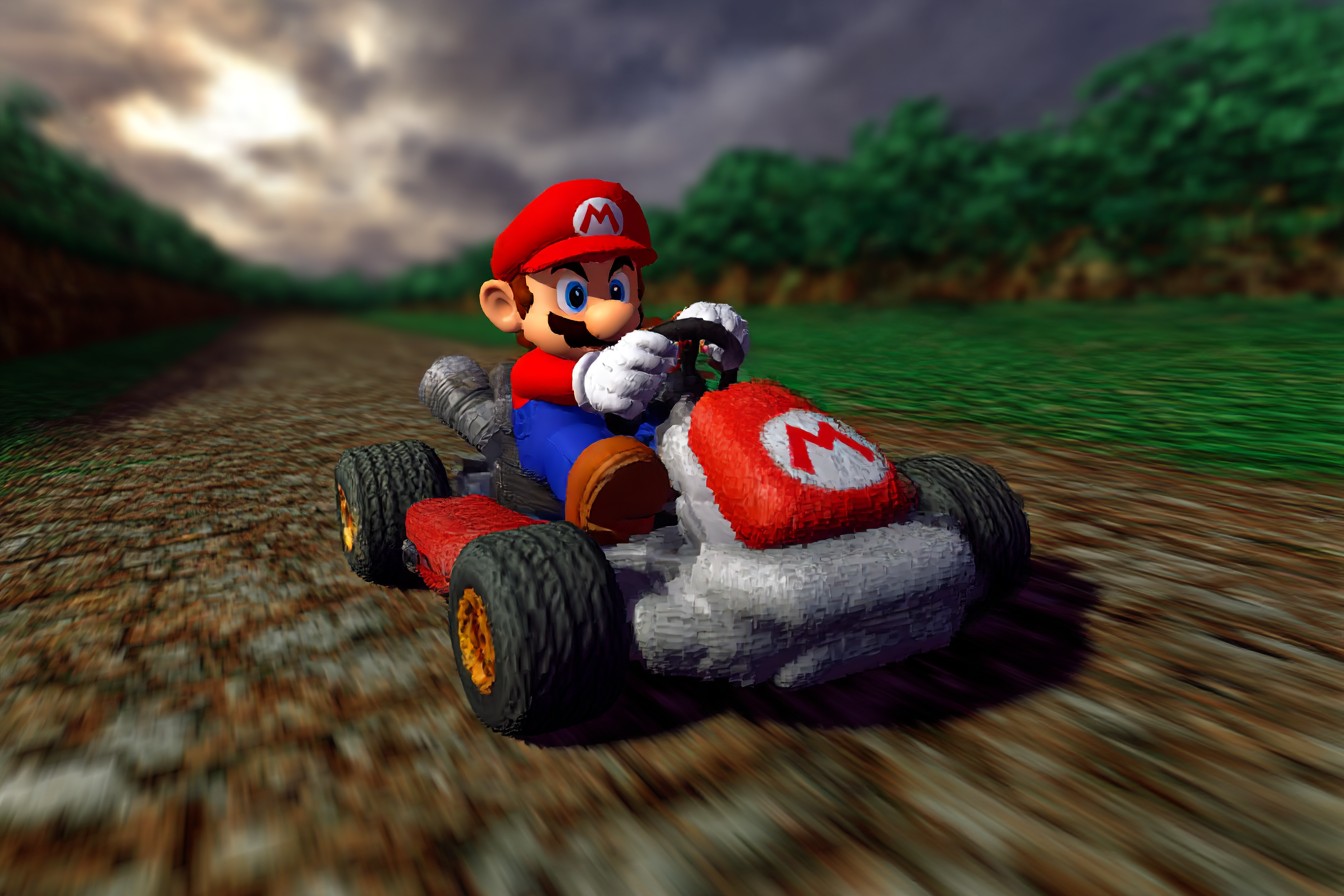
I’ve been analyzing game balance since the 16-bit era, and Mario Kart 64 sits in this weird position where casual players dismiss it as dated and technically competent players dismiss it for being less refined than later entries. Both groups miss something crucial – the item balance in Mario Kart 64 is genuinely inspired. Not because it’s perfect, but because it’s perfect for what the game is trying to do.
My background in accounting means I think about systems in specific ways. How do resources distribute? How do you prevent dominance of any single strategy? How do you reward player decision-making while still allowing luck to factor in? Mario Kart 64 answers all these questions with elegance.
What Mario Kart 64 Actually Is
Eight racers, four racing tracks, four battle arenas, three difficulty cups, three engine classes. The core structure is straightforward – race around tracks multiple times, use items strategically, try to finish first. The item distribution is where everything gets interesting.
In any given race, you can grab items from item boxes scattered throughout the track. The item pool is distributed probabilistically based on your current position. In first place? You’re more likely to get defensive items (bananas for trailing racers, fake item boxes to discourage attacks) or utility items (mushrooms for speed boosts). Trailing racers? They get aggressive items (red shells for tracking attacks, green shells for area denial) and more powerful speed boosts.
This is exponential rubberbandering baked into game mechanics rather than CPU adjustments. It’s brilliant system design because it prevents any single racer from running away with the race while still rewarding good driving. The item distribution isn’t hidden – you can figure it out through play. The system is transparent enough that experienced players understand their odds.
The Item Economy That Actually Works
The red shell is probably the most important item in kart racing – it homes in on the racer directly ahead of you. In Mario Kart 64, red shells are powerful but manageable. You can outrun them with good track position. You can block them with bananas. They’re terrifying but not inescapable. This creates genuine tension without feeling unfair.
Blue shells – the lightning-powered shells that target whoever’s in first place – are properly devastating. You’re leading? A blue shell ends that advantage immediately. But blue shells are rare enough and obvious enough that other racers can prepare for them. Everyone stops planning their own strategy and prepares for the blue shell hit. It’s chaos but it’s elegant chaos.
The distribution is meticulous. Green shells for area control – throw them forward and hope someone hits them. Bananas for defensive play – place them behind you and let trailing racers crash into them. Mushrooms for speed boosts that are powerful but only last briefly. The Bullet Bill that temporarily automates racing at high speed. The Starman that grants temporary invincibility. The Ghost that lets you pass through items and obstacles.
What impresses me is how completely these items serve different playstyles. Aggressive players get tools for attacking. Defensive players get tools for protection. Skill-based players can use mushrooms strategically to gain advantages on specific parts of the track. Luck-dependent players can hope for powerful items that swing races.
The Track Design That Enables Competition
Luigi Raceway is straightforward – basically an open oval teaching basic mechanics. Moo Moo Meadows has cows that you can hit or avoid for slight advantage. Koopa Troopa Beach has sand sections that slow you down. Kalimari Desert has a train that crosses the track unpredictably. Royal Raceway has jumping sections that reward timing. Bowser’s Castle is full of hazards that punish mistakes.
Each track has distinct characteristics that reward different approaches. Aggressive players might prefer tracks with lots of items and chaotic racing. Precision players might prefer tracks with technical jumps and opportunities for clean racing lines. This creates track selection strategy – experienced players might choose certain tracks based on their skillset and item luck.
The battle mode where you’re in enclosed arenas trying to destroy each other with items is genuinely excellent. The item economy changes when you’re not trying to win a race – suddenly aggressive items are everywhere. The confined spaces mean encounters are constant. The adrenaline spike of 1v1 Mario Kart battles is genuinely high.
Why It’s Still Underrated
Here’s what drives me crazy about modern assessments of Mario Kart 64 – people compare it to later games with more tracks, more characters, and more technical refinement, and then dismiss it for coming up short. They miss that Mario Kart 64 had to solve basic problems that later games could build on. It had to prove that kart racing could work in 3D. It had to demonstrate that item-based balance systems could prevent runaway leaders. It had to show that split-screen multiplayer could be engaging.
Mario Kart 64 solved all those problems. The frame rate varies a bit depending on how many players are active. The graphics aren’t cutting-edge even by 1996 standards. But the core racing mechanics work, the item balance is inspired, and the multiplayer is genuinely fun.
The Technical Execution
The physics are forgiving but responsive. You can feel the weight of your kart as you turn. Drifting gives you a speed boost if you time it right – easy to understand, satisfying to execute, skill-rewarding. The track surface affects handling – grass is slower, pavement is faster, ice is slippery. These physical properties are communicated clearly through gameplay feel.
The AI difficulty is well-tuned. Easy mode is genuinely easy but still competent. Medium mode is challenging but not unfair. Hard mode demands precision and good item management. Very Hard mode (if unlocked) is genuinely difficult, with the CPU making intelligent decisions about item usage and racing lines.
Does Mario Kart 64 Still Hold Up?
Playing it today, the graphics are definitely dated. The frame rate isn’t constant. The camera can be awkward on certain tracks. Character selection is limited compared to modern entries. The track roster is smaller.
But the core racing is still engaging. The item balance still works. The multiplayer is still fun. The tracks are still well-designed. These fundamentals haven’t changed – they’re just been built upon by later games.
The biggest difference is that modern Mario Kart entries have more polish and more content. Mario Kart 64 is more raw and basic. That’s not a flaw – it’s just a snapshot of where the series was in 1996.
The Verdict
Mario Kart 64 is a genuinely solid kart racer that often gets overlooked because later games improved on its foundation. But “later game improved on the foundation” doesn’t mean “earlier game was bad” – it just means the series evolved. Mario Kart 64 is worth playing because it shows racing game design from a specific era, solved problems elegantly, and created a multiplayer experience that still works today.
The item economy is inspired. The track design is solid. The multiplayer is engaging. The difficulty balancing works. This isn’t the best Mario Kart game – Double Dash and modern entries are more refined. But it’s a genuinely good kart racer that deserves more respect than it usually gets.
If you’ve never played it, it’s worth experiencing to understand where the series comes from. If you wrote it off as aged, replay it and appreciate how well the core mechanics hold up despite technical limitations.
Rating: 8/10 – A solid kart racer that proved the genre could work in 3D
Return to our full N64 rankings →

Samuel’s been gaming since the Atari 2600 and still thinks 16-bit was the golden age. Between accounting gigs and parenting teens, he keeps the CRTs humming in his Minneapolis basement, writing about cartridge quirks, console wars, and why pixel art never stopped being beautiful.