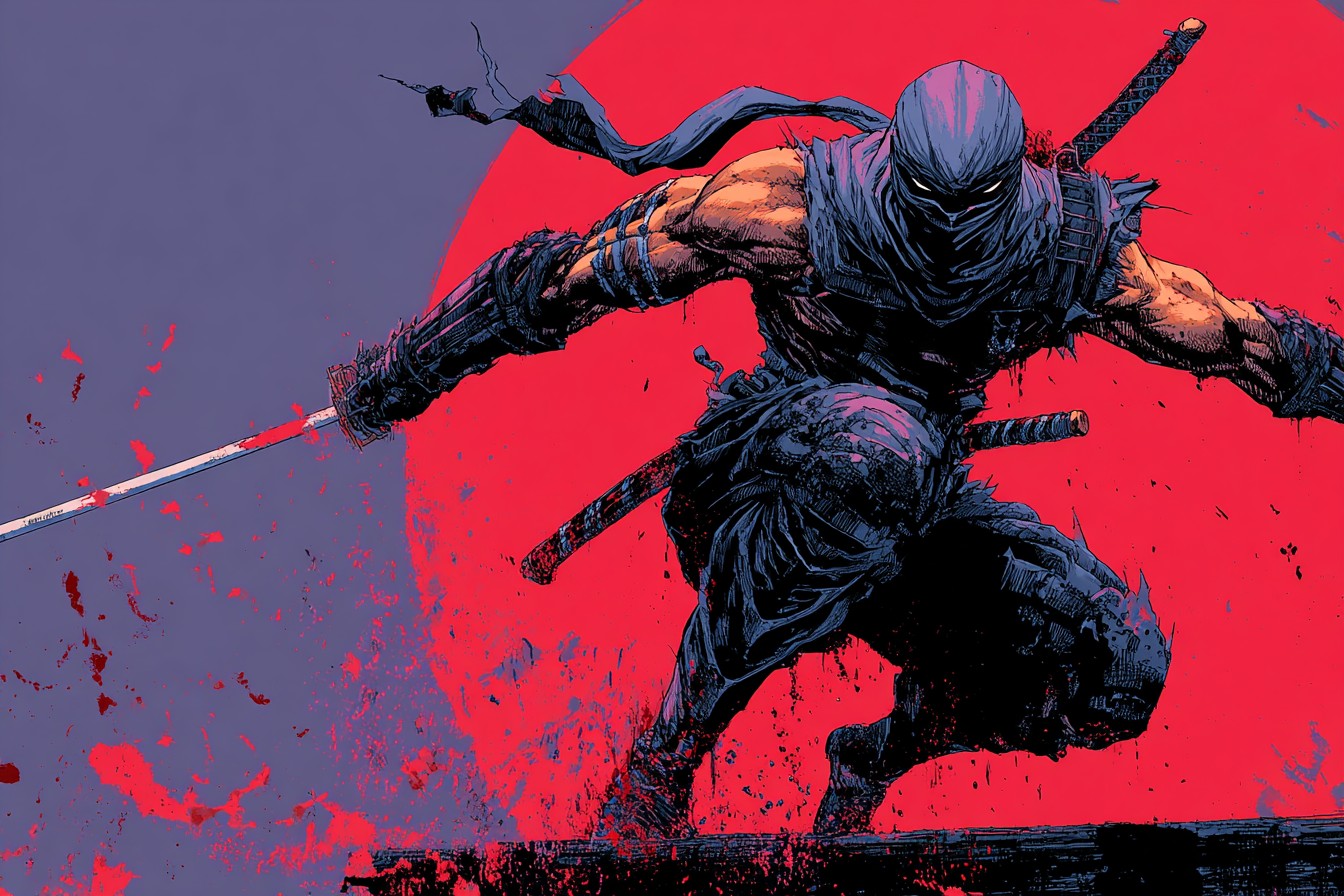
I’ve been analyzing action game design since the arcade era, which means I understand when difficulty is punishing and when it’s fair. Ninja Gaiden by Team Ninja achieves the rare balance where extreme difficulty feels earned and fair. Ryu Hayabusa is a ninja fighting impossible odds with grace and precision. The combat demands mastery. You will die repeatedly. But death feels like your mistake, not the game’s unfairness. That’s design excellence.
What impresses me about Ninja Gaiden is the commitment to skill-based design. The game doesn’t hold your hand. It doesn’t slow down for dramatic cinematics during fights. It doesn’t punish you with unavoidable damage. It just presents challenges and trusts you’ll learn from failure. That respect for player intelligence creates investment because progression is earned through genuine skill development, not gear treadmills or level grinding.
What Ninja Gaiden Actually Does
You’re Ryu Hayabusa fighting through levels filled with enemies. The combat is fast-paced and demands precision. Every attack has startup and recovery frames. Enemy patterns are readable but require attention to understand. Dodging is crucial – timing your evasion perfectly reduces damage taken. The difficulty is genuinely challenging on normal mode and brutally difficult on higher difficulties.
The controls are absolutely responsive. Input lag is zero. Movement is immediate. Attacks execute when commanded. The camera follows the action without fighting you. This responsiveness is crucial because player skill should be the determining factor in victory or defeat. When controls are perfect, deaths feel earned rather than cheap.
The boss encounters are genuinely difficult and genuinely fair. Each boss has patterns you need to learn. The first few attempts are about observation and experimentation. Once you understand the pattern, execution becomes the limiting factor. You know exactly what the boss does and when. Your skill determines whether you can react quickly enough.
The enemy variety keeps combat fresh. Different enemy types have different patterns. Early enemies teach basic patterns. Later enemies combine multiple attack types requiring strategic thinking. Boss encounters test comprehensive mastery of mechanics. The progression ensures you’re constantly being challenged appropriately.
Why Action Games Should Respect Skill
Here’s what Ninja Gaiden understands that many action games miss – difficulty is respect. When a game respects your skill enough to provide genuine challenge, it respects your time investment. Easy games are forgettable. Games that punish unfairly are frustrating. Games that provide fair challenge at high skill ceilings create investment because progression is earned.
The difficulty modes serve real purposes. Easy mode lets you experience the story and world without constant punishment. Normal mode provides appropriate challenge. Hard mode demands genuine skill. Mastery mode is for players who’ve internalized the combat system completely. Every mode feels intentional rather than just damage adjustments.
The combat system rewards learning through practice. You can’t button-mash successfully. You need to understand timing, positioning, and enemy patterns. This creates skill expression where good players feel powerful and poor players understand exactly what they need to improve.
The Technical Achievement
The graphics are good for 2004. The character models are detailed and animate smoothly. Ryu’s movements are fluid and communicate power. Enemy animations are readable – you can see attacks coming based on their stance. The visual clarity during fast action is impressive. Effects don’t obscure critical information.
The sound design is excellent. Combat sounds are distinct – different weapons make different sounds. Enemy vocalizations communicate attack types. Your character’s breathing changes based on exertion. The audio feedback is immediate and responsive to player actions.
The pacing is relentless. Combat sections flow into each other. Cinematics don’t interrupt action except at major story beats. There’s no padding – the game respects your time by keeping you engaged.
Does Ninja Gaiden Still Hold Up?
The controls are still responsive. The difficulty is still fair. The combat is still engaging. The progression is still satisfying. The skill ceiling is still high. Playing this now, you understand why action game fans still celebrate this game.
The graphics are dated but the character animation is smooth. The visual clarity during combat is still good. Enemy patterns are still readable. The camera still serves you well.
The difficulty modes still provide appropriate scaling. Easy mode still teaches mechanics. Normal mode still challenges without punishing. Hard mode still demands mastery. The progression through difficulty still feels earned.
The boss encounters still feel genuinely difficult but fair. Pattern recognition still matters. Execution skill still determines victory. The satisfaction of defeating a difficult boss is still genuine.
Why This Game Defined Action Game Design
Ninja Gaiden proved that extreme difficulty could be designed fairly. It proved that skill-based design creates investment because progression is earned through genuine improvement. It proved that respect for player intelligence creates better games than hand-holding.
The franchise would continue with sequels that expanded on these foundations. Modern action games understand these lessons. The Souls series learned from Ninja Gaiden’s approach to difficulty. Modern action games respect player skill because Ninja Gaiden proved that’s what action game players wanted.
The Verdict
Ninja Gaiden is an action game that proves extreme difficulty can be fair and engaging. The controls are responsive. The combat is tactical despite being fast-paced. The enemy variety keeps things fresh. The boss encounters are genuinely challenging. The difficulty modes provide appropriate scaling. The progression is satisfying.
This is a game where every system serves creating engaging, skill-based action gameplay. The developers trusted player intelligence enough to provide genuine challenge. That trust creates investment because players earn their progression through skill development.
If you’ve never played Ninja Gaiden, play it and understand why action game fans respect difficulty-focused design. If you played it when it released, replay it and appreciate how well the technical fundamentals hold up. If you make action games, study Ninja Gaiden because it’s proof that respecting player skill creates better games than artificial hand-holding.
Rating: 10/10 – The action game that proved fair difficulty creates engagement and investment
Return to our full Xbox rankings →

Samuel’s been gaming since the Atari 2600 and still thinks 16-bit was the golden age. Between accounting gigs and parenting teens, he keeps the CRTs humming in his Minneapolis basement, writing about cartridge quirks, console wars, and why pixel art never stopped being beautiful.