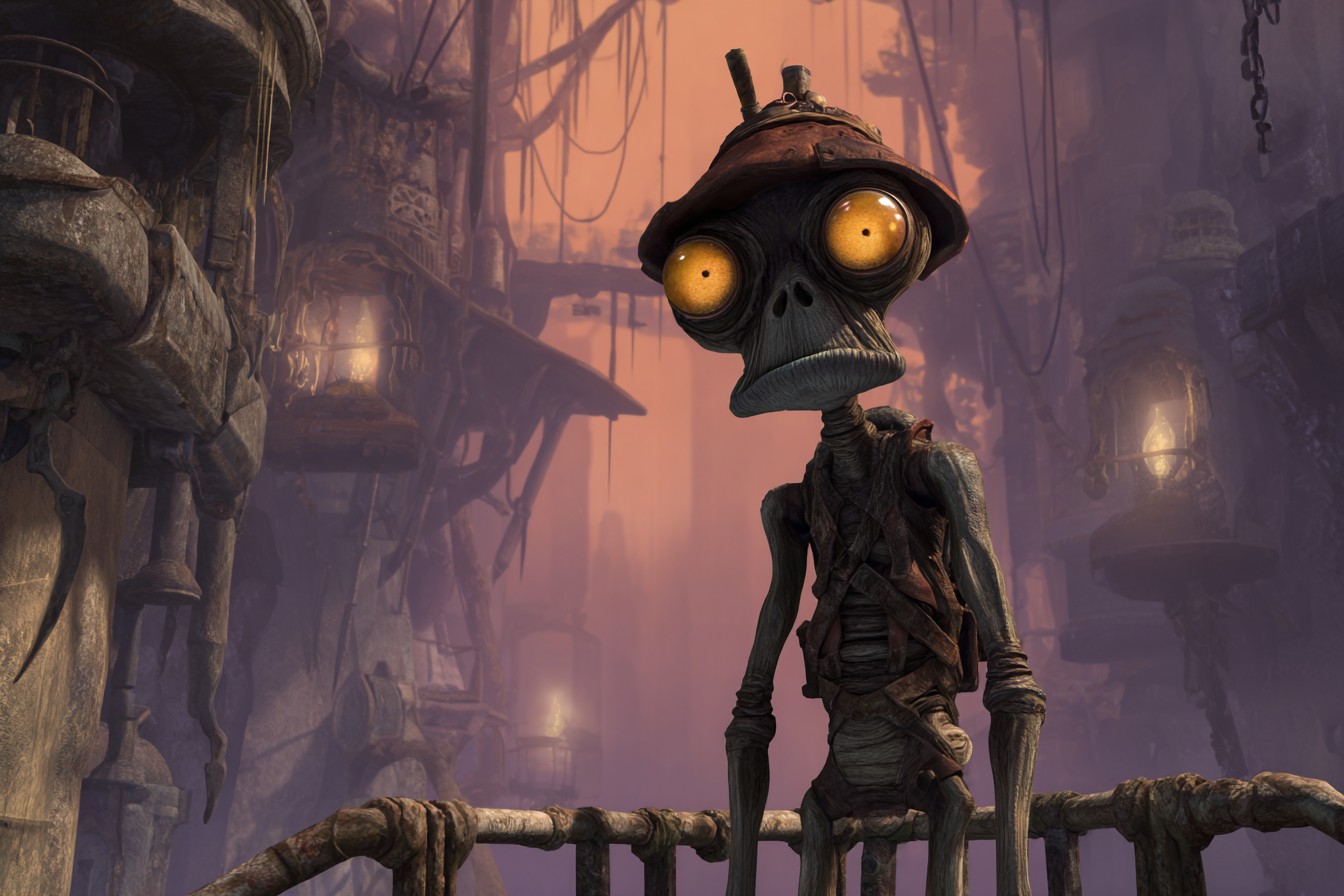
I’ve spent fifteen years in IT management understanding that sometimes the best systems are the ones that take a completely unique approach. Oddworld: Abe’s Oddysee is a game that took a completely unique approach when puzzle platformers were becoming increasingly standardized. You’re Abe, a mudokon trying to escape a facility where your species is being hunted for meat. You run, you jump, you talk to other creatures, you possess them, you use their abilities to progress. No other game had done this before and few have replicated it since.
What impresses me about Oddworld is the complete commitment to originality. Not originality for its own sake, but originality in service of creating a completely distinct experience. The aesthetic is unique. The mechanics are unique. The voice acting is unique. Everything about this game commits to being different and respects that difference.
What Oddworld: Abe’s Oddysee Actually Does
You’re Abe, a mudokon who can communicate with other creatures telepathically. You’re trying to escape a facility where your species is being killed for meat. You progress by running, jumping, and crucially, talking to other creatures. You can possess them, you can guide them, you can use their abilities to solve environmental puzzles. The goal is to guide as many of your species to safety as possible.
The controls are straightforward – movement, jump, talk. But the puzzle design is brilliant. You need to observe the environment, understand what creatures are present, figure out how to communicate with them, and use their abilities creatively. Some creatures can climb. Some can activate machinery. Some can carry objects. You’re constantly solving puzzles by understanding what each creature can do and applying that knowledge.
The tone is dark. The facility is industrial and hostile. Your species is literally being hunted. But the game has dark humor running through everything – the absurdity of the situation, the characters’ personalities, the ridiculousness of certain predicaments. It’s tense but never grim.
Why Originality Matters
Here’s what Oddworld understood that many games miss – originality isn’t just about being different. Originality is about having a unique vision and committing to it completely. Oddworld didn’t just have unique mechanics – it had a unique aesthetic, unique voice acting, unique dialogue, unique everything. The game is internally consistent in its originality.
The hand-drawn animation is expressive and charming. Abe’s expressions communicate emotion. Other creatures have personality through their animations. The movement feels weighty and character-driven rather than just utilitarian.
The voice acting is genuinely excellent. Abe’s voice is distinctive and personality-filled. He’s scared when danger is present. He’s hopeful when escape seems possible. The other creatures have personality through sound design. The combination creates characters you care about despite limited dialogue.
The Design Philosophy Behind The Strangeness
What impresses me technically is how Oddworld manages complexity through simplicity. The core mechanics are simple. What creates depth is how those mechanics combine in environmental puzzle-solving. You’re not learning complicated systems – you’re learning creative approaches to simple problems.
The difficulty is well-balanced. Puzzles are challenging but solvable through observation and experimentation. Platforming requires precision but isn’t brutally hard. The combination of both creates engagement without frustration.
The pacing is excellent. Tension escalates gradually. Safe areas provide respite. Danger areas create genuine threat. The emotional journey matches the mechanical challenges.
Does Oddworld Still Hold Up?
Completely. The hand-drawn animation is timeless. The voice acting is still excellent. The puzzle design is still clever. The originality is still striking. The atmosphere is still effective.
The controls feel responsive. The collision detection is fair. The platforming mechanics work. The puzzle design still challenges. Playing this now, you understand why people still celebrate this game.
The graphics have aged but the aesthetic transcends technical quality. The creatures are memorable. The facility feels genuinely hostile. The atmosphere is thick and engaging.
Why This Game Matters Culturally
Oddworld: Abe’s Oddysee proved that originality mattered in a gaming landscape that was increasingly standardized. In an era where platformers were becoming more like each other, Oddworld said “we’re going to do something completely different” and proved that different could work.
The game influenced how developers think about originality. It proved that unique vision could drive engagement. It proved that charm could come from commitment to weird ideas rather than polishing traditional concepts. Modern indie gaming understands this lesson partly because Oddworld proved it at AAA scale.
The Verdict
Oddworld: Abe’s Oddysee is a puzzle platformer that proves originality matters. The unique aesthetic. The unique mechanics. The unique voice acting. The unique everything creates a completely distinct experience that still resonates decades later.
This is a game where every element serves the original vision. You’re not playing this because it perfects an established genre – you’re playing this because it creates something genuinely new. That newness, executed with excellence, creates engagement that traditional approaches would struggle to achieve.
If you’ve never played it, seek it out and experience something genuinely unique. If you make games, study Oddworld as an example of how commitment to an original vision creates something memorable.
Rating: 9/10 – The game that proved originality and excellence aren’t mutually exclusive
Return to our full PlayStation 1 rankings →

John grew up swapping floppy disks and reading Amiga Power cover to cover. Now an IT manager in Manchester, he writes about the glory days of British computer gaming—Sensible Soccer, Speedball 2, and why the Amiga deserved more love than it ever got.