I came to retro gaming as an adult without childhood nostalgia, which means I approach it practically. Coming from construction, I understand something about building things efficiently and understanding where to spend money and where to save it. Retro gaming doesn’t have to be expensive. The collector market has inflated prices for complete games with original packaging, but playing retro games affordably is absolutely possible if you’re willing to make different choices than collectors.
The secret that collectors don’t want acknowledged is that you can get the same gaming experience for a fraction of the collector price. A loose cartridge plays identically to a complete cartridge with original box. The game experience is identical. The visual or collectible experience is different but the actual play experience is the same. Understanding this distinction is the key to playing retro games affordably.
Budget retro gaming requires making strategic choices. You need to decide what matters – the game experience itself versus preservation and authenticity. Most budget gamers should prioritize experience because the collector premium is enormous and it doesn’t affect gameplay. A $10 loose SNES game plays as well as a $300 complete game.
The Budget Reality
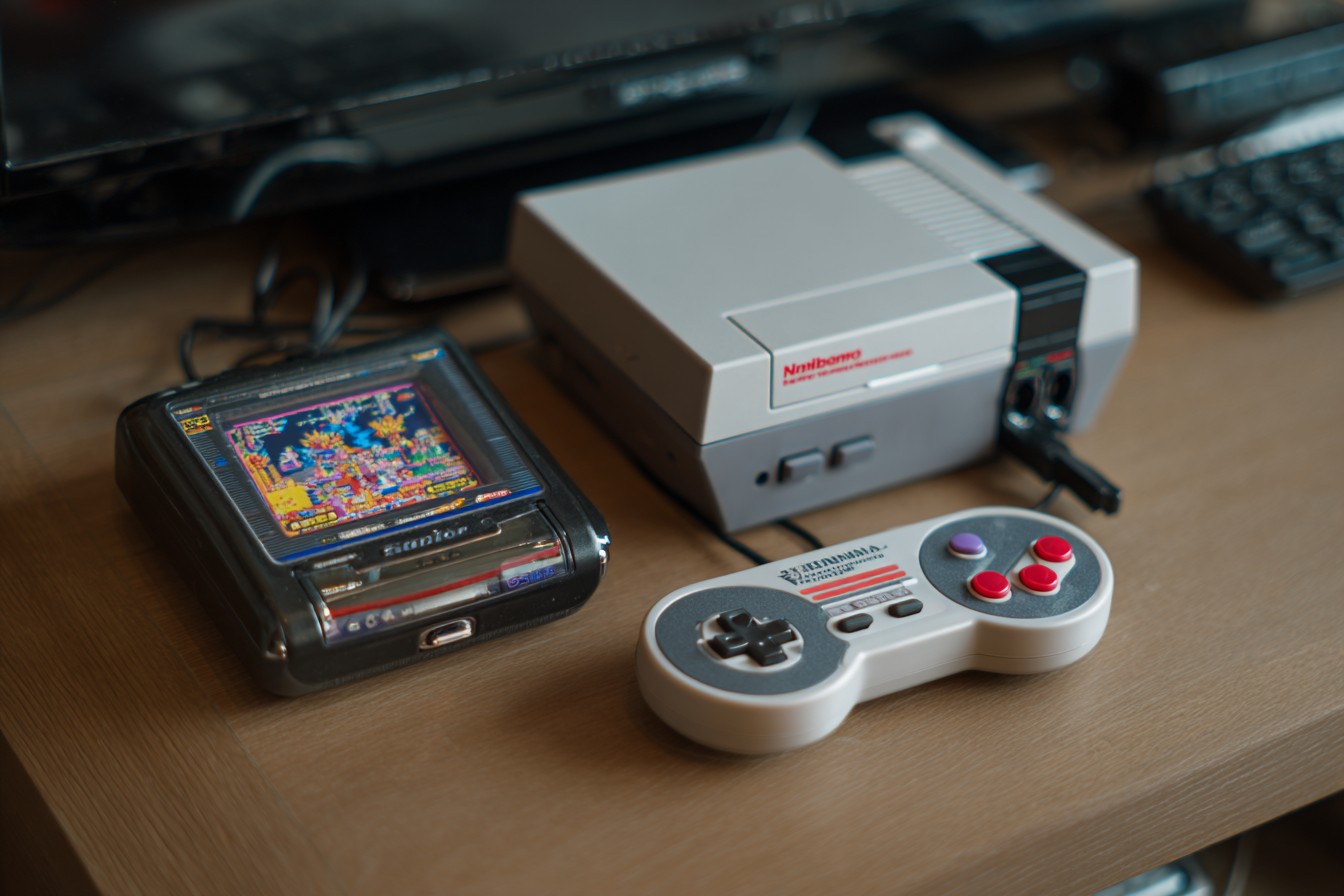
Retro gaming on a budget breaks down into console cost and game cost. A working SNES console costs $80-150. A loose copy of Super Mario World costs $20-40. You can build a library of 10 games for under $300. An NES costs $60-120. N64 games are expensive because they’re collected heavily. PlayStation games are cheap because they were produced in massive quantities.
The initial hardware investment is unavoidable. You need a console. You can minimize this by buying used consoles from Facebook Marketplace or local selling. You can spend less than retail price. But you need to spend something.
Game costs vary enormously. SNES games range from $5 loose common games to $100+ for rare games. Genesis/Mega Drive games are similar. N64 games are more expensive – even common games cost $30-50. PlayStation games are cheaper – common games cost $5-20. Nintendo games are collected heavily. Sega and Sony games are cheaper because they’re collected less.
The collector market has made some systems genuinely expensive to collect. N64 especially is expensive because cartridges are durable, Nintendo games are good, and collectors hoard them. SNES is expensive because Nintendo’s library is exceptional and everyone knows it. Genesis is less collected so prices are lower.
Strategy 1: Choose Your System Carefully
If you’re on a tight budget, the original PlayStation is your best choice. Consoles are cheap ($50-100). Games are cheap – you can find working copies for $5-20. The library is massive so you’ll never run out of games to discover. You can build an enormous collection for minimal investment.
The downside is that the games are from an older system. The 3D graphics are primitive by modern standards. The gameplay is dated in some respects. But the games are solid and the library is so large that you’ll find games you genuinely enjoy.
If you have moderate budget, SNES or Mega Drive is the better choice. Games are more expensive but the quality is higher. The visual presentation holds up better. The gameplay is more refined. You’ll spend more but get games that are more satisfying to play.
If you’re targeting a specific series or genre, choose the system where that content is cheapest. Sports fan? Mega Drive sports games are cheap. RPG fan? PlayStation has hundreds of cheap RPGs. Platformer fan? SNES has cheap platformers. Match your interest to your budget.
Strategy 2: Buy Loose Games
Loose cartridges play identically to complete games. The difference is cosmetic and collector-focused. A loose game lacks the box and manual but the cartridge plays the same. The price difference is enormous – complete games cost 5-10x more than loose games.
This is the single biggest budget hack for retro gaming. Buy loose cartridges. You get the same game experience for a fraction of the price. A loose Mario game costs $20. A complete Mario game costs $100+. You’re not losing anything gaming-wise. You’re just not preserving packaging.
If you’re a collector and preservation matters to you, this isn’t an option. But if you’re a gamer and the actual gameplay matters, buying loose is the smart choice.
Strategy 3: Shop Carefully
Facebook Marketplace often has better prices than eBay because sellers aren’t optimizing for collector premium. You can find deals locally if you’re patient. Thrift stores occasionally have games priced without collector knowledge. Estate sales have games priced by people who don’t know value.
Patience is your best tool. If you wait for deals, you’ll find them. If you buy immediately at the first price you see, you’ll overpay. Set alerts. Watch listings. Buy when you find good deals rather than buying everything you see.
Seasonal trends exist. Holiday seasons see more games available as people clean out closets. End of year sales exist. Black Friday has deals. Learning when to buy helps.
Building relationships with local sellers helps. Facebook groups focused on your local area often have people selling games. Community connections beat eBay prices.
Strategy 4: Emulation and Digital
The most budget-friendly option is emulation. Emulators are free. Games are either ROMs of games you own or available through official digital releases like Nintendo Switch Online. If you’re comfortable with emulation ethics, this is functionally free after your initial hardware investment (computer or phone).
Nintendo Switch Online provides legal access to NES, SNES, Genesis, and N64 games for a subscription. It’s not free but it’s dramatically cheaper than buying physical games. You get hundreds of games for under $20/month. This is the most affordable legal way to play a massive game library.
The downside is that you’re not playing on original hardware. The experience is different. But the games are the same and the cost is dramatically lower.
Strategy 5: Focus On Quality Over Quantity
Don’t try to own every game. Own games you actually want to play. A collection of 20 games you love is better than a collection of 100 games you’ve never played. Focus on quality content and accept that you won’t have everything.
This also reduces cost. You’re not trying to complete collections. You’re just gathering games you’re interested in. Your budget goes further because you’re selective.
Research before buying. Use YouTube or Twitch to watch gameplay. Read reviews. Make informed choices about what’s worth your money. Don’t buy games blind.
Strategy 6: Multi-System Budget
Instead of collecting one system completely, collect a little from multiple systems. You get variety without the depth of collector pricing on single-system rares. A loose game from each of 5 systems costs less than a complete game from one system.
This also prevents boredom. You can switch between systems instead of grinding through one library. Variety keeps things engaging.
Strategy 7: Avoid The Trap Games
Some games are expensive because they’re collectible despite being common. Stadium Events on NES is expensive because few cartridges exist, but the game isn’t good. Earthbound on SNES is expensive because it’s legendary, but finding it is hard and the price is absurd for what you’re getting.
Learn which games are actually good versus which are expensive because of scarcity. Play good games. Avoid paying premium prices for rare games that aren’t worth the money.
Realistic Budget Examples
A tight budget ($300): Original PlayStation console ($80), 20 loose games ($200). You get an enormous library for minimal investment.
A moderate budget ($500): SNES console ($100), 15 loose SNES games ($200), 10 loose Genesis games ($150), misc accessories ($50). You get variety and quality without breaking the bank.
A comfortable budget ($1000): Multiple consoles, diverse game libraries, proper cables and adapters, maybe one or two complete games as collector pieces. You can build a genuinely solid collection.
A generous budget ($2000+): Complete collections on your favorite systems, original hardware in good condition, proper setup with cables and displays. You can build a collector-quality setup.
The Reality Check
Retro gaming doesn’t have to be expensive if you’re willing to buy loose games and avoid the collector market. You can play every game for a fraction of collector price. The experience is identical.
The collector market has inflated prices. That’s real and acknowledged. But it doesn’t force you to pay those prices. You can avoid the collector premium by accepting that you’re playing games, not collecting them.
Focus on the gameplay, not the boxes. Build a collection of games you enjoy rather than trying to own everything. Buy loose cartridges. Shop for deals. Use emulation if legal digital options exist. Play budget options. This approach makes retro gaming accessible to anyone.
The games are the same whether they cost $10 or $300. Choose the price point that makes sense for your budget.

Timothy discovered retro gaming at forty and never looked back. A construction foreman by day and collector by night, he writes from a fresh, nostalgia-free angle—exploring classic games with adult curiosity, honest takes, and zero childhood bias.