You know what still makes my blood boil? Walking into a GAME store in 1999 and seeing rows upon rows of PlayStation cases while the Dreamcast section looked like a forgotten corner booth at a failing car boot sale. Three games. Maybe four if someone hadn't nicked Crazy Taxi again.
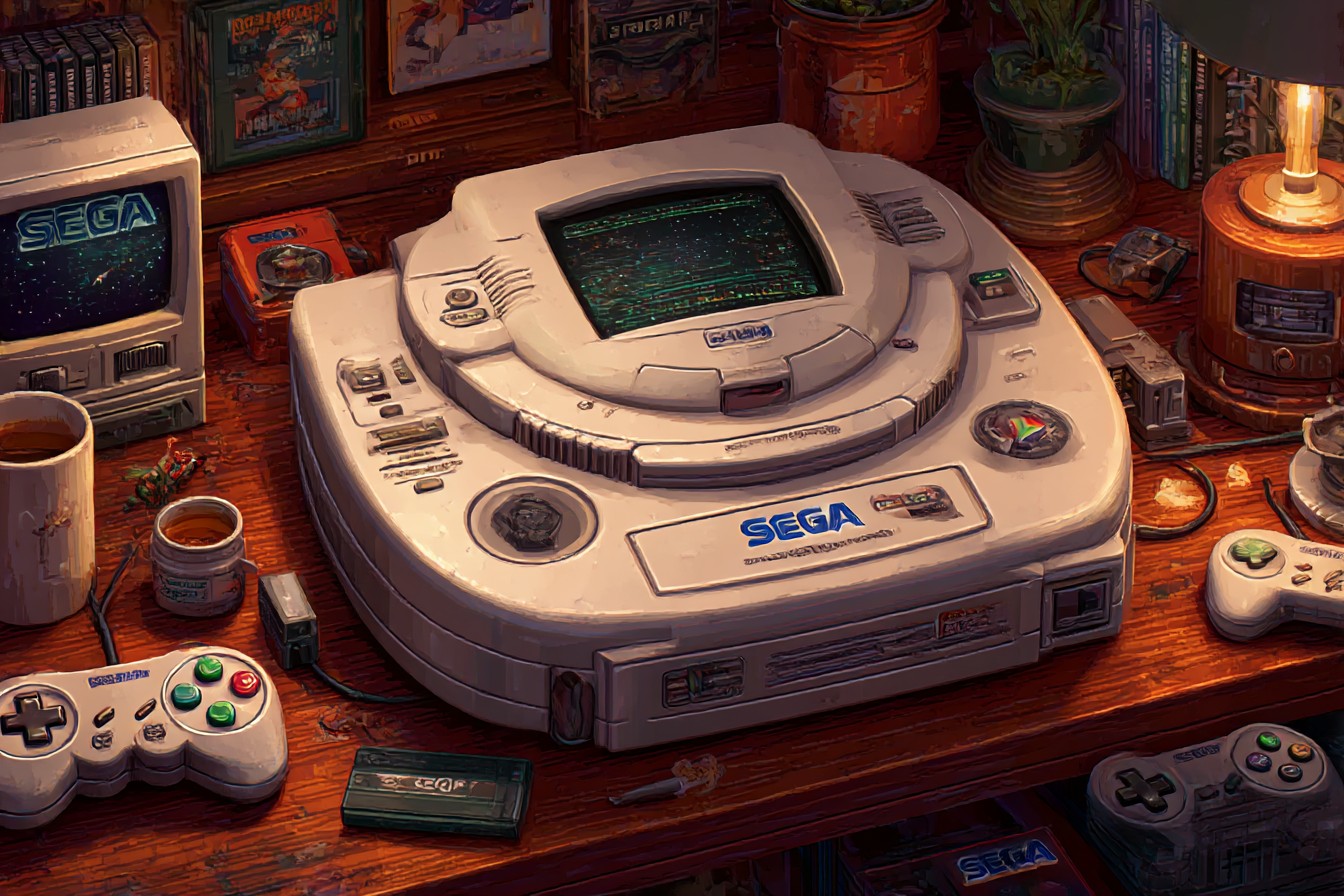
I was there, mate. I had the console on launch day—well, launch week anyway, because I'm not completely mental and the queues looked insane. But I remember that white box sitting under the telly, humming away with its little orange power light, completely unaware it was about to become gaming's greatest tragedy. The Dreamcast wasn't just ahead of its time; it was practically from another dimension, and we were all too busy arguing about DVD playback to notice.
Here's the thing about Sega's final console—it did everything right and got punished for it. Take the controller, for starters. After years of Saturn pads that felt like they were designed by someone who'd only heard controllers described over a dodgy phone line, the Dreamcast pad was… perfect. Proper. The stick clicked beautifully, the buttons had that satisfying press, and don't even get me started on how the VMU made that little beep when you slotted it in. Made you feel like you were piloting something important.
But the games, bloody hell, the games. Everyone bangs on about how the PlayStation 2 "won" the generation, but they're forgetting what the Dreamcast was serving up while Sony was still figuring out how to make their launch lineup not completely embarrass them. Shenmue dropped in 2000 and I genuinely thought I was living in the future. You could open drawers. Actual drawers! With stuff in them! I spent forty minutes in Ryo's house just picking up cassette tapes and examining them like they were archaeological artifacts.
My mate Dave came over one Saturday morning—still in his work clothes from some warehouse night shift, smelling like instant coffee and regret—and I booted up Jet Set Radio. Twenty seconds into that opening sequence, with the cel-shaded graphics doing things his PlayStation couldn't even dream about, he just went quiet. Sat there watching Beat spray-paint a wall while that soundtrack made the living room feel like downtown Tokyo. "This is on Dreamcast?" he kept asking, like I was pulling some elaborate prank.
The online stuff was bonkers too, but nobody talks about it now because we're all supposed to pretend Xbox Live invented everything. My Dreamcast was dialing up the internet in 2000, downloading demo discs and letting me play Chu Chu Rocket with some Japanese bloke who was probably having his breakfast while I was having my tea. The future! Right there in my suburban semi-detached! And yet somehow we all decided that was less impressive than the PS2's ability to play DVDs we already owned.
Soulcalibur still makes me laugh. Not the game—the game's a masterpiece—but the reactions it got. You'd put that disc in, watch Mitsurugi do his little sword twirl in the attract mode, and suddenly every person who'd been banging on about "polygon counts" went very, very quiet. It looked like something from five years in the future, moved like silk, and played like a dream. I had friends come over just to watch me play Kilik versus Nightmare because they wanted to see if their eyes were lying to them.
Crazy Taxi turned my living room into a mobile disco. I'm not even exaggerating—the Offspring and Bad Religion blasting out while you're careening through San Francisco (sorry, "made-up city that definitely isn't San Francisco"), picking up punters and launching off hills like you're auditioning for The Fast and the Furious. My neighbors must have thought I'd lost my mind, this grown man shouting "YA YA YA YA YA!" at two in the morning while a virtual taxi driver told me to step on the gas.
The Dreamcast's sports games were mental too. NFL 2K looked so good I genuinely thought they'd somehow managed to broadcast actual American football matches through my phone line. Remember when sports games had personality? When they felt like someone had actually watched the sport they were making a game about? Before everything became a grim annual update cycle where the only changes are the squad rosters and the price?
Phantasy Star Online broke my brain in the best possible way. An RPG. Online. With people. In 2001! I was wandering around some alien forest with a bloke from Manchester and two kids from God knows where, hitting monsters with increasingly ridiculous weapons while trying to work out how to type messages with a controller. It was clunky as anything, took forever to connect, and I absolutely loved every second of it. That feeling of "we're all in this together" across phone lines and different time zones—Xbox Live gets the credit, but PSO did it first and did it with more heart.
The real kicker? Half these games never got proper sequels or got completely butchered when they moved to other systems. Jet Set Radio Future was decent, but it wasn't the same. Shenmue III happened eventually, but after an eighteen-year gap that felt like archaeological reconstruction rather than natural progression. Meanwhile, the PS2 got fourteen different versions of every franchise known to humanity.
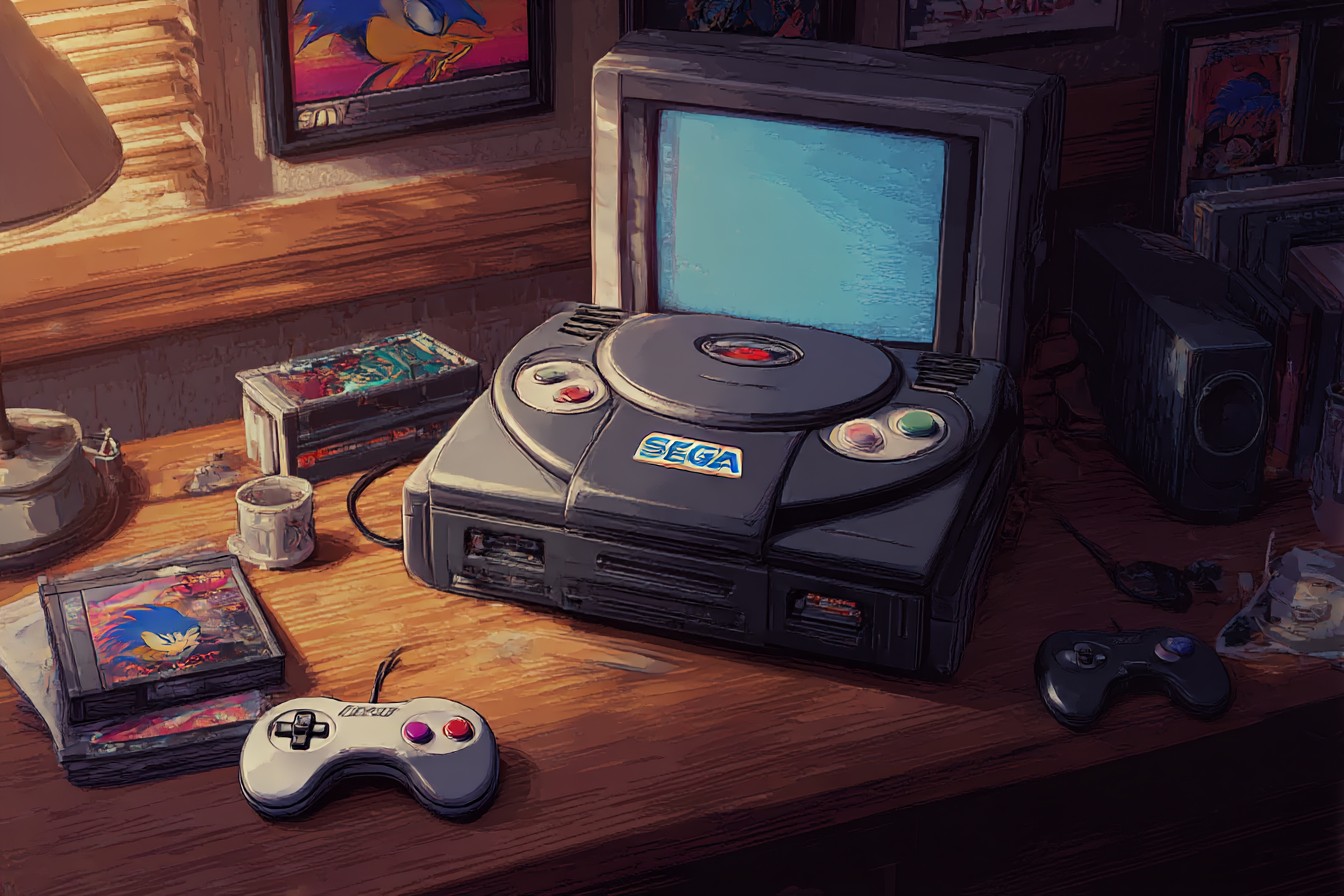
I kept my Dreamcast plugged in long after everyone else had moved on. Even bought a few games in the bargain bins—Rez for three quid, can you believe it? Three bloody pounds for one of the most innovative games ever made! But that's the Dreamcast story in a nutshell, isn't it? Brilliance sold cheap because nobody was paying attention.
The worst part is how right they got everything. The controller that influenced every pad since. The online play that predicted the future. The graphics that made everything else look dated overnight. The games that took actual risks instead of just polishing the same old formulas. Sega looked at the gaming landscape and said "let's do something nobody expects," and we all said "no thanks, we'll stick with what we know."
Sometimes I fire up the old white box just to remind myself what we lost. Still works perfectly, by the way. That Yamaha sound chip still makes every ping and crash sound like it's coming from inside your skull. And those games… they're not museum pieces. They're still brilliant, still fresh, still doing things that modern games are only just catching up to.
The Dreamcast deserved better. We all deserved better. But at least those of us who were there know what real innovation looked like, even if nobody was buying it at the time.