I’ve been analyzing fighting game balance since the 16-bit era, which means I understand when a 3D fighting game is genuinely balanced versus when it just appears balanced. Tekken 3 achieves genuine balance. Eight characters with completely distinct fighting styles. Every character is viable competitively. The frame data works. The physics make sense. The move list for each character teaches their playstyle philosophy.
This is fighting game design where diversity is the balance mechanism. Kazuya plays completely differently from Paul who plays completely differently from Nina. That fundamental difference in playstyle means every matchup is interesting because you’re not just learning the same moves with different animations – you’re learning completely different approaches to fighting.
What Tekken 3 Actually Does
Eight fighters in a 3D ring. You’re fighting other characters with their own distinct move lists and strategies. Each character has a distinct approach to combat. You’re learning frame data, learning when to attack and when to defend, learning character matchups. The difficulty escalates from arcade mode teaching you basics to online tournament competition demanding frame-perfect execution.
The move list for each character is extensive but learnable. The basic attacks are intuitive – square and triangle buttons for arms, cross and circle for legs. Complex moves are executed through button combinations that make logical sense given the animation. You can learn by observing what moves work and what opponent moves you need to counter.
The difficulty curve in arcade mode teaches mechanics naturally. You’re fighting progressively harder opponents that force you to learn. Early fights are winnable with basic attacks. Later fights require understanding matchups and executing advanced techniques.
Why 3D Fighting Games Are Harder To Balance Than 2D
3D fighting adds spatial complexity. You’re not just moving forward and backward – you can sidestep in full 3D space. That vertical dimension adds possibilities that 2D fighters don’t have. Add that to eight distinct characters and balancing becomes exponentially more complex.
Tekken 3 manages this by understanding that complete balance isn’t possible – controlled imbalance is. Some characters are stronger at close range. Some are better at distance. Some rely on positioning. Some rely on mixups. Some rely on raw power. That diversity means every matchup is interesting because players are genuinely playing different games rather than variations on the same approach.
The juggle system lets you perform air combos after launching opponents. But every character has different juggle potential. Some characters launch easily. Some are hard to launch. The juggle damage varies. This creates risk-reward – launching might lead to big damage, but vulnerable characters need to be careful.
The Technical Balance That Actually Works
What impresses me about Tekken 3’s balance is how it achieves it through mechanical diversity rather than damage numbers. If Tekken 3 had tried to make all eight characters play the same way with different damage values, balance would be impossible. Instead, the game says “every character plays completely differently and that difference is their balance.”
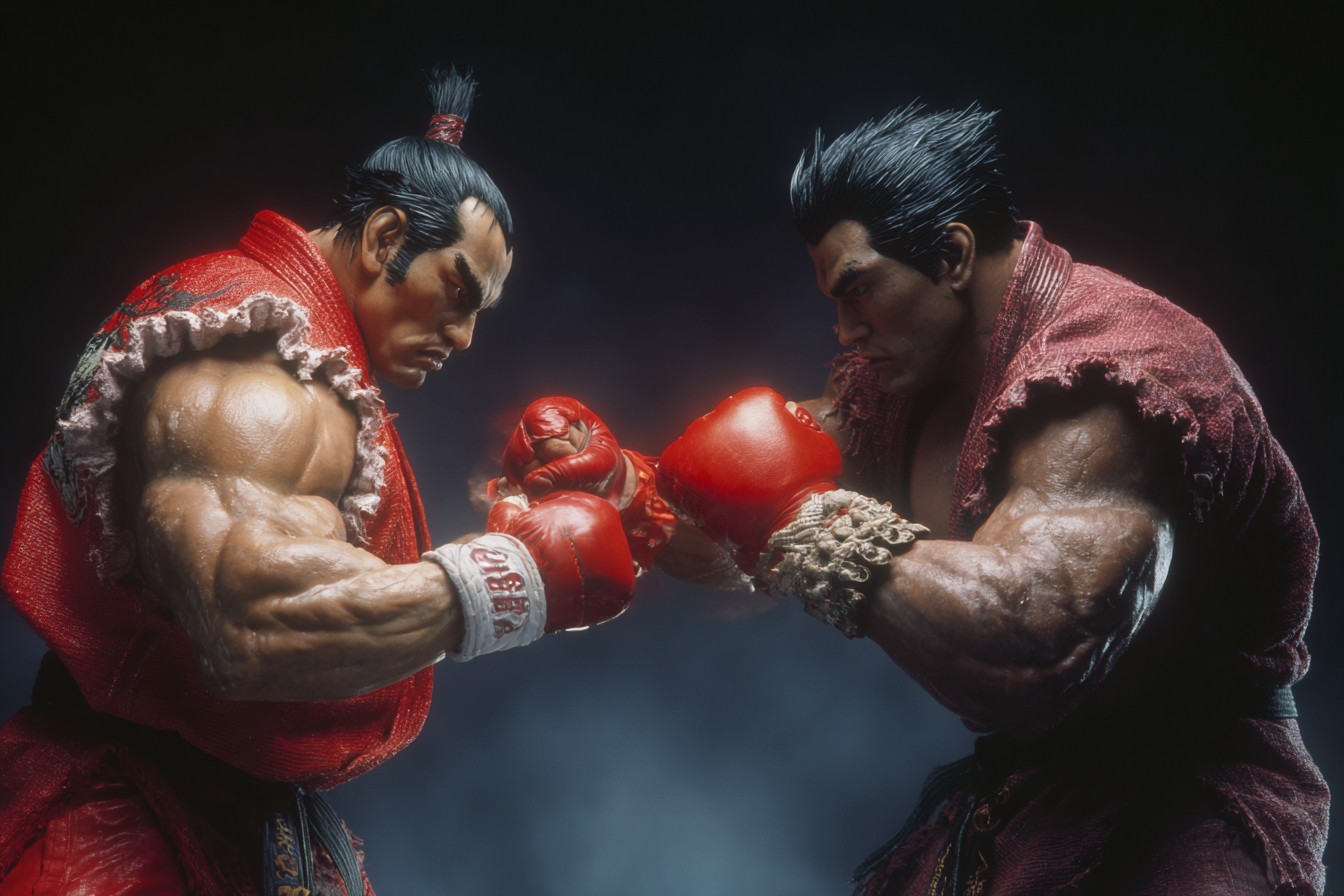
Kazuya is all-around competent but has no extreme strengths or weaknesses. Paul is rushdown aggression but shorter range. Jack is grappling power but slower. Nina is complex hit-confirm sequences but requires precise execution. King is pure grappling with throw mixups. Lei is evasive unpredictability through positioning. Eddy is mobility through flashy kicks but technical depth. Yoshimitsu is unconventional mixups through sword usage.
Eight completely distinct characters. Eight viable competitive strategies. That’s not luck – that’s design excellence.
Does Tekken 3 Still Hold Up?
The graphics are obviously dated. Character models are crude. Textures are low-resolution. But the character designs are distinct and readable in motion, which matters for gameplay. The fighting is still engaging. Modern fighting games have more visual flash and larger rosters, but the core fighting game mechanics in Tekken 3 are still solid.
The frame data still works. The combos are still satisfying. The difficulty is still well-balanced. The matchup variety is still interesting. Playing this now against someone with fighting game knowledge is a genuinely competitive experience.
Why This Game Changed 3D Fighting
Tekken 3 proved that 3D fighting games could work if designed carefully. It proved that the 3D space could create genuine strategic depth rather than just looking different. It proved that you didn’t need to homogenize characters to achieve balance – diversity IS the balance mechanism.
Every 3D fighting game since has learned from Tekken 3’s approach. Modern Tekken games have expanded the roster but maintain the character diversity principle. Soul Calibur learned these lessons. Virtua Fighter learned these lessons. The entire 3D fighting game genre understands that balance through diversity is the foundation.
The Verdict
Tekken 3 is a fighting game that proves 3D and balance aren’t mutually exclusive. Eight completely distinct characters that are all competitively viable. Frame data that works. Physics that make sense. A difficulty curve that teaches without overwhelming. Matchup variety that keeps the experience fresh.
This is a game where every design choice serves competitive play. You’re not playing this for story or spectacle – you’re playing this because the fighting game design is genuinely excellent. Frame data nerds and casual button-mashers can both find engagement here at appropriate difficulty levels.
If you’ve never played it, approach it as a pure fighting game. If you’re interested in how 3D fighting games should be balanced, study Tekken 3 because it’s the template that still works.
Rating: 9/10 – The 3D fighting game that proved diversity creates balance
Return to our full PlayStation 1 rankings →

Samuel’s been gaming since the Atari 2600 and still thinks 16-bit was the golden age. Between accounting gigs and parenting teens, he keeps the CRTs humming in his Minneapolis basement, writing about cartridge quirks, console wars, and why pixel art never stopped being beautiful.