There's something almost criminal about how Kirby 64: The Crystal Shards gets overlooked in those "best N64 games" conversations. I mean, everyone rattles off the usual suspects—Mario 64, Ocarina of Time, GoldenEye—and fair enough, those are masterpieces. But then Kirby 64 sits there like the quiet kid in class who turned out to be brilliant at everything but never made a fuss about it.
I picked up my copy from a Blockbuster that was closing down, sometime around 2001. Twenty quid for a cart that still had that faint rental shop smell—you know, that mix of carpet cleaner and someone else's living room. My mate Dave was with me, and he pulled a face. "Kirby? Isn't that for kids?" Classic Dave. Same bloke who'd spend hours perfecting his Tekken 3 combos but couldn't handle anything pink or round.
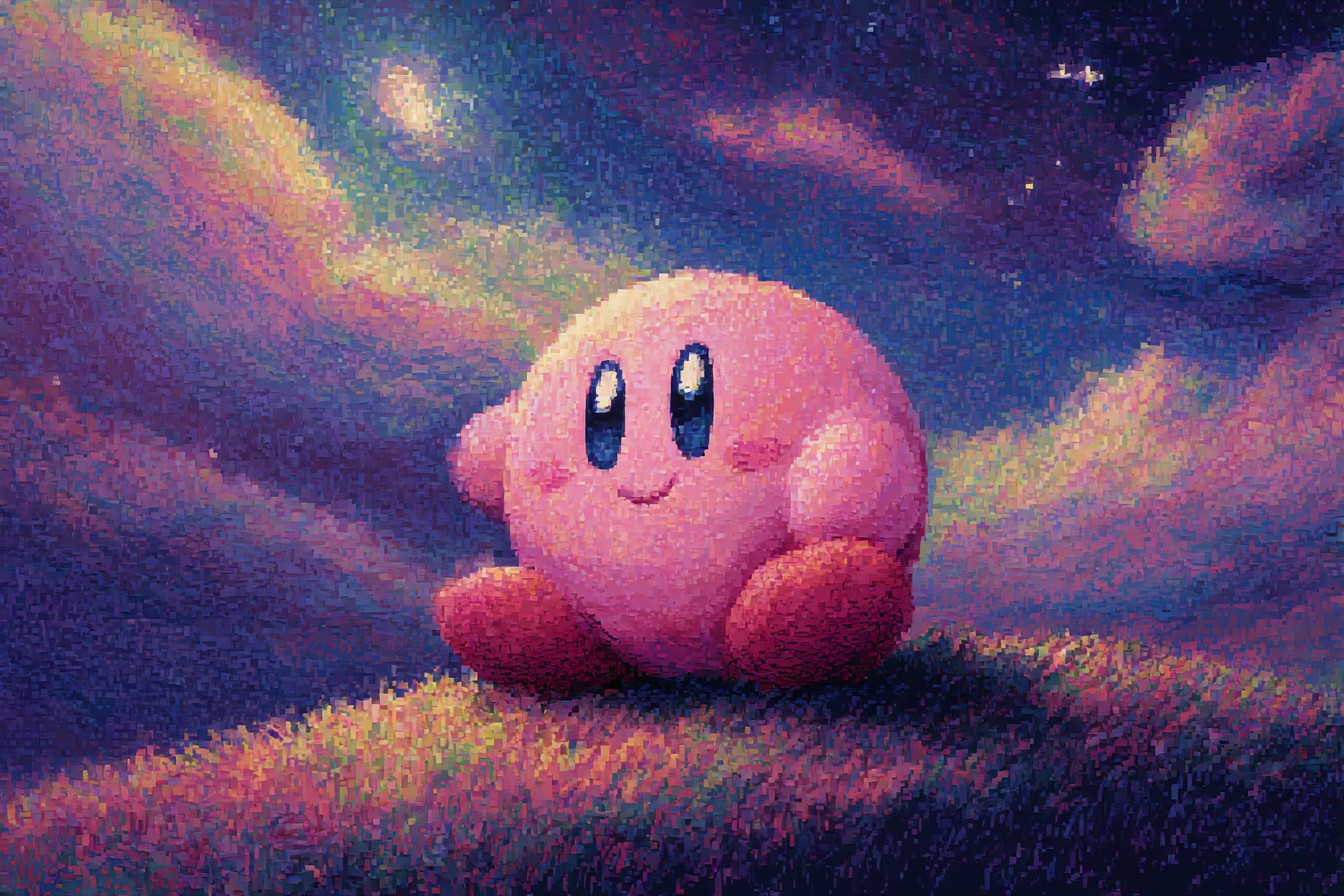
First thing that hit me was how gorgeous it looked. Not technically impressive like Perfect Dark or anything—this was pure art direction doing the heavy lifting. Those pre-rendered backgrounds had this dreamy, watercolor quality that made every level feel like stepping into a children's book illustration. The kind where you'd linger on each page because there was always some tiny detail you'd missed. Pop Star looked like somewhere you'd actually want to live, all rolling green hills and impossible architecture that somehow made sense in Kirby's world.
But here's where it gets interesting—the power combination system. Oh man, this was genius wrapped in deceptive simplicity. You could inhale two different enemies and merge their abilities into something completely new. Fire plus ice? You get a lightsaber. Stone plus electricity? Congratulations, you're now throwing lightning rocks like some kind of geological wizard.
I remember spending an entire Saturday afternoon just experimenting with combinations. My younger sister would call out random pairings from across the room—"Try needle and fire!"—and I'd dutifully find the right enemies to test it out. Some combinations were obvious crowd-pleasers: bomb plus cutter gave you explosive boomerangs that felt properly destructive. Others were wonderfully weird: ice plus spark created a refrigerator that Kirby could ride around in. A refrigerator. On wheels. Throwing ice cubes at enemies. The imagination required to even conceive that combination still makes me grin.
What really sold me was how the game respected your intelligence while keeping things accessible. Sure, you could probably button-mash your way through most levels using basic abilities. But the real joy came from discovering which power combo worked best in each situation. Those crystal shards scattered throughout each level weren't just collectibles—they required you to think about your approach. Sometimes you needed double-jump height, sometimes you needed to break through specific materials, sometimes you needed range attacks that could hit switches from weird angles.
The co-op was another masterstroke, though it took me ages to discover it properly. My sister and I had been taking turns, passing the controller back and forth like civilized humans. Then one day she grabbed the second controller during the opening sequence and… there she was. Playing as a helper character. We both just stared at the screen for a moment, processing this revelation.
Suddenly the game became something else entirely. She could transform into whatever power I was using, which meant we could have the same ability active simultaneously. Imagine two Kirbys with the stone-fire combo, bouncing around levels like volcanic pinballs while actual children's laughter echoed from the TV speakers. It shouldn't have worked as well as it did, but HAL Laboratory knew exactly what they were doing.
The boss fights showcased the system at its best. Each one required specific strategies, and having that arsenal of combined powers meant you were never stuck grinding away with basic attacks. I particularly remember the fights on Shiver Star—that frozen, post-apocalyptic Earth that still gives me chills thinking about it. The industrial settings demanded different approaches than the organic worlds, and suddenly your choice of power combination became tactical rather than just fun.

Looking back, what strikes me most is how Kirby 64 managed to be experimental without being alienating. Nintendo was pushing their first-party teams to explore what the hardware could do, and HAL Laboratory's response was… let's make the most charming, inventive platformer possible. While other studios were figuring out how to make cameras work in 3D space, Kirby 64 said "nah, we'll stick to 2.5D but make it the prettiest 2.5D you've ever seen."
The music deserves a mention too. Jun Ishikawa and Hirokazu Ando crafted a soundtrack that perfectly matched those dreamy visuals. Gentle, melodic themes that stuck in your head for days without becoming annoying. The kind of tunes you'd find yourself humming while doing completely unrelated tasks. My mum once asked if I was playing "that nice space music game" again—she meant Kirby 64, and honestly, that's not a bad description.
These days, with the benefit of hindsight and a slightly more sophisticated understanding of game design, I appreciate how confident Kirby 64 was in its own identity. It didn't try to be edgy or technically impressive. It just focused on being delightful, which is much harder than it sounds. Every system felt considered, every level felt purposeful, every power combination felt like a small gift to the player.
I still have that Blockbuster copy, complete with the rental sticker that won't come off cleanly. Sometimes I'll fire it up on a rainy Sunday afternoon, usually when I need reminding that video games can be pure joy without irony or complexity for its own sake. My daughter's getting to the age where she might appreciate it, and I'm looking forward to watching her discover those power combinations for the first time. Some things are worth passing forward, even if they never quite got the recognition they deserved.