My mate Tony called me an idiot last Tuesday. Not for anything particularly stupid—well, more stupid than usual—but because I'd just spent twenty-five quid on a pristine copy of Mortal Kombat II for the Mega Drive. "You know you can download it for free, right?" Yeah, Tony. I know. But you can't download the weight of that chunky cartridge, can you? You can't download the satisfying click when it slots into the console, or the way the spine looked next to Street Fighter II on my bedroom shelf in 1994.
See, here's what people forget about MKII on the Genesis. Everyone bangs on about the SNES version being arcade-perfect, and fair enough—the colors were spot-on, the sound effects crisper. But the Mega Drive version? That was something else entirely. Something rawer, grittier, like someone had taken the arcade cabinet and stripped it for parts, then rebuilt it with pure teenage angst and a Yamaha sound chip that could make Liu Kang's bicycle kick sound like industrial machinery having a breakdown.
I remember the exact moment I knew I had to own it. Christmas 1993, round my cousin Dave's house. His mum had somehow managed to get hold of a copy early—probably fell off the back of a lorry, knowing his family—and there we were, huddled around their knackered old Panasonic telly while the grown-ups argued about the Queen's Speech in the next room. Dave punched in that blood code like he was defusing a bomb: A-B-A-C-A-B-B. The screen flickered, and suddenly we weren't playing the neutered version we'd seen in the shops. This was the real thing. Blood that looked like paint, fatalities that made us go "eurgh" and then immediately demand to see them again.
The thing about the Genesis version—and I'll die on this hill—is that it felt more dangerous somehow. Maybe it was the way the FM synthesis made everything sound slightly wrong, like the audio had been recorded through a wall. Scorpion's "Get over here!" had this metallic rasp that the SNES version couldn't match. Reptile's acid spit sounded properly nasty. Even the crowd noise in the background had this grimy quality, like you were fighting in some underground tournament that your parents definitely wouldn't approve of.
And Christ, those fatalities. Look, we all knew they were daft. Cartoon violence taken to its logical extreme. But at fourteen? They were the most transgressive thing we'd ever seen in our living rooms. Sub-Zero ripping someone's spine out wasn't just a finishing move—it was a middle finger to every rating board, every concerned parent, every politician who thought video games should be educational. We'd gather round like we were watching banned footage, passing the controller with sweaty palms, each trying to outdo the other with increasingly elaborate finishing moves.
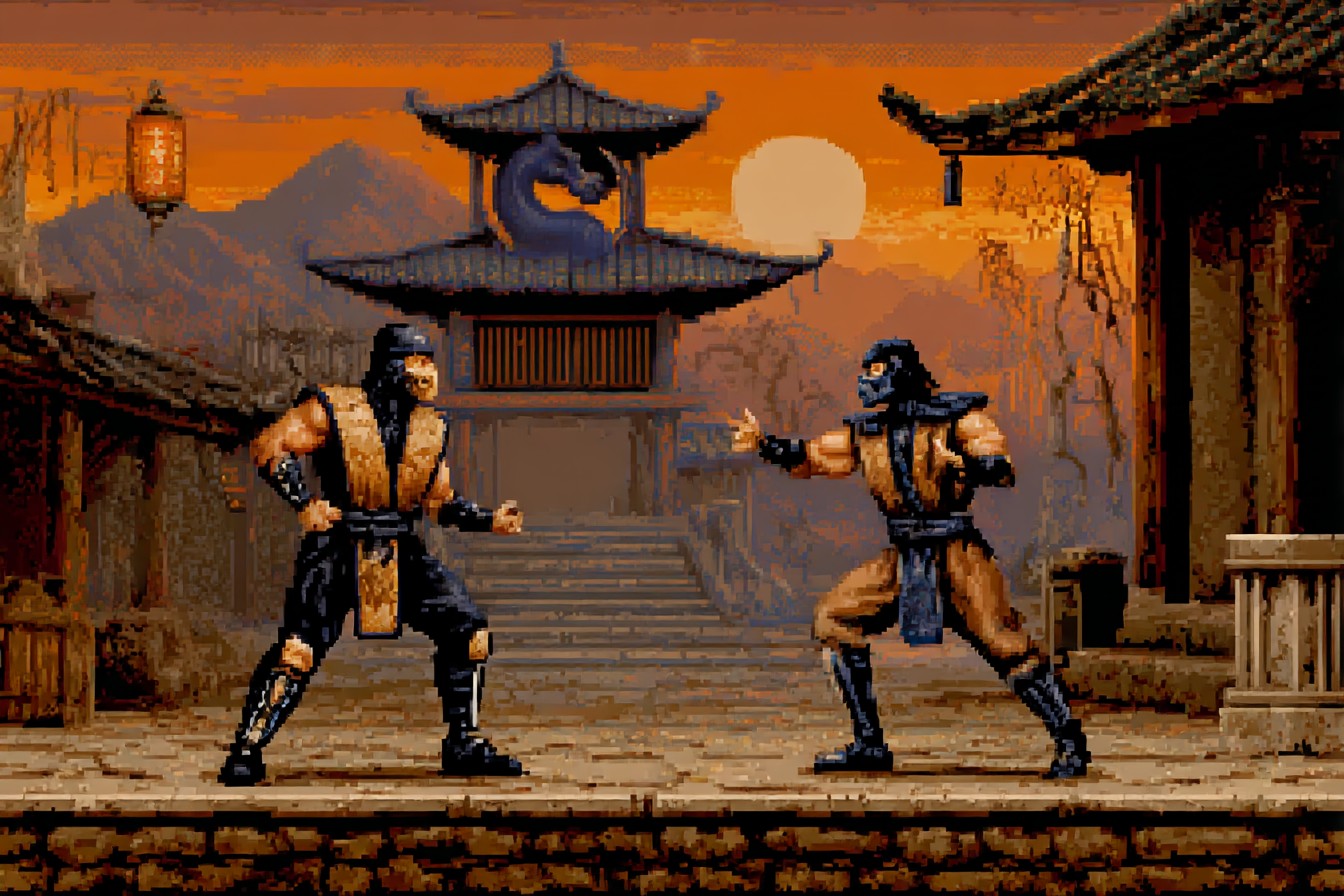
The six-button controller made all the difference too. I know purists bang on about the original three-button pad, but come on—having dedicated buttons for the different punch and kick strengths? That was luxury. My thumbs still remember the muscle memory: back-forward-high kick for Kitana's fan throw, down-back-low punch for Mileena's teleport kick. Hours spent in training mode—well, versus mode against the AI, because proper training modes weren't really a thing yet—drilling those special moves until they became second nature.
Tony's always going on about input lag and frame rates and all that technical bollocks. Fair enough, mate, but in 1994 we didn't have Digital Foundry telling us our games were running at 11fps during busy scenes. We had eyes and reflexes and the absolute certainty that whoever could nail Shang Tsung's morphing combos was basically a fighting game god. I spent entire weekends trying to master his transformations, turning into other fighters mid-combo like some sort of martial arts shapeshifter. The timing was brutal—mess it up and you'd leave yourself wide open for punishment.
But here's what really made the Genesis version special: it felt like ours. The SNES crowd could keep their pixel-perfect sprites and their superior sound samples. We had character, personality, a version that sounded like it had been dragged through the same industrial wasteland as the fighters themselves. When Johnny Cage threw one of his shadow kicks, it didn't sound clean and pristine—it sounded like violence, like something that would actually hurt if it connected with your ribs.
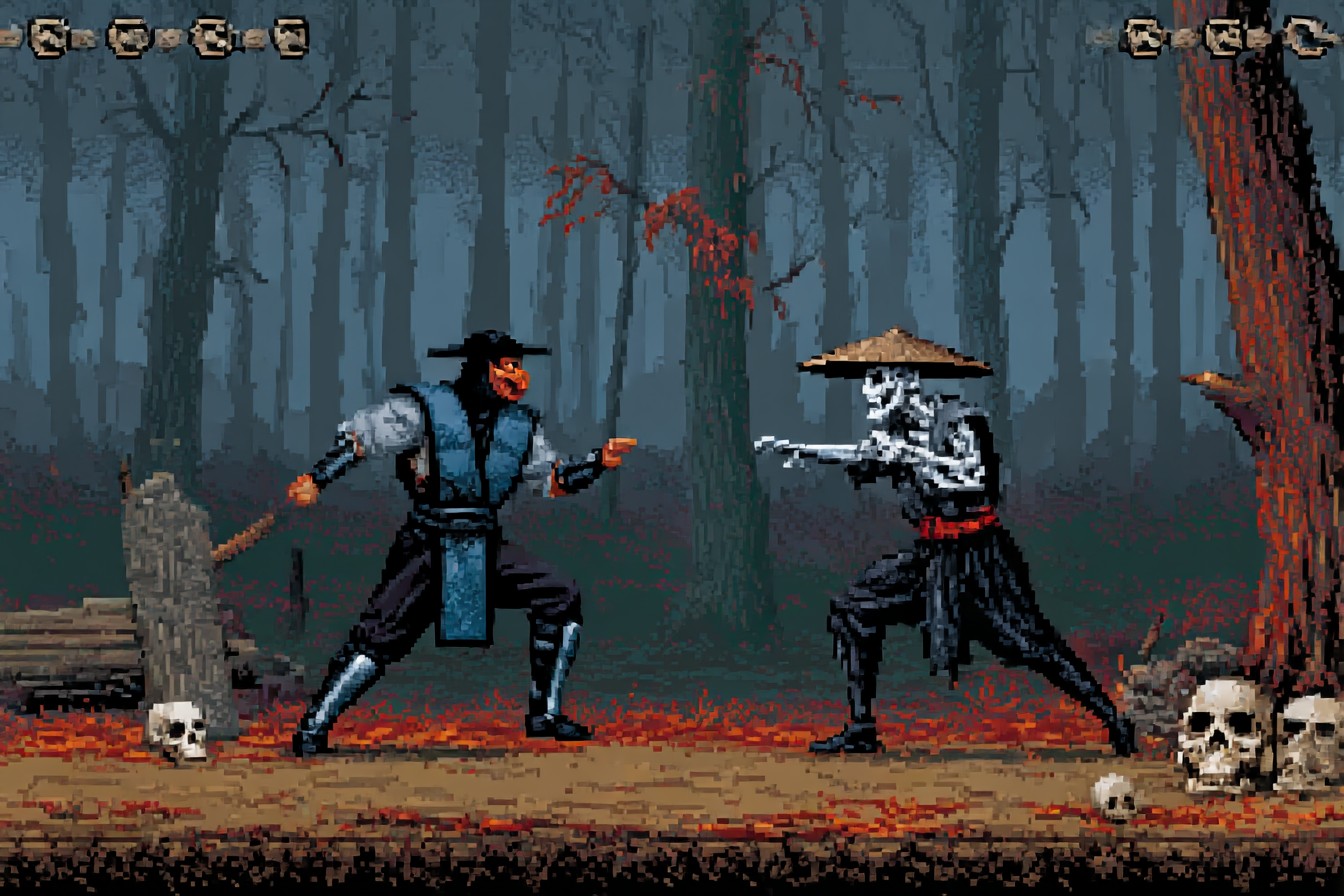
The stages, man. The Dead Pool with its acid bubbling away in the background, occasionally claiming an unfortunate victim. The Pit II with its impossible architecture and that brilliant fatality opportunity—nothing quite like uppercutting someone into those spikes below. The Portal stage that looked properly alien, all purple and wrong. Each one had its own audio signature on the Genesis, its own slightly off-kilter atmosphere that made you feel like you were fighting somewhere genuinely dangerous.
I've still got that copy I bought last week. Fired it up on my trusty Model 2 Genesis—the one with the proper headphone jack and the volume slider that actually works. Plugged into my Sony PVM via RGB SCART, because if you're going to do retro gaming, you might as well do it properly. The first thing that hit me was the sound. That gloriously rough, slightly distorted audio that sounds nothing like the sanitized remasters we get nowadays. Liu Kang's dragon fatality still makes me wince. Kung Lao's hat slice still makes me laugh like a maniac.
Tony can keep his downloaded ROMs and his frame-perfect emulation. I'll take the real thing—plastic cartridge, slightly grubby label, the faint smell of thirty-year-old electronics warming up. Because sometimes the imperfect version is actually perfect. Sometimes a little grit in the audio makes the whole experience better. Sometimes the version that runs slightly slower, looks slightly rougher, sounds slightly wrong is the one that gets its hooks into your memory and never lets go.
That's not nostalgia talking. That's experience. That's the difference between playing a game and living it.