There's something deeply surreal about a game where the King of Pop transforms into a spaceship to fight aliens, and somehow it all makes perfect sense. I was twelve when Moonwalker landed on my Mega Drive, and honestly? It might've been the first time a video game made me feel like I was inside someone else's fever dream—in the best possible way.
My mate Danny had gotten it for his birthday, and I remember the exact moment we fired it up for the first time. His mum had made us those triangular sandwiches with the crusts cut off (fancy), and we're sitting there with our mouths full of ham and butter, watching Michael Jackson moonwalk across the title screen while Smooth Criminal played through his dad's hi-fi speakers. The Mega Drive's FM synthesis doing its metallic magic with that bassline? Pure electricity.
See, this wasn't just another celebrity cash grab. Well, it was, but it was also something else entirely. Sega had somehow captured the essence of what made Michael Jackson compelling and translated it into beat-'em-up mechanics. You weren't just playing as MJ—you were inhabiting this weird alternate reality where dance moves were martial arts and fedoras were projectile weapons.
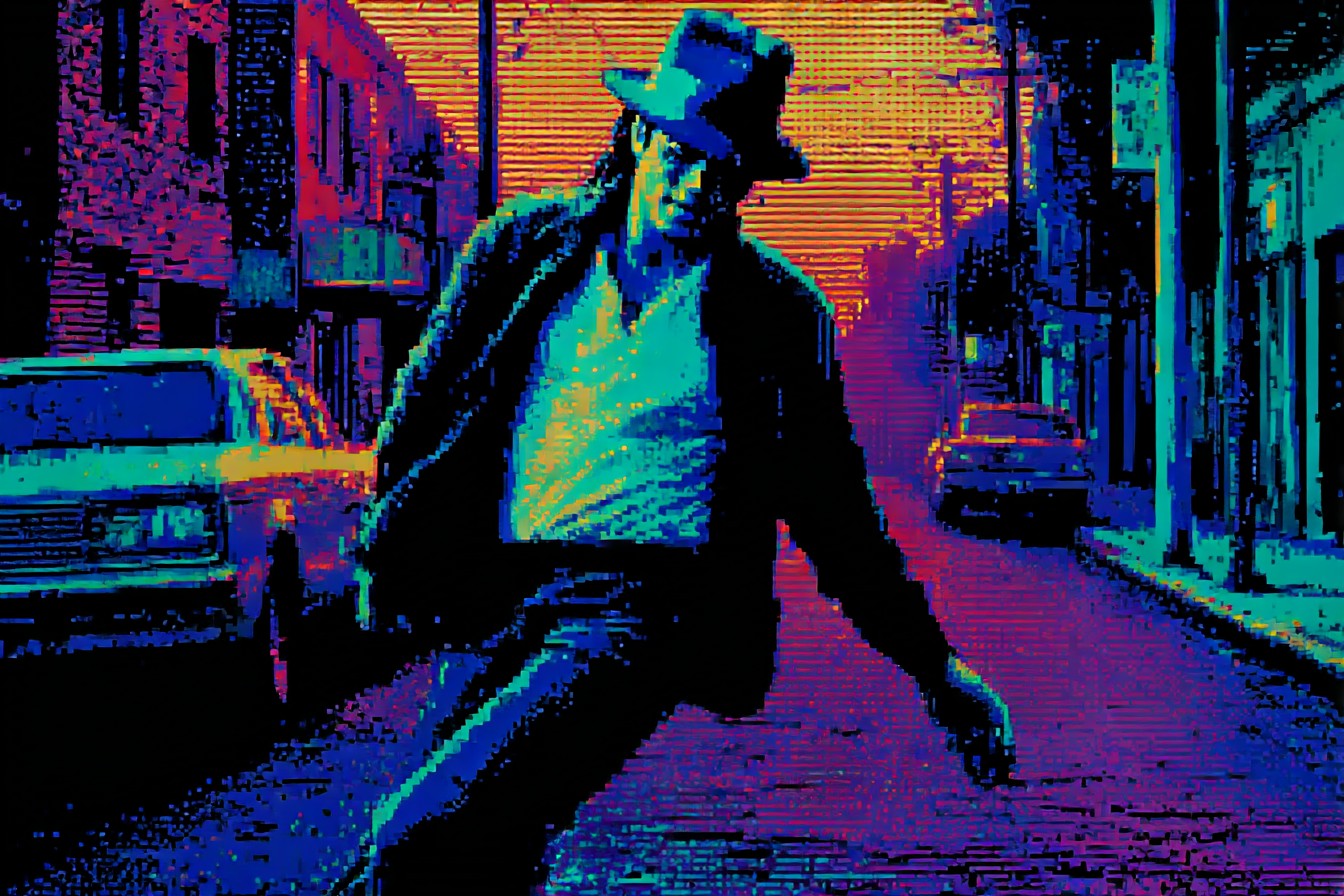
The game opens with that iconic Smooth Criminal scenario, except instead of Annie, you're looking for kidnapped children. Dark stuff, wrapped in neon and sequins. Michael moves across the screen with this fluid grace that the programmers somehow managed to capture in 16-bit sprites. His idle animation wasn't just standing there—he'd do these little shoulder pops and hip tilts that screamed authenticity. Someone on that development team had studied MJ's body language frame by frame.
Danny and I quickly figured out the rhythm. Tap the attack button once, Michael does a standard kick. Tap it twice quickly? Spin kick with a little "hee-hee!" sound effect that made us giggle every single time. But the real magic happened when you held the button down. Michael would start this wind-up animation, drawing all the enemies toward him like some sort of musical Pied Piper, and then—BOOM. Dance explosion. Every baddie on screen would be compelled to dance along before getting knocked flat.
I mean, think about that for a second. The core mechanic of the game was making your enemies dance themselves to death. It was absurd. It was brilliant. It was peak early-90s gaming logic where anything could happen as long as it felt right in the moment.
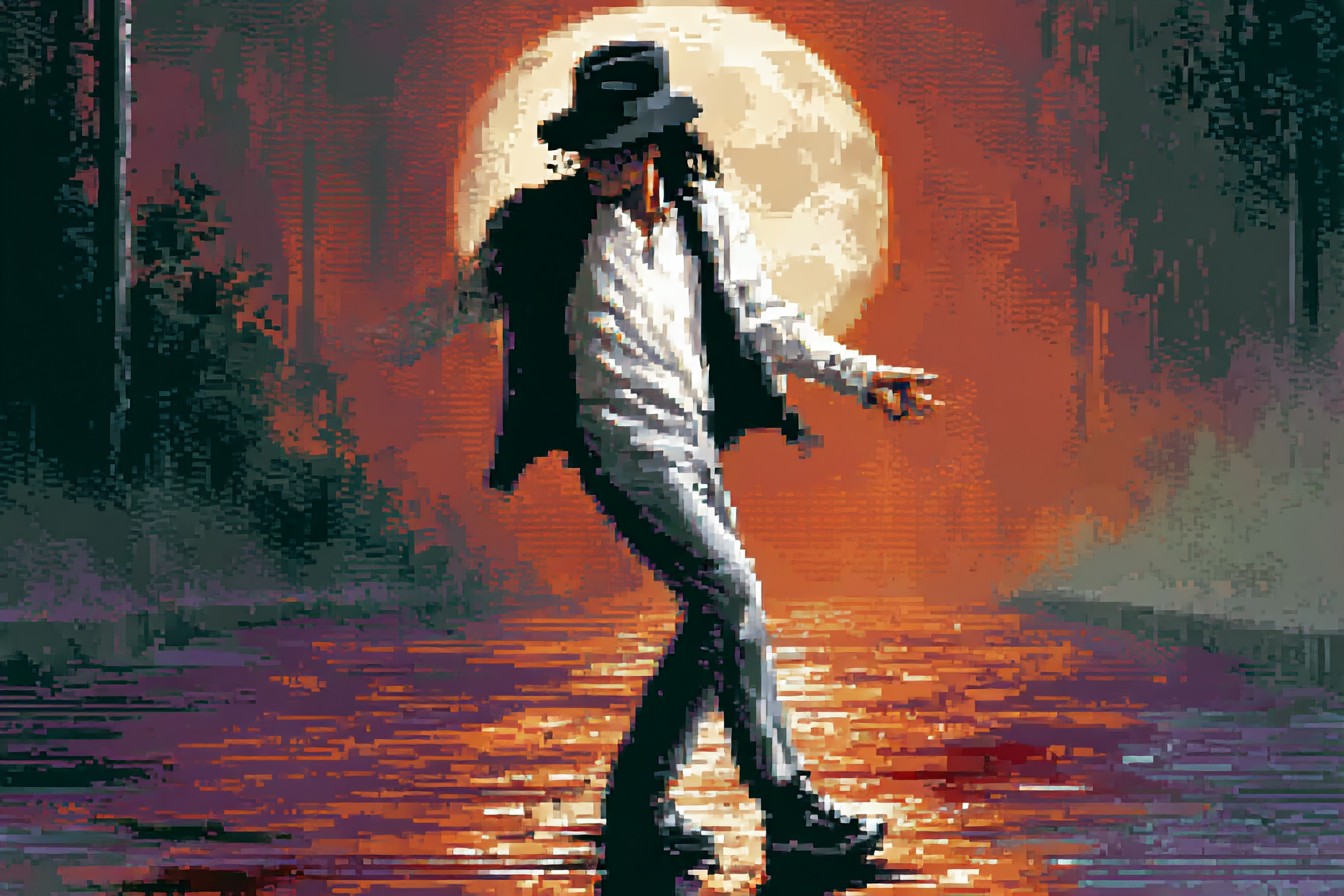
The level design borrowed heavily from Michael's music videos, which gave each stage this cinematic quality that most beat-'em-ups lacked. You'd start in a 1930s speakeasy that looked ripped straight from Smooth Criminal, complete with tilted floors and Art Deco lighting. Then you'd find yourself in a graveyard that felt like Thriller, except instead of zombies backing you up, they were trying to tear your sparkly glove off.
What really got me was the attention to detail in Michael's movements. The moonwalk wasn't just a gimmick—it was a legitimate defensive maneuver. You could slide backward while facing forward, dodging attacks while setting up your next dance combo. The programmers had somehow made the moonwalk feel tactically useful, which is either genius or madness. Probably both.
Danny's little sister Sarah used to watch us play, and she picked up on something I hadn't noticed. "Why does he keep checking his watch?" she asked. We paused the game and looked closer. Sure enough, one of Michael's idle animations had him tapping his wrist and looking impatient, like he had somewhere important to be. It was such a human touch in a game full of robot dogs and laser-shooting gangsters.
The boss fights were where Moonwalker really lost its mind, though. You'd think you're playing a straightforward side-scroller, and then suddenly Michael Jackson turns into a robot. Not metaphorically—literally. Mech-suit Michael with laser cannons and everything. The first time this happened, Danny and I just sat there with our controllers in our hands, trying to process what we'd just witnessed.
"Did… did Michael Jackson just become a Transformer?" Danny asked.
"I think so? Is that… is that allowed?"
Apparently it was, because the game just rolled with it like this was the most natural progression in the world. One minute you're doing the anti-gravity lean, the next you're piloting a spacecraft that looks suspiciously like something from Captain EO. The boss battles in robot mode felt completely different—suddenly you're in a shoot-'em-up, dodging patterns of enemy fire while Michael's digitized voice shouts encouragement.
The sound design deserves special mention here. This was 1990, remember—the Mega Drive's sound chip wasn't exactly known for its vocal capabilities. But somehow, Sega managed to squeeze recognizable Michael Jackson samples into the cartridge. "Shamone!" "Who's bad?" These weren't just sound effects; they were perfectly timed audio punctuation that made every successful combo feel like a small performance.
I spent entire afternoons perfecting the timing on Michael's special moves, not because the game was particularly challenging, but because nailing the rhythm felt so satisfying. There was this one sequence in the nightclub level where you could chain together three different dance attacks in perfect sync with the background music, and when you got it right, it felt like conducting an orchestra of controlled chaos.
The two-player mode was where things got properly mental. Danny and I would argue over who got to be "real" Michael and who had to be the palette-swapped version in the slightly different outfit. But once we started playing, it didn't matter. Having two Michael Jacksons moonwalking around the screen, making gangsters breakdance against their will, was peak couch co-op nonsense.
Looking back now, thirty-odd years later, Moonwalker represents this perfect storm of 90s excess. It was the era when celebrity tie-ins could be genuinely innovative because nobody really knew what they were supposed to be yet. The game industry was still figuring out its own rules, so why not make a beat-'em-up where the protagonist defeats evil through the power of choreography?
I still fire up Moonwalker occasionally, usually on original hardware when I want that authentic FM synthesis crunch. The game holds up surprisingly well, not because it's mechanically sophisticated, but because it commits so completely to its own bizarre logic. In a world full of serious, po-faced action games, Moonwalker remains gloriously, unapologetically weird.
Michael Jackson turned into a spaceship to fight aliens, and somehow, it all made perfect sense.