You know what still makes my palms sweat a bit? Walking past an old arcade cabinet running Virtua Fighter. Not the sweaty-palms anxiety of teenage social awkwardness—though there's definitely some of that muscle memory lurking about—but the good kind. The kind that comes from remembering when Sega didn't just make fighting games, they made *statements*.
I was probably fourteen when I first saw Virtua Fighter running in the wild, tucked into the corner of our local leisure center between a busted Street Fighter II cabinet and something that might've been Golden Axe if you squinted. The polygons looked rough as sandpaper by today's standards, but back then? Christ, it was like watching the future boot up in real-time. Akira's blocky shoulders moved with this weird, mechanical precision that felt more *honest* than Ryu's flowing hadokens. Here was a fighter that didn't care about fireballs or supernatural nonsense—just pure, sweaty martial arts rendered in glorious chunky 3D.
The thing about Sega's approach to fighting games was they never seemed content to just follow Street Fighter's homework. While Capcom was perfecting the six-button formula and SNK was cramming more special moves than you could memorize into Fatal Fury, Sega went sideways. Virtua Fighter said "what if we made this about actual fighting?" Streets of Rage said "what if beat-em-ups had the best soundtrack ever recorded?" Even their oddball experiments like Fighting Vipers felt like someone in Japan had gotten properly excited about an idea and just *run* with it.
I spent more 50p pieces on Virtua Fighter 2 than I care to calculate. The local arcade—this grotty place above a kebab shop that always smelled like industrial carpet cleaner and broken dreams—had the cabinet positioned just so the afternoon sun would hit the screen at exactly the wrong angle. Didn't matter. I learned to play Jacky Bryant by feel, timing his punches to the rhythm of the Yamaha FM synthesis pumping through speakers that had definitely seen better days. That cabinet taught me something important about Sega's fighting philosophy: it wasn't about memorizing quarter-circle motions until your thumbs bled. It was about understanding space, timing, momentum.
The Saturn port was a revelation wrapped in a minor miracle. This was back when "arcade perfect" was marketing speak that usually meant "we tried our best but the home version looks like it was filtered through a sock." Not Virtua Fighter. Pop that disc into a Saturn and it was *there*—all the chunky animation, all the precise hit-boxes, all the mechanical satisfaction of landing a perfect combo. I remember calling my mate Dave over specifically to watch me demonstrate how the home version was identical to the arcade. "Look," I said, executing Pai's most complex string, "exactly the same timing." Dave was more interested in my mum's biscuit tin, but I knew I was witnessing something special.
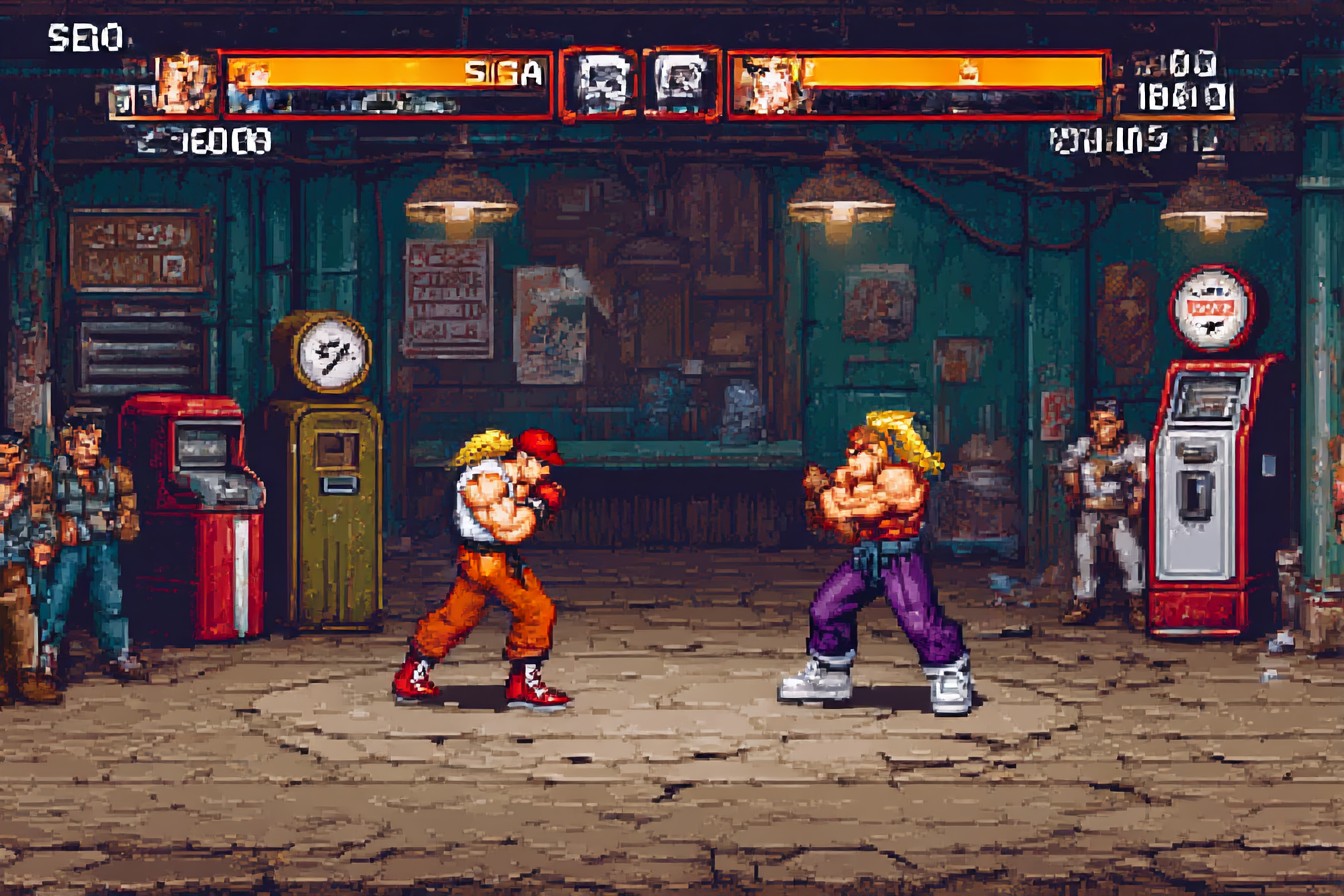
Streets of Rage, though—that's where Sega showed they understood fighting could be more than just one-on-one. The beat-em-up genre was hardly new when SOR landed on the Mega Drive, but Sega approached it like they were scoring a film. Yuzo Koshiro's soundtrack didn't just complement the action; it *was* the action. Those bass lines didn't just play while you punched street thugs—they punched *with* you. I can still hum the opening theme from Streets of Rage 2, and I'm willing to bet it would sync perfectly with my heartbeat after thirty years of occasional cardio.
Playing Streets of Rage with my younger brother was like conducting a tiny orchestra of violence. He'd button-mash his way through as Axel while I'd try to demonstrate the subtle art of crowd control with Blaze. "You can't just run in swinging," I'd explain, usually while getting grabbed by three enemies because I was talking instead of paying attention. "You've got to use spacing, manage your special moves…" Then he'd accidentally discover some devastating combo and clear half the screen while I was still lecturing about strategy.
The beauty of Sega's fighting games was they never felt clinical. Tekken had its precise Korean backdashes and frame-perfect juggles. Street Fighter had its charge motions and careful neutral game. But Sega's fighters felt… physical. Chunky. When Jeffry McWild grabbed someone in Virtua Fighter, you could almost hear his spine creaking with the effort. When Axel threw a punch in Streets of Rage, the YM2612 chip made it sound like thunder wrapped in electricity.
I've still got my Saturn hooked up to an old Sony Trinitron in the spare room, mostly for Virtua Fighter 2 sessions when modern life gets a bit much. There's something about those blocky polygons and that precise, mechanical movement that cuts through contemporary gaming's obsession with smoothness and spectacle. VF2 doesn't care about your feelings—it cares about whether you pressed the button at exactly the right frame. It's meditation disguised as a fighting game.
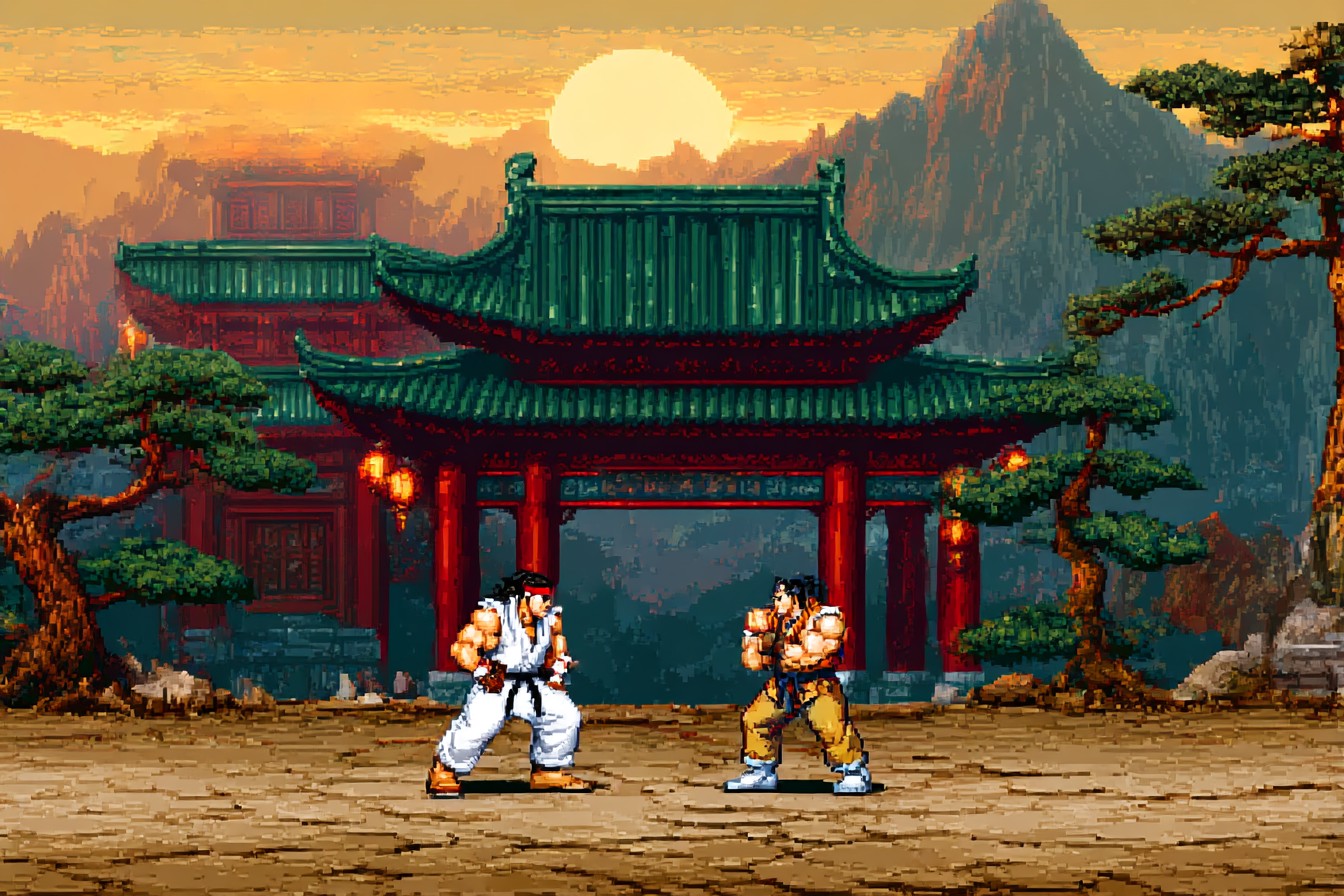
The Dreamcast era brought us Virtua Fighter 3tb, and honestly, I think that's when Sega's 3D fighting peaked. The graphics had smoothed out just enough to feel properly futuristic without losing that distinctive chunky charm. Playing it today on VGA through an OSSC makes those character models look almost sculptural—like someone carved martial artists out of digital marble. The loading times were practically non-existent, the controls were butter-smooth, and that little VMU screen showing your character's health between rounds? Pure Sega madness in the best possible way.
Here's the thing about Sega's approach to combat games that I still appreciate: they treated fighting like a conversation rather than a lecture. Street Fighter teaches you its language through repetition and muscle memory. Virtua Fighter teaches you through experimentation and adaptation. Streets of Rage teaches you through rhythm and flow. Each game felt like it respected your intelligence while still being accessible enough that your non-gaming friends could jump in and have a laugh.
Modern fighting games are technically superior in every measurable way—better netcode, more balanced rosters, training modes that can dissect frame data like a forensic scientist. But there's something about Sega's old-school approach that still hits different. Maybe it's the lack of pretension, the willingness to be weird, or just the way those FM synthesis soundtracks made every punch sound like it was changing the molecular structure of reality.
Sometimes I fire up Streets of Rage 4—which is brilliant, by the way—and I can hear those old Mega Drive sound channels echoing through the modern production. Sega's fighting game DNA is still there, still punching above its weight, still making statements instead of just following formulas. That's arcade combat excellence, right there.