Right, so there I was in Electronics Boutique circa 1992, clutching a twenty-pound note that had been burning a hole in my pocket for three weeks. Sonic 2 was calling my name from behind the glass counter, but this enormous black contraption next to it kept catching my eye. The Sega CD. Even the name sounded expensive.
The bloke behind the counter—middle-aged, thick glasses, definitely knew his stuff—was practically bouncing on his heels talking about it. "Full motion video," he kept saying, like he was announcing the second coming. "CD-quality audio. Games that look like movies." I was sixteen and absolutely skint most of the time, but something about that sleek black wedge made me want to negotiate with my paper round money like I was buying a car.
My mate Dave had managed to convince his parents to shell out for one after Christmas. Lucky git. I'd head round to his after school and we'd take turns with Night Trap, feeling properly rebellious watching grainy actors stumble through what was basically an interactive B-movie. The quality was, let's be honest, absolutely dreadful by today's standards. But back then? Christ, it was like having a cinema under your telly.
The thing about the Sega CD—or Mega CD if you're being proper about it—was that it felt like the future arriving early. Your standard Genesis cartridge might give you brilliant gameplay, but it couldn't give you Dana Plato vamping it up in cheesy cutscenes. The audio upgrade alone was worth the price of admission, though that price was absolutely mental. Three hundred quid, if memory serves. That's serious money when you're earning twelve pounds a week delivering the local rag.
I eventually saved up for mine by selling my entire collection of Marvel cards. Took months. The anticipation was worse than waiting for Christmas morning. When I finally brought that black box home and hooked it up to my existing Genesis, the ritual felt almost sacred. That distinctive whirring sound when you powered it up, different from the gentle hum of a cartridge system. This thing had moving parts. Laser technology. It was proper space-age stuff.
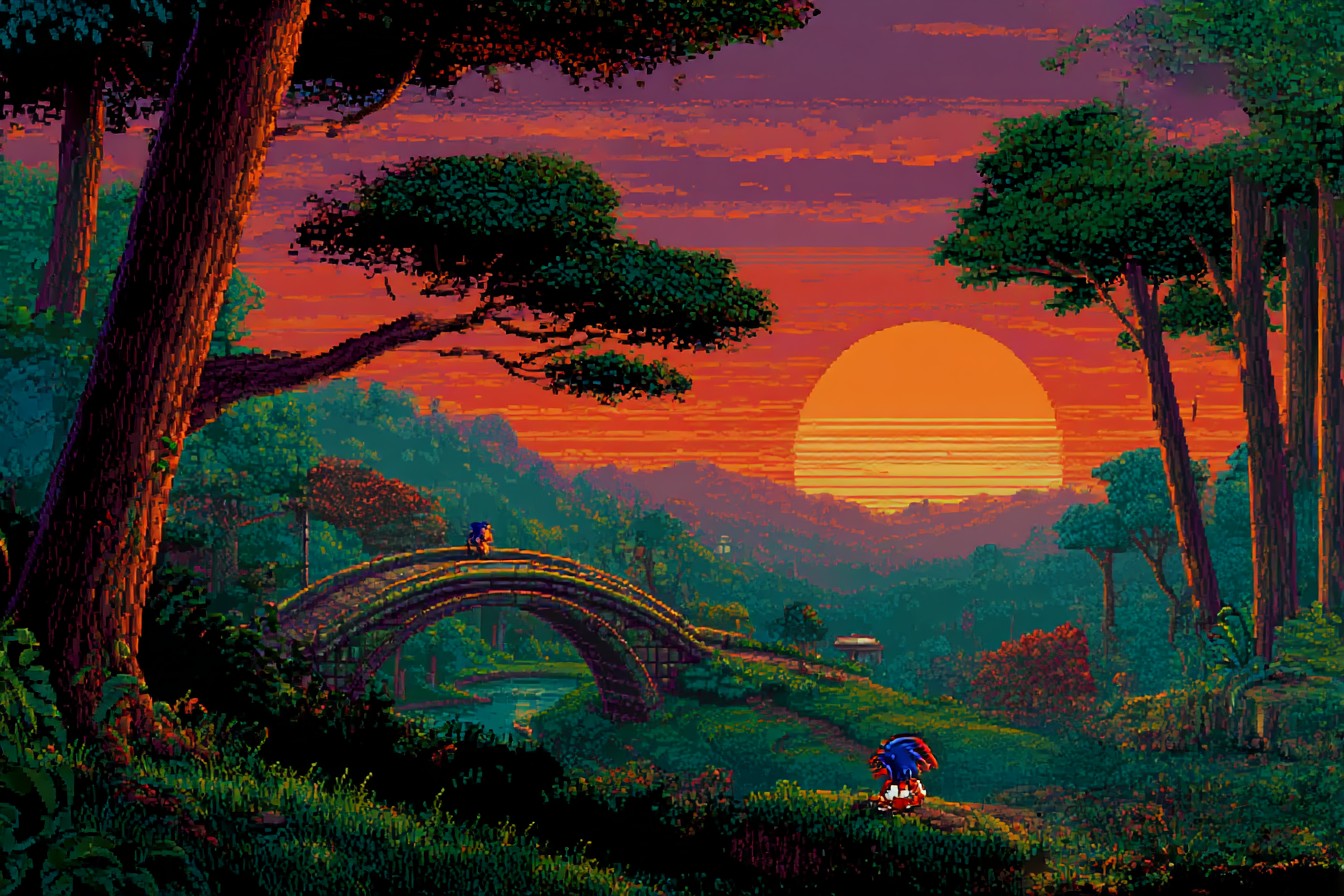
Sonic CD was the first game I bought with it, and bloody hell, what a showcase. That intro sequence with Sonic running through time—still gives me goosebumps. The soundtrack was incredible, miles beyond anything the standard sound chip could manage. Each time zone had its own musical identity. Past versions had this retro charm, future levels sounded properly sci-fi. The Japanese soundtrack was different too, which we only found out years later through internet trading. Different era entirely.
But let's talk about the real reason most of us wanted a Sega CD: those FMV games. Night Trap gets all the attention because of the congressional hearings and moral panic, but Sewer Shark was the one that really got its hooks in me. Flying through tunnels shooting mutant rats while some grizzled pilot barked orders through tinny speakers. Pure cheese, but I loved every second. The acting was community theater standard, the graphics were pixelated to hell, but it felt like playing inside a movie.
Road Avenger was another favorite. Basically animated Quick Time Events before that term existed, but the animation was gorgeous. Proper anime-style car chases with branching paths depending on how well you timed your button presses. I must have replayed certain sequences dozens of times, not because I was struggling, but because they looked so good. Having that level of visual storytelling at home felt revolutionary.
The enhanced ports were brilliant too. Final Fight CD gave us the complete arcade experience—all three characters, every stage, no compromises. The loading times were a bit of a pain, sure, but hearing that CD-quality audio pumping through the speakers made up for any delays. Mike Haggar's piledriver never sounded better.
Then there were the weird experiments. Make My Video games that let you edit music videos for Kriss Kross and other early '90s acts. Completely bonkers concept that somehow worked as a curiosity. Double Switch, another FMV adventure with Corey Haim hamming it up in what looked like a low-budget thriller. These games were objectively terrible by most measures, but they had personality. Character. They were trying something genuinely new.
The technical side was fascinating if you were into that sort of thing. The way the system handled the integration between cartridge and CD data, the extra RAM for buffering video, the scaling and rotation effects that weren't possible on standard hardware. Ground Zero Texas pushed the hardware to its limits with its branching storyline and multiple video streams. Playing it felt like being inside one of those "Choose Your Own Adventure" books, except with actual moving pictures.
Course, not everything was brilliant. The loading times could be properly painful, especially coming from the instant gratification of cartridges. Some games were just slightly enhanced versions of existing titles with a few cutscenes bolted on. And don't get me started on the reliability issues. My original unit developed a habit of not reading certain discs after about eighteen months. Had to do that old trick of adjusting the laser potentiometer with a tiny screwdriver, following photocopied instructions from a computer magazine.
Looking back now, the Sega CD was definitely ahead of its time. It was trying to bridge the gap between traditional gaming and multimedia entertainment before most people even had CD-ROM drives in their computers. The concept was sound, but the technology wasn't quite there yet. Those full-motion video sequences that seemed so impressive in '92 look pretty rough now, but they represented something important—gaming's first real attempt at cinematic storytelling.
The library was smaller than I'd have liked, and too many games relied on the novelty of video rather than solid gameplay mechanics. But when it worked, it really worked. Snatcher, Lunar, Popful Mail—these were games that used the additional storage and audio capabilities to create experiences you simply couldn't have on cartridge alone. They felt bigger, more ambitious, more adult somehow.
My Sega CD eventually gave up the ghost sometime in the late '90s, victim of laser degradation and my complete inability to leave well enough alone. But those memories of sitting in Dave's living room, mouths hanging open as we watched our first FMV cutscene, remain crystal clear. The future looked expensive back then, and it was. But sometimes, if you saved up your paper round money long enough, you could afford a piece of it.