My mate Steve still owes me twenty quid from a bet we made in 1997. The wager? Whether anyone would ever top GoldenEye 007's four-player split-screen battles. He reckoned Quake II would murder it within six months. Poor sod's been dodging that debt for twenty-seven years now, and honestly, I'm not even mad anymore because he was spectacularly wrong.
You have to understand something about gaming in the late nineties—proper multiplayer on consoles wasn't really a thing yet. Sure, we had Street Fighter tournaments and the odd racing game where you could take turns, but the idea of four people simultaneously running around shooting each other in actual 3D environments? That was PC LAN party territory, and most of us couldn't afford four computers plus the networking cables that looked like they belonged in a telephone exchange.
Then Rare went and changed everything with one cartridge that weighed about the same as a house brick.
I still remember the first time we fired up GoldenEye's multiplayer mode at my cousin's place. His mum had finally upgraded from the old Panasonic telly to one of those massive Philips CRT monsters—the kind that took two people to lift and heated the room like a radiator. We'd been playing through the single-player campaign for weeks, learning every guard patrol in Facility and memorizing which crates exploded when you shot them, but none of us had really explored the split-screen options properly.
Four controllers plugged into that weird N64 hub thing. The screen divided into quarters that looked impossibly tiny until you started playing. Then magic happened.
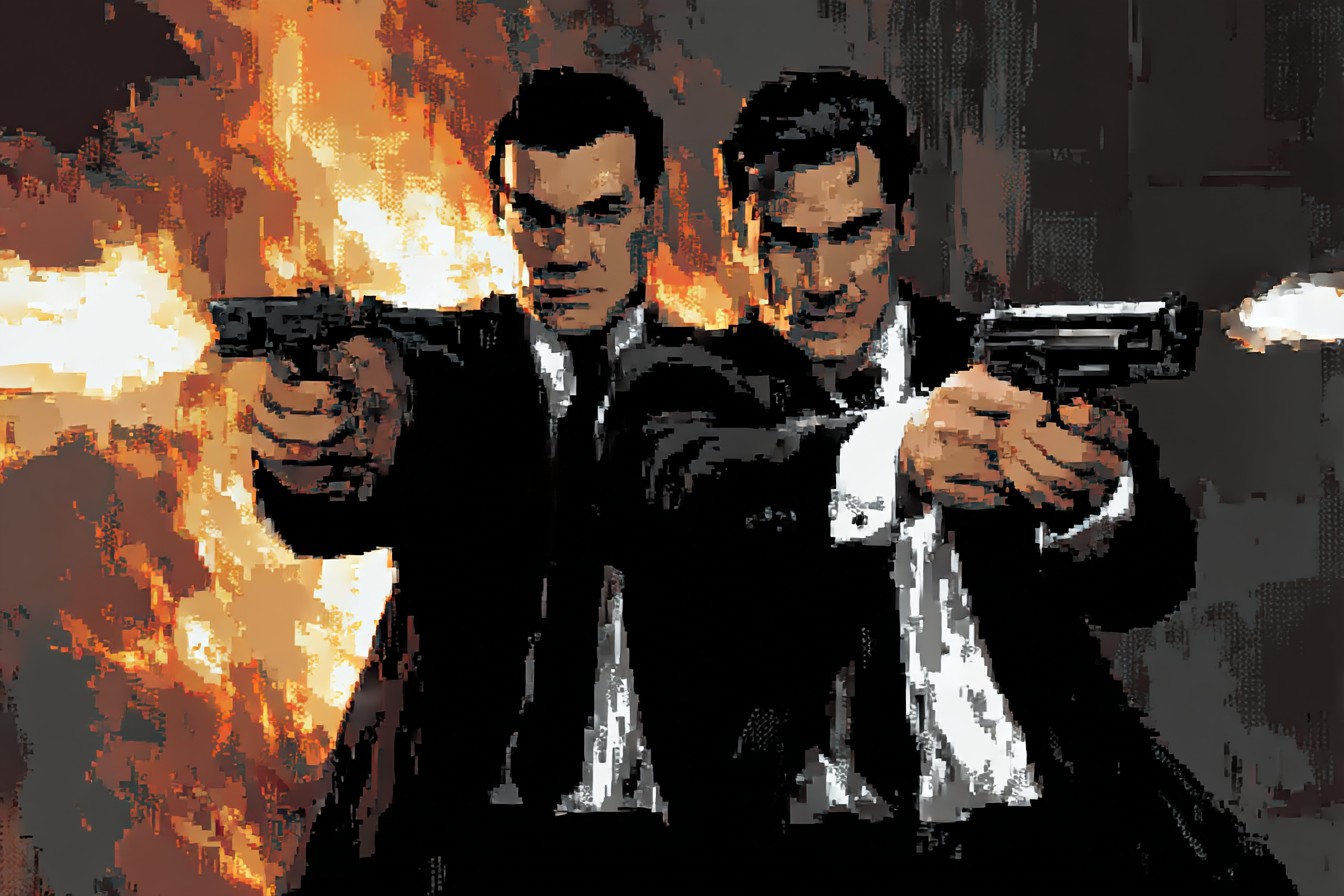
The weapon selection system was pure genius, even if we didn't appreciate it at the time. Instead of just dumping every gun from the campaign into multiplayer and calling it a day, Rare curated specific loadouts that turned each match into a different sort of chaos. Slappers Only became an instant classic—nothing but fists and the satisfying thwack of digital palm meeting digital face. We'd spend entire Saturday afternoons just running around Temple, giggling like idiots as we chased each other up ramps and around corners.
But then you'd switch to RCP-90s and suddenly everyone was a bullet-spraying maniac. The sound design on that thing was incredible—this chunky, industrial rattle that made you feel like you were wielding some sort of future police weapon. Or Rocket Launchers in Complex, which usually ended with everyone dead within thirty seconds and arguments about spawn camping that would stretch on longer than the actual matches.
The real genius was in those smaller details that you only noticed after hundreds of hours. The way Oddjob was banned from most friend groups not because he was overpowered, but because playing as him felt like cheating in a way that was hard to articulate. His short stature meant everyone was constantly aiming over his head, and auto-aim couldn't quite compensate properly. We instituted house rules faster than the UN writes treaties.
Screen-watching was the other eternal debate. Officially, we all agreed it was cheating. Practically, we all did it constantly and pretended we didn't. You'd catch someone's eyes flicking to your quarter of the screen just as you were setting up the perfect ambush, and suddenly they'd change direction at the last second. The accusations would fly, denials would follow, and somehow this just made everything more competitive rather than less fun.
The level design deserves more credit than it usually gets. Each map had its own personality and flow that completely changed depending on what weapons you were using. Facility with Proximity Mines turned into this tense psychological warfare where everyone was paranoid about doorways. Archives with Paintball Mode was pure running and gunning across multiple floors. The Caverns felt claustrophobic with shotguns but became a sniper's paradise with Klobbs.
And speaking of the Klobb—what a beautifully useless weapon that thing was. Named after Ken Lobb from Nintendo, it sprayed bullets like a garden sprinkler and hit about as hard as harsh language. But somehow matches restricted to Klobbs were some of the most entertaining, because everyone was equally terrible and firefights lasted long enough to develop proper drama.
The technical achievement still impresses me when I think about it properly. Four separate viewports running simultaneously on hardware that was already pushing its limits with single-player games. The frame rate would absolutely chug during busy moments—especially if someone set off multiple explosions at once—but nobody cared because we were all experiencing the same slideshow together. It felt fair in its limitations.
Perfect Dark tried to build on GoldenEye's foundation a few years later, and in many ways succeeded. The weapons were more creative, the bots were a revelation, and the customization options were deeper. But it never quite captured that same lightning-in-a-bottle feeling. Maybe it was the James Bond license adding that extra layer of cool, or maybe it was just timing—GoldenEye arrived at exactly the right moment when we were hungry for something we didn't even know we wanted.
The cultural impact rippled out in ways that are still being felt today. Every online shooter owes something to those early GoldenEye matches. The idea that multiplayer could be the main attraction rather than a bonus feature started in those split-screen sessions. Battle royale games are basically just scaled-up versions of what we were doing in 1997, except now there are ninety-nine other players instead of three, and they're all scattered across the globe instead of crammed onto one sofa.
I've got my N64 hooked up to that same type of CRT these days—not the exact same one, obviously, but a period-correct Trinitron that weighs about as much as a small car and displays those chunky pixels exactly as they were meant to be seen. Sometimes I'll fire up GoldenEye just to remind myself how it felt when four-player gaming was still new and magical. The muscle memory is still there—the exact stick movements needed to strafe around corners in Archives, the timing required to nail someone with a Rocket Launcher from across Complex.
The weapons feel different now, of course. I've played decades of shooters since then, with more realistic ballistics and better feedback systems and graphics that would have melted our teenage brains. But there's something pure about GoldenEye's approach that modern games sometimes lose in their pursuit of authenticity. It's arcade-simple in the best possible way—point, shoot, run, repeat.
Steve still comes round occasionally, though he's careful not to bring up any topics that might remind me about that outstanding twenty quid. We'll play a few rounds of GoldenEye for old time's sake, and he'll shake his head and mutter something about how games were better back then. He's not entirely wrong, even if his prediction about Quake II taking over the world was spectacularly off-target.
Some legends never fade. They just get passed down to the next generation, one split-screen session at a time.