Standing in front of that burgundy CRT television in 1996, watching Mario's pixelated face stretch and scrunch in the file select screen, I had no idea I was witnessing the birth of something that would fundamentally rewire how we think about moving through digital space. My mum was somewhere behind me complaining about the "telly being upside down again" because we'd switched from the regular aerial to the N64's RF adapter, but I couldn't hear her. Mario winked at me through sixty-four bits of pure magic, and everything changed.
See, up until that moment, video game movement had been a pretty binary affair. You pressed right, your character moved right. You pressed up, they jumped or climbed. The Game Boy taught us that direction was digital—eight ways if you were lucky, four if you weren't. Even the SNES, with all its Mode 7 trickery making F-Zero feel like you were actually racing, still fundamentally operated on the principle of "press button, get predetermined result."
But that chunky three-pronged controller… Christ, what were Nintendo thinking with that design? Looked like something you'd need three hands to operate properly. My younger cousin actually tried holding it with both hands and resting the middle prong on his knee, which, honestly, wasn't the worst approach I'd seen. The real genius wasn't in the alien ergonomics though—it was that little grey stick poking up from the center. First time I nudged it gently, Mario took a tentative step forward. Pushed it harder, he broke into his familiar sprint. But here's the thing that made my brain do a little flip: I could make him walk diagonally.
Sounds stupid now, doesn't it? Walking diagonally. But in 1996, after years of eight-directional movement at best, being able to guide Mario at any angle felt like gaining a new sense. Like suddenly discovering you could hear colors or taste sounds. That first lap around Princess Peach's courtyard wasn't just a tutorial—it was a proof of concept that digital characters could move like real things in real space.
The camera though… that took some getting used to. My dad wandered in while I was wrestling with it during those opening moments in the castle grounds. "Why's the picture all wonky?" he asked, and I tried explaining that *I* was controlling the camera now, that I could look around independently of where Mario was facing. He gave me that look parents reserve for when their kids claim they can taste the difference between tap water and bottled water. Fair enough—it did look wonky at first.
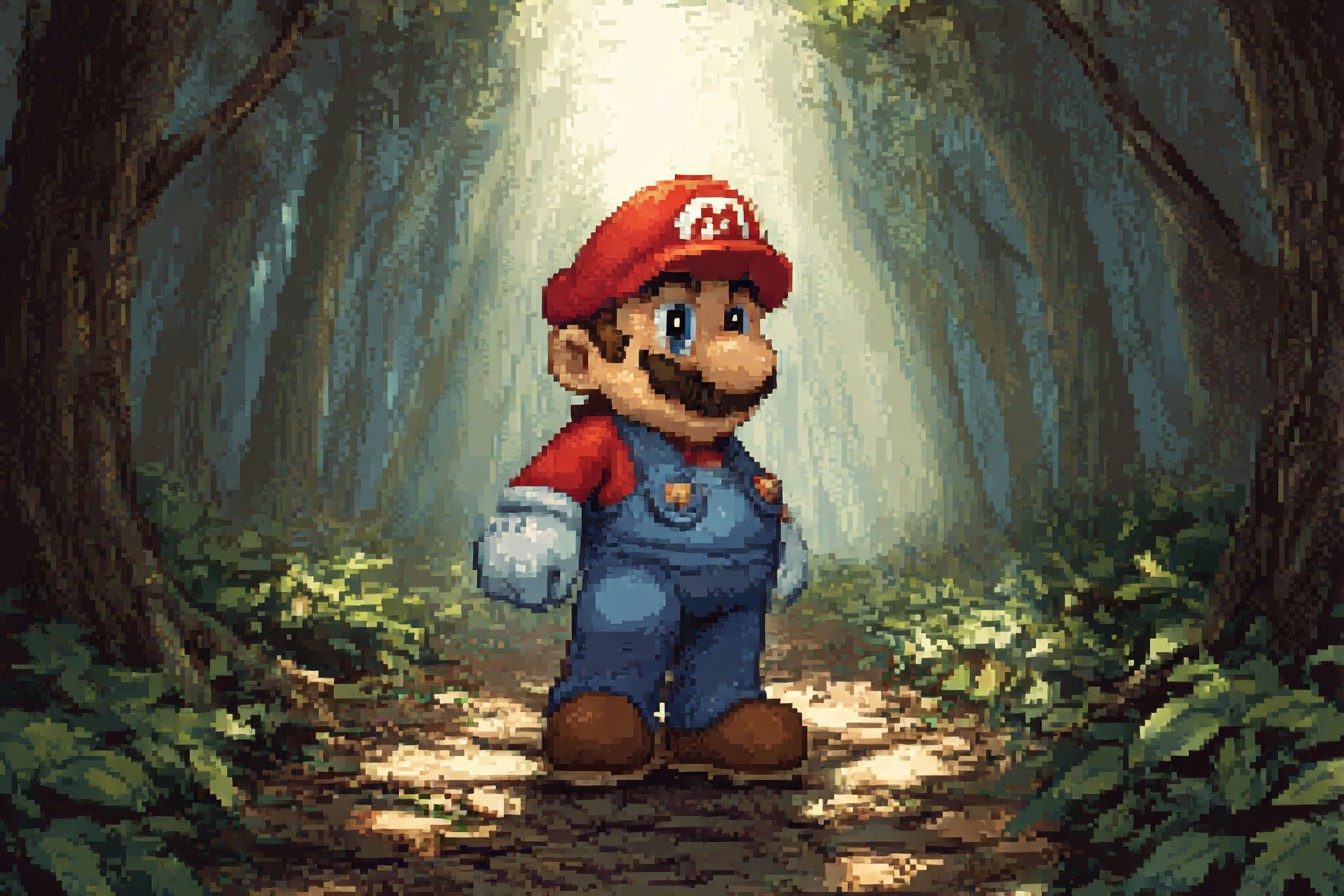
Those yellow C buttons became my best friends and worst enemies simultaneously. Up close to examine a texture that looked suspiciously like someone had sneezed pixels onto a wall. Too far back to see anything useful. Spinning wildly because I'd gotten excited and mashed everything at once. But slowly, muscle memory took over. Z-targeting felt like cheating at first—lock onto an enemy and suddenly combat became about timing and positioning rather than hoping your jump landed somewhere vaguely threatening.
I remember the exact moment it all clicked. Second floor of the castle, standing outside the painting for Bob-omb Battlefield. I'd been circling that damn lobby for twenty minutes, jumping at walls, trying to figure out what you were supposed to do in a 3D Mario game besides collect coins and stomp on things. Then I walked through the painting—literally through it—and emerged onto that grassy battlefield with Goombas wandering around in actual three-dimensional space.
The King Bob-omb fight taught me everything I needed to know about how Nintendo had reimagined video game combat for three dimensions. No more approaching enemies from the side because that's the only angle the 2D sprite looked convincing from. No more timing jumps based on memorized patterns. I had to run around behind the King, grab him (grab him! With a button press!), and hurl him to the ground while he rotated in real-time, trying to face me. It felt like wrestling with a slightly oversized beach ball that had developed attitude problems.
But the real revolution wasn't in the combat—it was in the exploration. Mario controlled like he had weight and momentum, which sounds obvious until you remember that platformer heroes had been essentially teleporting between predetermined pixels for over a decade. Push the stick forward gently, and Mario ambled along like he was taking a Sunday stroll. Slam it to the edge, and he'd tear across the landscape with purpose. That gradient of movement speed changed everything about how you approached platforming challenges.
Tall, Tall Mountain became my personal Everest. Not because it was particularly difficult, but because it was the first time I'd encountered a 3D platforming challenge that required me to think about space in layers. Climbing up, looking down, planning routes that took advantage of Mario's newfound ability to approach problems from literally any angle. The slide down was pure joy—careening around corners I'd carefully navigated on foot, building speed until the world became a blur of polygons and that wonderful "Yahoo!" sound effect.
The analog movement opened up possibilities that level designers are probably still discovering today. Take the penguin race in Cool, Cool Mountain. In a 2D Mario game, that would've been a straightforward race along a predetermined track. But because Mario could move at any speed in any direction, suddenly it became about finding the optimal line, about understanding how his momentum worked on different surfaces, about the physics of penguin racing in a world where physics actually mattered.
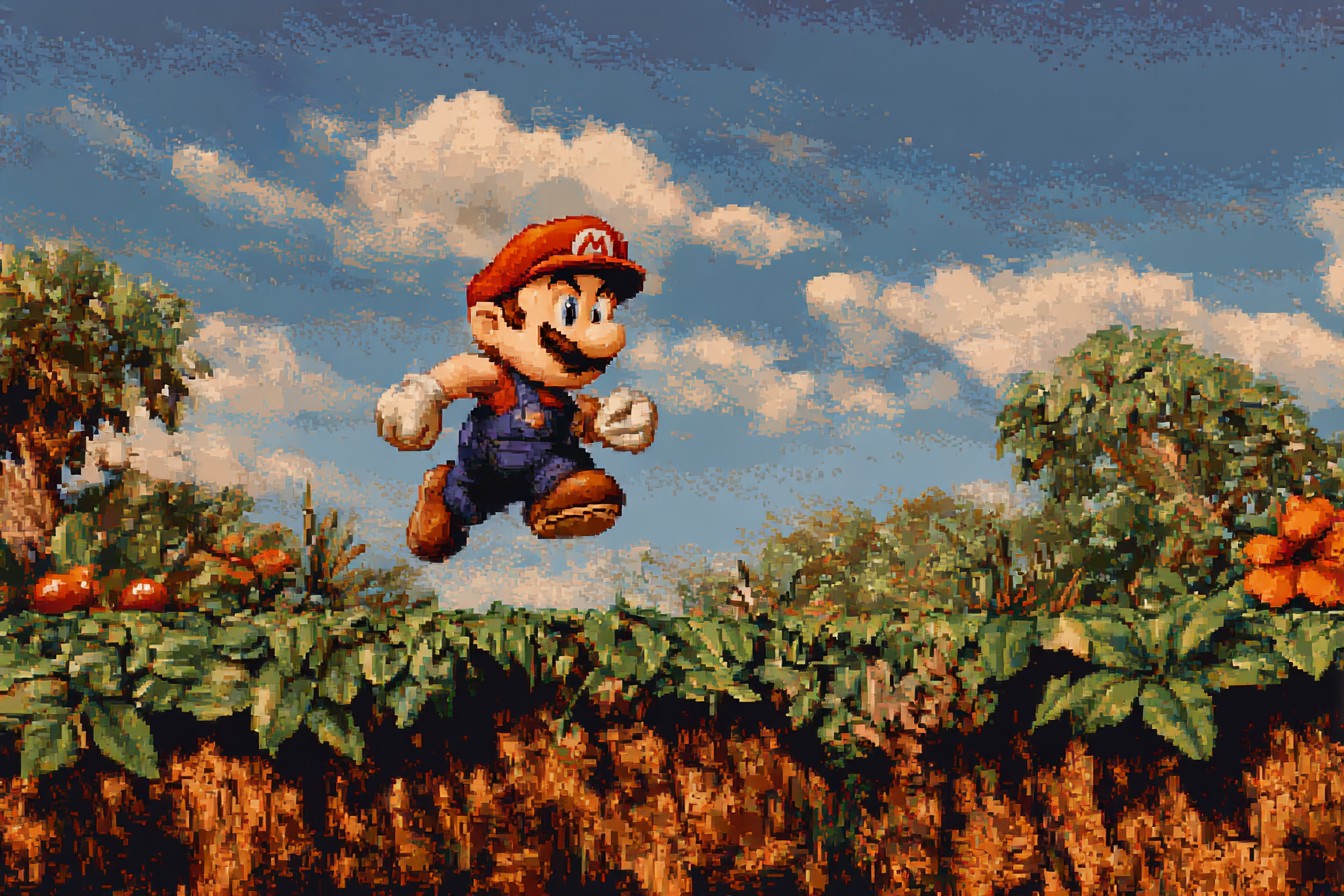
Even the castle itself felt alive in ways that previous game hubs never managed. Those spiral staircases where you could lean over the railings and peer down multiple floors. The way footsteps echoed differently in the basement compared to the upper floors. The secret areas you could only access by thinking in three dimensions—that room behind the clock face, for instance, which required you to consider the castle as a genuine architectural space rather than a series of connected screens.
Nintendo didn't just create analog movement; they created analog thinking. Every surface became potentially climbable, every gap potentially crossable if you approached it from the right angle with the right momentum. The triple jump, the long jump, the backwards somersault—these weren't just flashy animations, they were tools that gave players precise control over Mario's position in 3D space. You could thread him through tiny gaps, land on impossibly small platforms, or send him soaring across chasms that would've been impassable barriers in earlier games.
Looking back now, with decades of 3D gaming behind us, it's hard to appreciate just how revolutionary that little grey analog stick was. We take smooth, variable movement for granted now. Every smartphone game understands that movement exists on a spectrum rather than a grid. But in 1996, Super Mario 64 was teaching an entire medium how to walk in three dimensions.
And yeah, my hairline's been in steady retreat since then, but muscle memory's a funny thing. I can still nail that precise angle needed for the wing cap flight through the cloud rings. Still remember exactly how much pressure to apply to make Mario tippy-toe along narrow ledges. That controller might've looked like alien technology, but it taught my thumbs to think in analog, and some lessons stick with you forever.