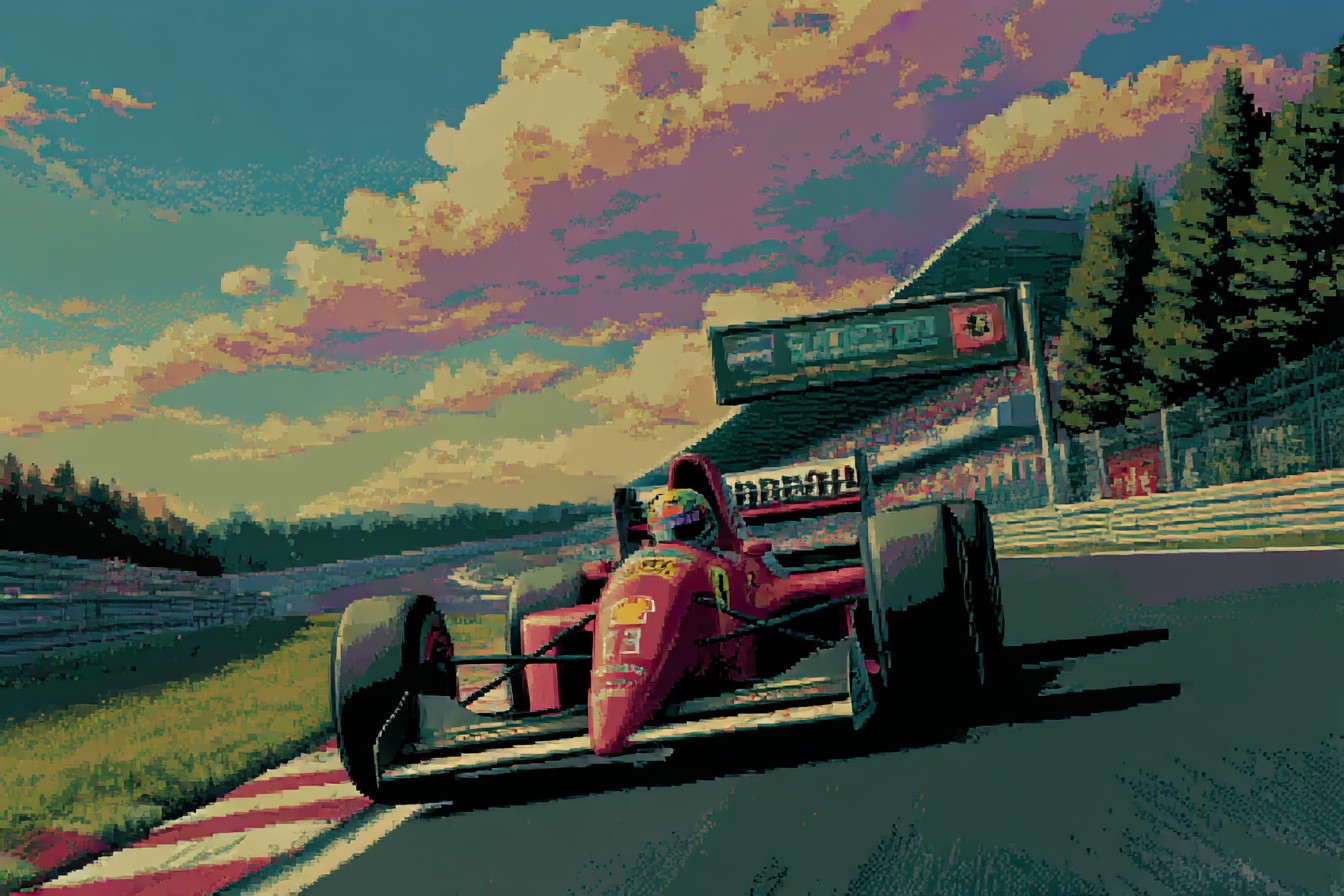
Christ, found my old copy of F1 World Grand Prix the other day while hunting through storage boxes for my Amiga joysticks. That blue N64 cart brought back a flood of memories, you know? The weight of it, the way you had to blow into the slot sometimes (probably made things worse but felt necessary), the ritual of sliding it into that grey beast with just enough pressure. Too soft and it wouldn’t connect properly, too hard and you’d worry about damaging something expensive.
Formula One games on the N64 were…well, let’s be honest, they were ambitious disasters wrapped in good intentions. The console was brilliant for Mario and GoldenEye, absolutely revolutionary for party games that destroyed friendships, but racing simulations? That was asking a lot. The controller didn’t help matters either – that weird three-pronged thing that confused every parent trying to have a go. I’d watch my dad attempt to hold it like a traditional pad while I tried explaining the whole “middle prong and right grip” concept. He’d give up after five minutes, muttering about how his Spectrum joystick never needed an instruction manual.
F1 World Grand Prix arrived with all the fanfare of proper motorsport gaming finally coming to Nintendo’s machine. The magazine previews looked incredible – actual F1 cars with recognizable liveries, circuits that resembled real tracks, driver names we’d heard commentators pronounce incorrectly on ITV. My old man was properly into Formula One back then, spent every other Sunday glued to Murray Walker’s commentary, shouting at the telly about Schumacher’s tactics or Ferrari’s pit stop cock-ups. When I showed him the game running on our ancient Bush television, he adjusted his glasses, squinted at the screen, and declared, “That’s meant to be Silverstone? Looks more like a car park.” Fair point, really. The N64’s texture mapping made every circuit look like someone had built it from the same grey building blocks.
But here’s the mad thing – it worked anyway. Not visually, obviously, and certainly not realistically by today’s standards, but something about the driving experience clicked. The physics engine, if you could call it that, felt consistent enough to learn. Predictable. You could sense weight transfer through corners, especially with that Rumble Pak buzzing away like a trapped bee inside the controller. Connected everything together somehow.
The career mode properly sucked me in during school holidays. Starting in Formula 3000 – remember when that existed? – grinding through seasons with machinery that handled like supermarket trolleys on wet tiles, all building toward that F1 breakthrough. I must have driven hundreds of laps around simplified versions of classic circuits, learning racing lines that bore little resemblance to their real-world counterparts. Eau Rouge became this gentle incline rather than the terrifying compression that actually challenges professional drivers, but when you hit it perfectly at full speed, rumble feedback going mental, engine sounds screaming through those terrible TV speakers…pure magic.
What impressed me most was how much proper F1 strategy they managed to cram into those 64 bits. Qualifying sessions where grid position actually affected your race prospects. Weather changes that forced complete strategic rethinks mid-race. Pit stops that weren’t just cosmetic breaks – you had to manage tire degradation, fuel consumption, all that technical stuff that makes F1 fascinating beyond just driving fast. Course, the graphics made every car look like colored Lego constructions, and all the drivers wore identical blocky helmets, but your imagination filled those gaps easily enough.
European gaming during this era was absolutely mental for import culture. Specialist shops were everywhere, feeding our desperate hunger for games that might never see official UK release. There was this tiny place in town – squeezed between a chippy and one of those shops that sells everything for a pound – run by this bloke called Mike who somehow sourced Japanese exclusives that looked like alien technology with their different artwork and mysterious text.
F1 Pole Position 64 was one of those holy grail imports that circulated among serious racing game collectors. Japanese exclusive, naturally, because heaven forbid we get nice things without jumping through expensive hoops first. The gameplay was supposedly tighter than the Eidos version, more arcade-influenced but somehow more engaging. The AI drivers actually seemed to develop personalities over a championship season – some aggressive wheel-to-wheel fighters, others tactical points-gatherers. You’d build proper rivalries with computer opponents, getting genuinely annoyed when they’d squeeze you out of corners or steal victories with better pit strategies. Incredible stuff that most of us never experienced because importing was financially painful and technically complicated.
Region locking was absolutely the bane of our existence back then. You couldn’t just download anything or order internationally with a mouse click. You needed converter cartridges (expensive and unreliable), console modifications (risky and expensive), or connections with someone who might have a spare Japanese N64 collecting dust somewhere. The grey market thrived on our desperation to experience games the rest of the world was enjoying months before us, if we were lucky.
Official PAL releases were often complete disasters anyway. Slower refresh rates, botched conversions, sometimes missing entire features that NTSC territories enjoyed as standard. F1 World Grand Prix suffered terribly from this – the European version ran like digital treacle compared to its American equivalent. Twenty frames per second was considered perfectly acceptable gaming back then, can you believe that madness? We tolerated stuttering, jerky gameplay because we literally didn’t know better options existed.
The modification scene around N64 racing games was fascinating, even with primitive tools by modern standards. People would hex-edit save files to unlock hidden content, manipulate texture data to create custom liveries, share GameShark codes that transformed serious racing simulators into arcade mayhem. Had this mate called Gareth who discovered a code sequence that made F1 cars sound like motorbikes. Completely pointless, utterly brilliant, exactly the kind of thing that made gaming feel like proper exploration rather than passive consumption.
Looking back now, what strikes me most is how those early F1 games captured motorsport’s essential character despite obvious technical limitations. Strategic elements were genuinely there – tire compound decisions, fuel load management, the constant balance between outright speed and mechanical reliability. The presentation might have been rough as sandpaper, but the core racing experience felt authentic. You genuinely managed an F1 campaign rather than just driving fast cars around circles for points.
These days I’ll occasionally fire up F1 World Grand Prix through emulation and marvel at how dramatically different gaming culture was. No patches fixing broken releases, no downloadable content extending gameplay, no online leaderboards proving your inadequacy against global competition. Whatever shipped inside that blue plastic cartridge was your permanent reality, bugs and limitations included. We learned to love those quirks because adaptation was the only option available.
The N64’s racing game legacy deserves more recognition than it typically receives, honestly.

John grew up swapping floppy disks and reading Amiga Power cover to cover. Now an IT manager in Manchester, he writes about the glory days of British computer gaming—Sensible Soccer, Speedball 2, and why the Amiga deserved more love than it ever got.