You know that moment when you realize you've been doing something wrong your entire life? Like when you discover you've been tying your shoelaces the hard way, or that there's actually a proper way to peel a banana. That's exactly what happened to me the first time I picked up an N64 controller and tried to walk Mario around Princess Peach's courtyard.
I'd been gaming since the Atari days, right? Spent countless hours with a joystick that had all the subtlety of a gear stick, mastered the D-pad on my NES until my thumb had a permanent indent. Two dimensions were my comfort zone. Left, right, jump, duck – simple as breathing. Then along comes this weird three-pronged alien artifact of a controller, and suddenly I'm supposed to navigate in every direction at once while a camera swings around like it's had too much coffee.
The learning curve was brutal, honestly. I still remember standing in that first area outside the castle, just trying to walk Mario in a straight line to the entrance. Sounds simple, doesn't it? But that analog stick – God, that analog stick – it was like trying to write with a pencil attached to a spring. Too gentle and Mario would shuffle forward like he was wearing slippers on ice. Too firm and he'd bolt off at maximum sprint straight into a wall.
And don't get me started on the camera. That right C button became my nemesis. I'd be trying to line up a jump, and the camera would swing behind a pillar or get stuck looking at Mario's backside while I'm desperately mashing buttons trying to see where I'm supposed to land. My mate Dave came round one Saturday morning, took one look at me wrestling with the controls, and just laughed. "You're fighting it," he said. "Stop fighting it."
He was right, of course. The trick wasn't to impose the old 2D logic onto this new world – it was to let the game teach you how to exist in three dimensions. Once I stopped trying to move Mario like I was playing the original Super Mario Bros., something clicked. That analog stick wasn't just a fancy D-pad; it was like learning to walk all over again, but in a space where you could move at different speeds, approach problems from multiple angles, literally circle around obstacles instead of just jumping over them.
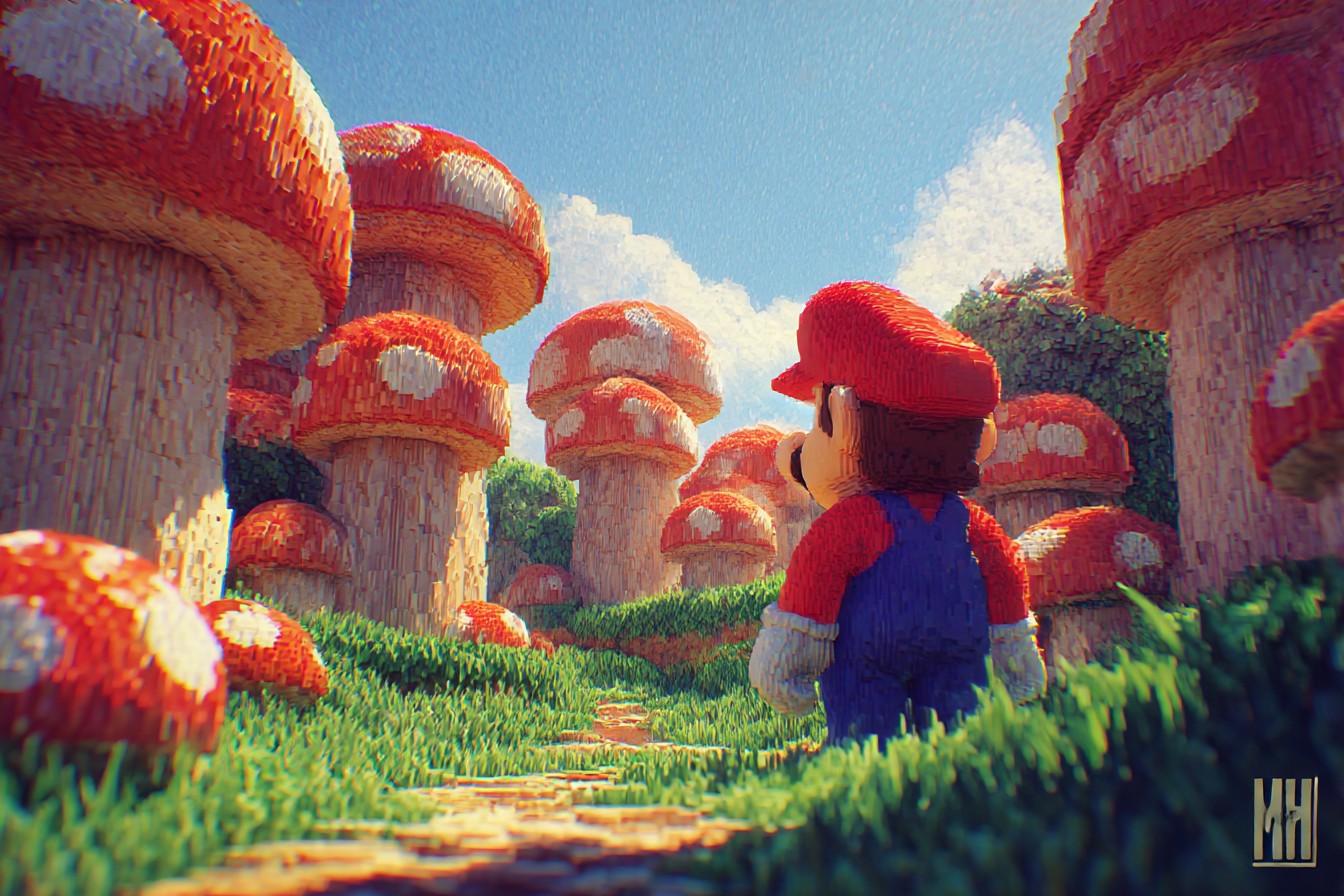
The genius of Super Mario 64 wasn't just that it figured out 3D movement – loads of games were having a crack at that in '96. It was that Nintendo understood the camera was just as important as the character you were controlling. Maybe more important, actually. Because what good is perfect movement if you can't see where you're going?
I spent hours just running around that courtyard, getting used to how the camera would automatically adjust when Mario got near walls, how it would swing wide when you entered open spaces, how you could take manual control when the automatic system wasn't quite right. It felt like learning a new language, except instead of words and grammar, it was spatial relationships and timing.
The castle itself was like Nintendo's masterclass in 3D design philosophy. Every room, every staircase, every doorway seemed designed to teach you something new about moving through digital space. Those spiral staircases? Perfect for understanding how the camera handles vertical movement. The long hallway with the paintings? Brilliant for getting comfortable with running in straight lines while the camera tracks alongside you. Even something as simple as walking up to a door and having Mario automatically face it properly – that was the game gently training your brain to think in three dimensions.
But here's the thing that really blew my mind: the way different surfaces felt different under Mario's feet. Run across grass and he'd make one sound, hit marble and it would echo, land on metal grating and you'd hear that distinctive clank. It wasn't just audio feedback – your brain started associating different surfaces with different movement properties. Slippery ice meant careful, deliberate steps. Thick mud meant slower movement. Sand meant you could run and slide to a stop in a satisfying spray of particles.
The analog stick itself was a revelation once you got the hang of it. Unlike the harsh on/off of a D-pad, you could walk Mario slowly by barely tilting the stick, jog with a medium push, or sprint by slamming it all the way to the edge. Combined with the way Mario's animation would smoothly transition between these speeds, it felt… I mean, it sounds daft now, but it felt almost organic. Like you were controlling a living character rather than just moving a sprite around a screen.
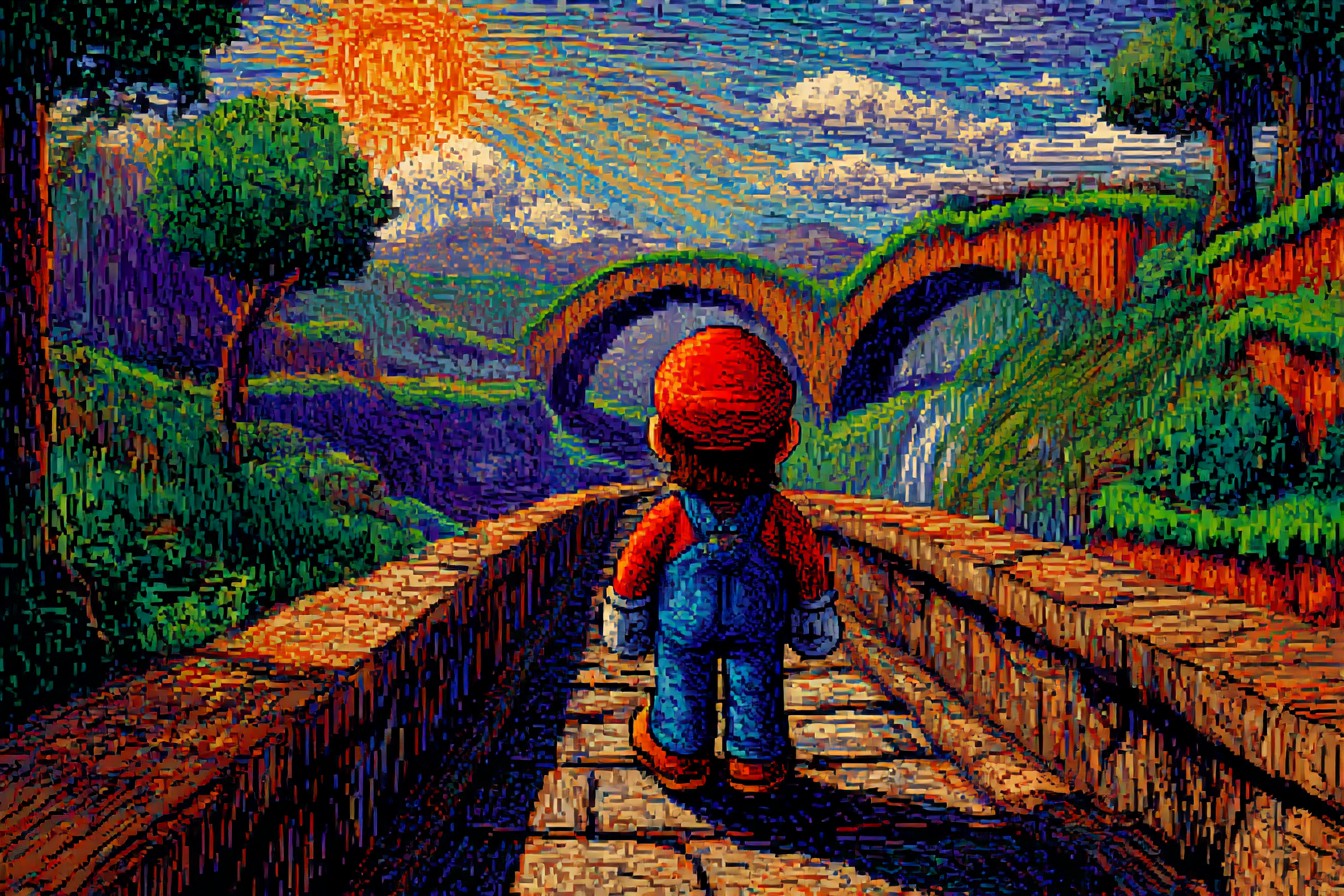
And the sound design – bloody hell, the sound design. Every footstep, every jump, every skid to a halt was perfectly tuned to give you feedback about what Mario was doing and where he was in space. Close your eyes while playing and you could still navigate reasonably well just by listening to the audio cues. The way Mario's voice would echo differently in large rooms versus small corridors, how his footsteps would change pitch as he ran up slopes – it all added up to create this sense of actually inhabiting a three-dimensional world.
The camera system became second nature eventually, but it took weeks of practice. Learning when to let it do its automatic thing versus when to grab manual control with those C buttons. Understanding that sometimes the "wrong" camera angle was actually perfect for lining up a tricky jump. Getting comfortable with the idea that you might need to run past your target, swing the camera around, and approach from a completely different direction.
Looking back now, it's wild how much Super Mario 64 changed gaming without making a big deal about it. No dramatic cutscenes explaining the new control scheme, no tutorial levels that explicitly taught 3D movement. Nintendo just dropped you into this world and trusted that you'd figure it out through play. And somehow, magically, you did.
Every 3D platformer since owes something to those foundational design decisions Nintendo made. The way modern games handle camera movement, analog control, spatial audio – it all traces back to those breakthroughs from 1996. Mario taught us how to walk in three dimensions, and gaming has never been the same since.