My mate Steve turned up at my fifteenth birthday party in ’96 with this knowing smirk and a Mega Drive cartridge hidden in his jacket pocket like he was smuggling state secrets. “Right, forget whatever else you’ve got planned,” he announced, which was exactly what you wanted to hear when you’d been politely enduring my mum’s friends asking about my GCSE choices for the past hour.
Ultimate Mortal Kombat 3 wasn’t just another fighting game—it was digital violence elevated to an art form that made Street Fighter II look like a polite disagreement between gentlemen. While Capcom was busy perfecting their charge motions and quarter-circles, Midway had completely lost their minds with input combinations that required the finger dexterity of a concert pianist and the timing of a Swiss chronometer. No blood codes needed here; this was the full ultraviolence experience straight from the box, thank you very much.
I spent the entire weekend hunched over that Mega Drive, frantically scrawling move lists across the margins of my school exercise books. Dad kept wandering past tutting about “this violent nonsense,” but I was deep in the lab, trying to unlock the secrets of Scorpion’s spear technique and Sub-Zero’s infamous spine extraction. The six-button pad felt like a proper arcade stick compared to the standard three-button controller—having dedicated light, medium, and heavy attack buttons made combo sequences flow like poetry written in pain.
What made UMK3 brilliant wasn’t just the expanded character roster or refined mechanics; it was how every fighter felt like they embodied a completely different martial philosophy. Ermac played like controlled anarchy with those telekinetic body slams, while Kabal’s spinning razor projectiles turned neutral game footsies into complex geometric equations. Nightwolf brought this grounded, deliberate approach that forced you to think several moves ahead, particularly once you mastered linking his shoulder ram into that devastating tomahawk sequence.
Memorizing Fatalities was like learning international dialing codes, except these numbers culminated with someone losing vital body parts in spectacular fashion. Scorpion’s legendary “Get Over Here!” spear followed by the flame uppercut never lost its impact—down, back, high punch when close enough to see the terror in their eyes. Sub-Zero possessed multiple finishing techniques, but his spine-rip remained the undisputed champion: forward, down, forward, high punch. Elegant inputs, catastrophic results. The execution window was surprisingly generous too, unlike some of the more technically demanding characters.
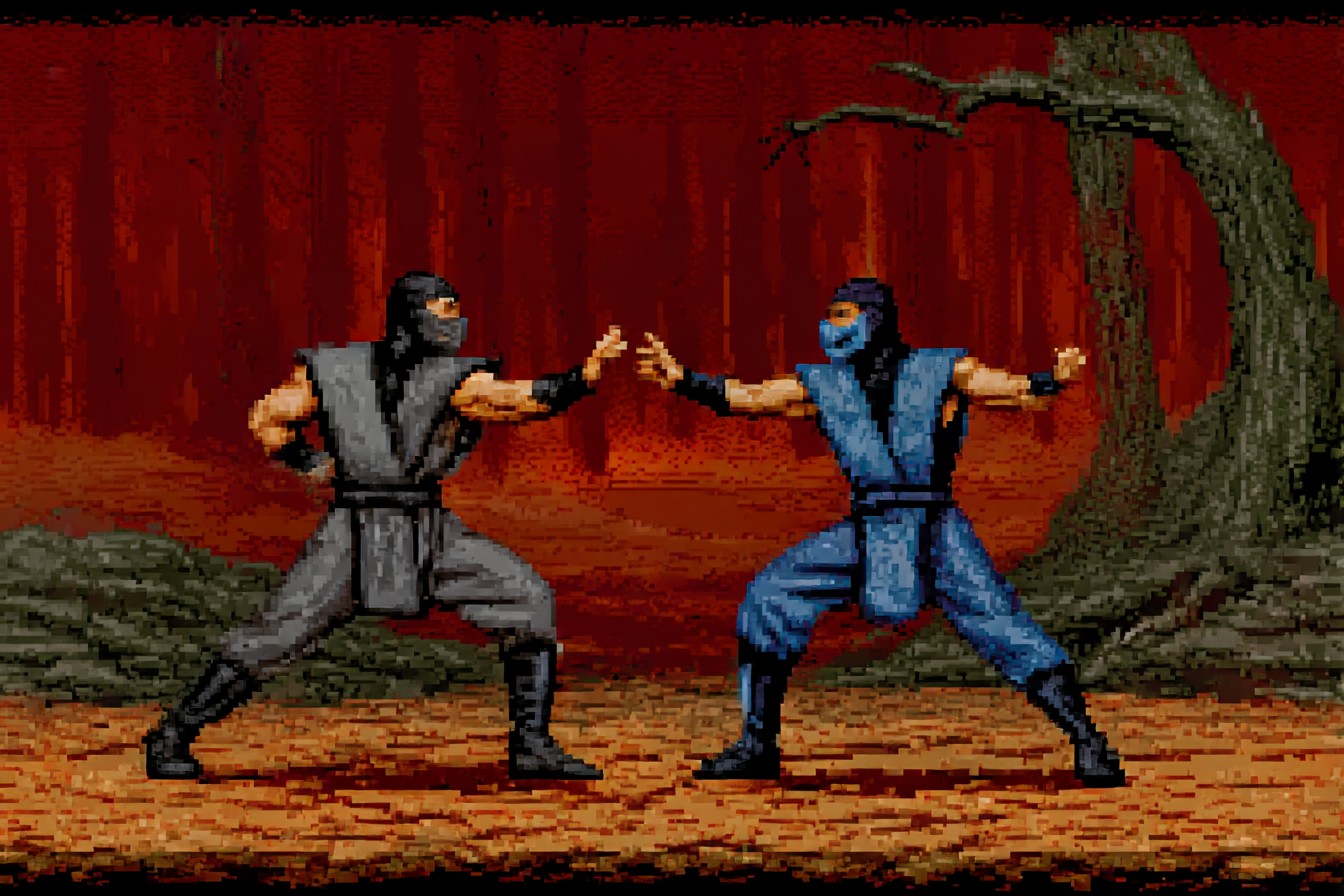
Shang Tsung was essentially a doctorate in Mortal Kombat theory disguised as a single character selection. His morphing abilities meant mastering everyone’s moveset, not just his base form techniques. Fancy transforming into Scorpion mid-battle? Down, down, back, low kick. Want to become Sub-Zero instead? Forward, down, forward, high kick. Truly mastering Shang meant essentially learning the complete roster, which sounds absolutely exhausting until you realize it makes you lethal with every single fighter.
The combo system in UMK3 felt genuinely revolutionary after Street Fighter’s more restrictive framework. Air juggling wasn’t just possible—it was actively encouraged by the game’s mechanics. Cyrax’s net trap followed by his explosive devices created these beautiful sequences where opponents became helpless projectiles ricocheting between detonations. Sektor’s teleport uppercut could extend aerial combinations in ways that completely defied physics and basic common sense.
Here’s what those move lists in Mean Machines magazine never bothered explaining: half the genuine excitement came from discovering the weird interactions. Jade’s staff pound had this peculiar hitbox property that bounced opponents at precisely the correct angle for follow-up attacks. Kitana’s fan lift behaved completely differently depending on corner distance. Reptile’s acid projectile could be cancelled into invisibility, creating psychological mind games that transformed every match into proper mental warfare.
I distinctly remember successfully executing Kung Lao’s spinning blade fatality for the first time—back, forward, forward, low kick at jumping distance. The animation was absolutely gorgeous: this perfect trajectory as the hat separated skull from shoulders, complete with that distinctive metallic whistle. My younger brother Simon watched from behind the settee, simultaneously revolted and mesmerized. “Do that again,” he whispered, which basically captured UMK3’s entire addictive appeal in three words.
The Mega Drive version had its distinctive characteristics compared to the original arcade release. The audio compression made everything sound like it was being broadcast through a biscuit tin, but honestly? That just enhanced the sinister atmosphere. Scorpion’s “Get Over Here!” sounded more threatening when slightly digitally mangled. The color reproduction was somewhat muted compared to arcade perfection, sure, but the gameplay mechanics remained solid as Manchester concrete.
Understanding the run button completely revolutionized movement and spatial control. Double-tap forward and hold to dash—such an elegant addition that fundamentally transformed match dynamics. Suddenly, full-screen punishment became tactically viable. Zoning specialists like Kabal couldn’t simply throw projectiles and retreat anymore. The run meter introduced resource management that made aggressive tactics simultaneously riskier and more potentially rewarding.
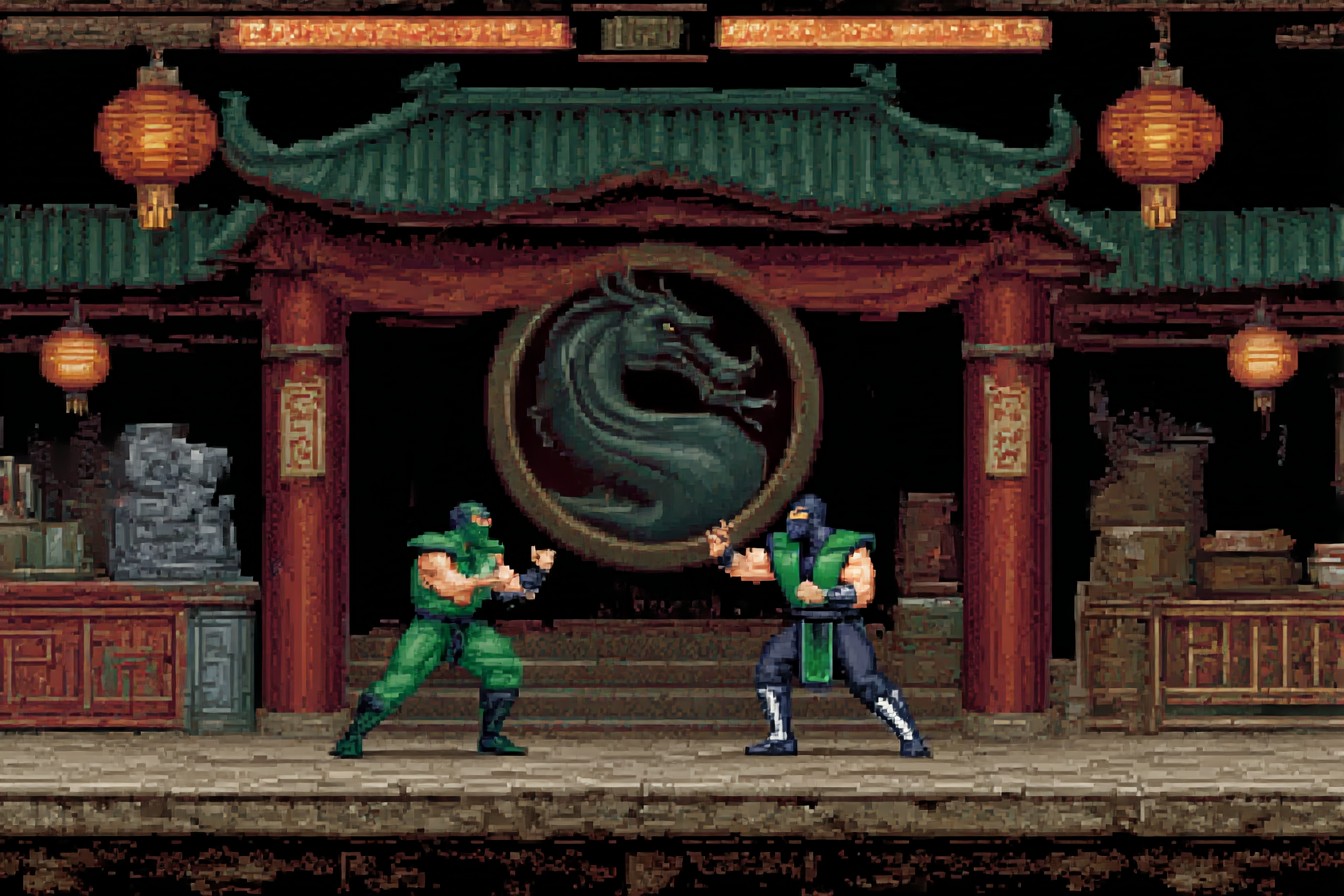
Some of my absolute favorite gaming memories involve tournament-style sessions on UMK3, despite being technically designed for two players. We’d rotate controllers after each bout, maintaining elaborate scorecards on notebook paper that eventually became sacred documents adorned with crisp crumbs and tea stains. Steve would absolutely dominate using Liu Kang’s bicycle kick pressure tactics, while I preferred Ermac’s psychological warfare and telekinetic throwing techniques.
The Brutalities were these epic twenty-plus hit sequences that required ages to execute properly but looked absolutely magnificent when performed correctly. Jax’s Brutality demanded a specific punch-kick pattern that I never completely memorized, but witnessing someone execute it flawlessly was like watching violent choreography. These weren’t merely finishing moves—they were declarations of technical superiority.
Decades later, experiencing UMK3 through various modern collections and emulation setups, I’m genuinely impressed by how brilliantly the core mechanics have weathered time’s passage. The input buffering system is forgiving enough that complex techniques feel achievable, yet strict enough that random button mashing rarely succeeds. The balance between accessibility and genuine depth remains remarkable—you can absolutely enjoy casual button pressing, but true expertise demands serious dedication and countless practice hours.
That original Mega Drive cartridge still functions perfectly today, incidentally. Occasionally I’ll boot it up purely to hear that distinctive “Mortal Kombat!” announcer bellow, followed by that pulse-pounding electronic soundtrack that sounds like industrial machinery experiencing an existential breakdown. Absolutely magical stuff, even now.

John grew up swapping floppy disks and reading Amiga Power cover to cover. Now an IT manager in Manchester, he writes about the glory days of British computer gaming—Sensible Soccer, Speedball 2, and why the Amiga deserved more love than it ever got.