Skies of Arcadia is the game that made me realize something important about the console wars – success isn’t just about the best software. Sometimes the best software ships on the wrong hardware at the wrong time and nobody remembers it. PlayStation dominated the JRPG market because Final Fantasy VII and VIII and IX sold the console. But Sega released Skies of Arcadia on Dreamcast and proved they understood how to make JRPGs just as well.
I teach history, so I appreciate context and consequences. Skies of Arcadia had every component to be remembered alongside PlayStation’s great JRPGs. It shipped at exactly the moment when Dreamcast was already dying. So instead of being celebrated, it became footnote.
What Skies of Arcadia Actually Is
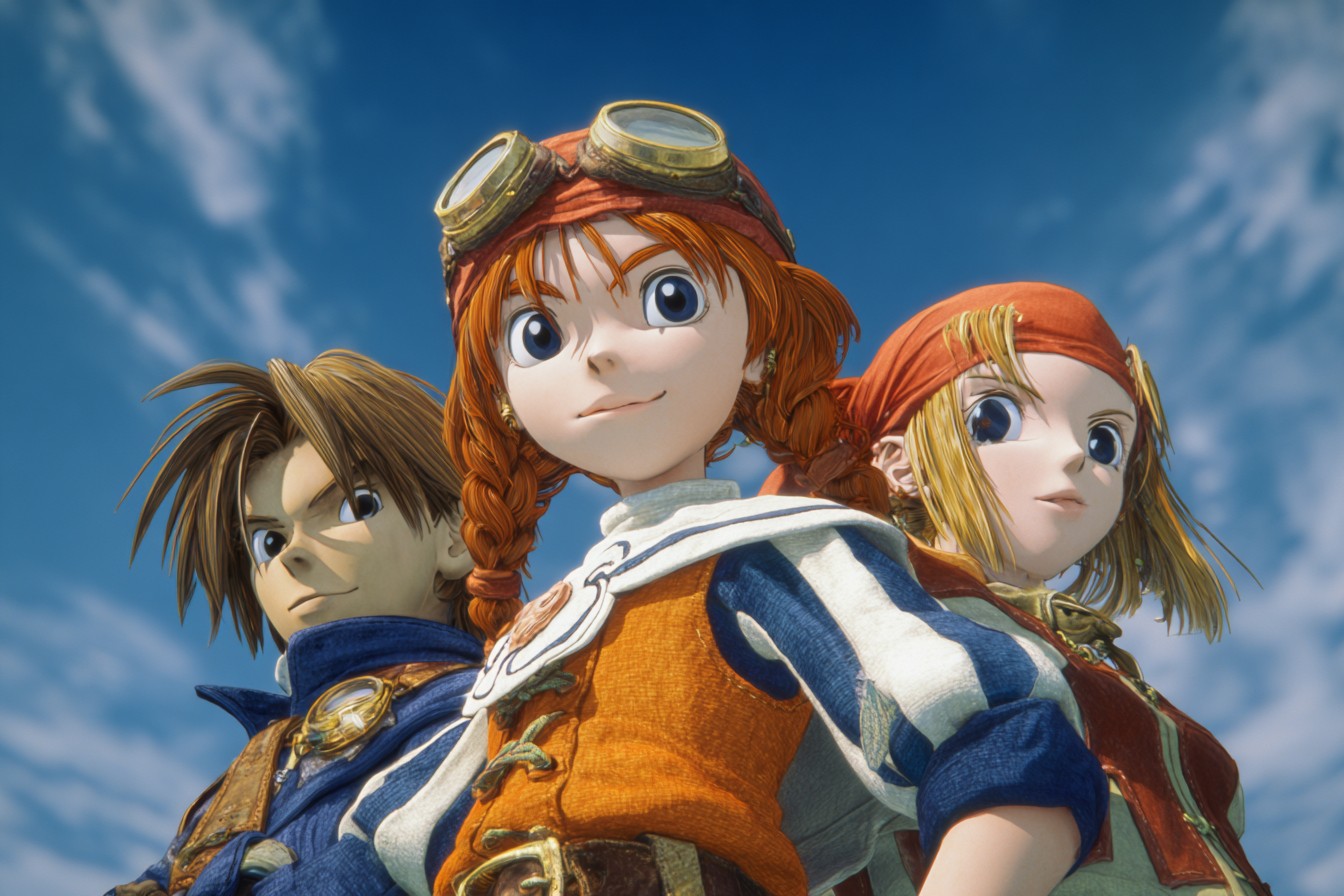
You’re a sky pirate in a world where continents float in the sky and airships are your primary transportation. You’re not saving the world from apocalypse – you’re just trying to survive as a pirate, find treasure, and gradually uncover that your enemies have much larger plans. It’s deliberately whimsical and earnest in a way that feels almost unique.
The story is straightforward – evil empire bad, hero good, ragtag party fights against overwhelming odds. But the execution is charming. Your party members have personality. The world feels lived-in. The supporting characters are interesting. The dialogue has personality without being obnoxious. You’re engaging with characters you actually care about rather than just vehicles for the plot.
The turn-based combat is solid without being innovative. You’re selecting attacks, using special moves, managing resources. The difficulty balance is fair. Bosses require strategy rather than grinding. The progression feels earned. This is competent JRPG design that respects the player’s time investment.
The ship-to-ship combat adds variety to the standard battle system. You’re commanding a airship against enemy vessels, managing crew, deciding tactics. It’s genuinely engaging and breaks up the standard battles perfectly.
Why Skies Of Arcadia Matters For Understanding Sega’s Software
Here’s what people forget – Sega could make excellent JRPGs. Final Fantasy belonged to Square. Dragon Quest belonged to Square-Enix. But Sega had Skies of Arcadia, Grandia II, Phantasy Star Online – their own JRPG identity that was genuinely competitive.
But Sega didn’t have the third-party support that made PlayStation the JRPG destination. Square and many other studios chose PlayStation because that’s where the market was. Sega’s Dreamcast had brilliant software but couldn’t compete with PlayStation’s software library breadth. Quality didn’t matter – market dominance did.
This is an important historical lesson. The best software doesn’t guarantee market success. Market positioning, third-party support, timing, and luck matter enormously. Skies of Arcadia proves this – it’s genuinely excellent and almost nobody remembers it because it shipped on a console that was already doomed.
The World Design That Feels Genuine
Skies of Arcadia’s world is carefully constructed. The sky pirate aesthetic is unique – most fantasy games use medieval fantasy or sci-fi. Skies uses airships and floating continents and sky pirates. It’s familiar enough to understand but different enough to feel fresh.
The characters you encounter are varied and interesting. The plot twists are earned rather than arbitrary. The character development happens gradually rather than through exposition. You’re learning who these people are through interaction rather than having it explained to you.
The side quests are genuinely optional but interesting enough that you want to pursue them. They’re not padding – they’re character stories and world-building. Completing them enriches your understanding of the world and characters.
The Technical Achievement
The graphics are charming if obviously dated. The character models are detailed. The animation is smooth. The spell effects are impressive. The environments create atmosphere. Everything is clean and readable without trying to be photorealistic.
The voice acting is competent. The soundtrack by Kazunari Tomi and others is genuinely excellent – memorable without being intrusive. The sound design creates atmosphere – you believe you’re in this world of sky pirates and floating continents.
The game is substantial – 40+ hours easily if you’re engaging with content. That’s not padding – that’s genuine content that’s worth experiencing. The pacing is good. Story beats land. Character development feels earned.
Does Skies Of Arcadia Still Hold Up?
Completely. The turn-based combat hasn’t aged. The character development is still engaging. The world is still charming. The story is still fun. The pacing is still good. Playing this now, the only dated element is the graphics quality. But the art direction is strong enough that you stop noticing.
The difficulty is well-balanced. Easy enough that you won’t get stuck repeatedly on bosses. Hard enough that you need to actually engage with the combat system rather than just mashing attack. The progression feels satisfying.
The ship combat adds genuine variety and breaks up standard battles in exactly the right way. The strategic element of choosing which crew members to bring creates meaningful player agency.
Why This Game Mattered Historically
Skies of Arcadia represented something important – Sega’s software prowess even as their hardware was dying. This is a genuinely excellent JRPG made by a company that was simultaneously losing market dominance. It proves that software quality and market success aren’t always correlated.
If Skies had released on PlayStation, it would be remembered alongside their greatest JRPGs. On Dreamcast, it became a footnote. That’s not about the game’s quality – it’s about market positioning and timing.
The Verdict
Skies of Arcadia is a JRPG that proves Sega understood how to make excellent games in the genre. The world is charming. The characters are interesting. The story is engaging. The combat is solid. The pacing is excellent. The scope is substantial.
This is a game that should be remembered as proof that the Dreamcast had software to compete with PlayStation, even if it couldn’t compete on hardware capability or market dominance. If you’ve never played it, seek it out and understand why Sega’s Dreamcast library deserves recognition despite the console’s commercial failure.
Rating: 9/10 – The JRPG that proves software quality doesn’t guarantee market success
Return to our full Dreamcast rankings →

Joe’s a history teacher who treats the console wars like actual history. A lifelong Sega devotee from Phoenix, he writes with passion, humor, and lingering heartbreak over the Dreamcast. Expect strong opinions, bad puns, and plenty of “blast processing.”