I’ve watched enough ambitious projects fail to recognize when a developer is genuinely swinging for the fences. Sonic Adventure 2 is one of those swings. Sonic Team – the same people who made Sonic Adventure, which was decent but messy – looked at the response and said “okay, we’re going bigger, weirder, more ambitious.” The result is a game that’s flawed in very deliberate ways because it was trying something genuinely brave rather than playing it safe.
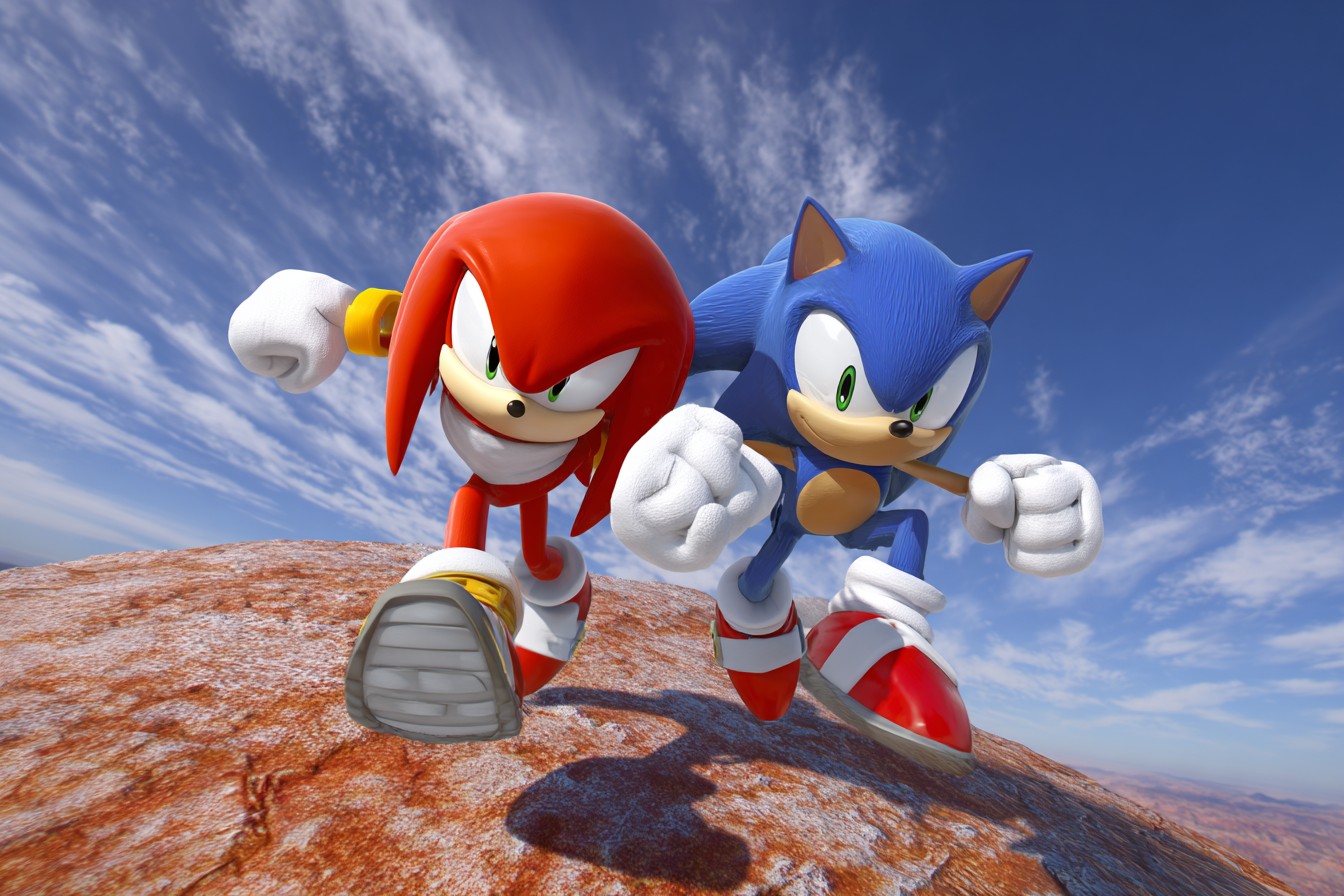
Sonic Adventure 2 is a game where six playable characters each have completely distinct gameplay styles. Running levels with Sonic and Shadow. Treasure hunting levels with Knuckles and Rouge. Shooting levels with Tails and Eggman. The story spans both perspectives – heroes and villains – and the narrative twist is that the real villain is something entirely unexpected. This is not cautious design. This is a studio that was confident enough to experiment.
What Sonic Adventure 2 Actually Does
Sonic is framed for a crime he didn’t commit and imprisoned. Eggman (Dr. Robotnik) breaks him out planning to use him for his own schemes. Shadow, the Ultimate Lifeform, appears and everything becomes complicated. Meanwhile, Knuckles is tricked into collecting Chaos Emeralds. Rouge is working as a government spy. The story unfolds across multiple perspectives and eventually reveals that neither the heroes’ nor villains’ plans are what’s actually happening.
The gameplay diversity is staggering. Sonic and Shadow’s running levels are fast-paced action where you’re navigating through loops and obstacles, collecting rings, trying to maintain momentum. Knuckles and Rouge’s hunting levels are exploration-based where you’re finding three pieces of an artifact scattered across a level, managing limited homing ability, backtracking to previously inaccessible areas with better equipment. Tails and Eggman’s shooting levels are third-person shooters where you’re dealing with enemy placement and taking down bosses.
Three completely different game types in a single package. This isn’t a compromise – it’s intentional design diversity. You’re not doing the same thing over and over with different characters. You’re fundamentally changing what you’re doing every time you switch characters.
Why This Design Was Brave
Here’s what impresses me about Sonic Adventure 2 – Sonic Team understood something about game design that a lot of studios miss. Diversity is more valuable than perfection in specific areas. They could have made a game that’s just Sonic running levels, polished to perfection. Instead they made a game with multiple gameplay styles, each of which is good but imperfect.
The running levels have camera issues sometimes. The hunting levels can be frustrating when you’re searching for the last piece. The shooting levels are serviceable but not deep. But the combination creates a game that’s more interesting than any single style would have been because it constantly keeps changing what you’re doing.
The story presented multiple playable perspectives of the same events. You’d see something from Sonic’s perspective, then later see the same event from Eggman’s perspective and realize you misunderstood what was happening. This narrative approach deserved more credit than it got.
The Technical Achievement Despite The Flaws
The graphics are actually impressive for 2001. The character models are detailed. The animation is smooth. The environments are detailed without being distracting. The special effects are elaborate – the chaos control sequences are genuinely impressive. The soundtrack is excellent – Naganuma’s work here is some of his best.
The camera system works for each gameplay type differently. The running levels have the most aggressive camera that can be awkward but captures the speed. The hunting levels have a more controllable camera. The shooting levels use a more focused third-person perspective. This variation is intentional and serves each style.
The online multiplayer leaderboards on Dreamcast were genuinely impressive for 2001. The fact that you could compete with other players globally was genuinely novel for console gaming at the time.
Does Sonic Adventure 2 Still Hold Up?
Mostly. The running levels are still engaging. Some of the level design is genuinely clever. The character variety is still refreshing. The story is still charming. The music is still excellent.
The camera can be genuinely awful sometimes. Some treasure hunting levels are more frustrating than fun. The shooting mechanics are competent but not engaging compared to purpose-built shooting games. The difficulty spikes randomly. The pacing occasionally drags.
But these flaws exist because the game was ambitious. It wasn’t trying to perfect one thing – it was trying to do multiple things and accept that some would be more polished than others.
Why This Game Mattered For Understanding Sonic
Sonic Adventure 2 represents the most ambitious 3D Sonic game ever made. Not the best (that’s debatable), but definitely the most ambitious. Every entry in the Sonic franchise since has learned from this game’s structure and mechanics. The Sonic Generations games basically return to the dual hero/villain perspective structure that Adventure 2 established.
This game proves that Sonic’s 3D struggles aren’t inevitable. With clear design vision and technical competence, you can make 3D Sonic work. You might not create a perfect game, but you can create something that’s genuinely interesting and engaging.
The Tragedy Of Sonic Adventure 2
Here’s what gets me about Sonic Adventure 2 – this shipped at exactly the moment when the Dreamcast was already dying and the GameCube was coming. So it got overshadowed immediately. The game had potential to be a flagship for Sega’s console if it had shipped earlier or if the market was different.
Instead, it became a game that dedicated Sonic fans appreciate but casual audiences largely missed. That’s not about the game’s quality – it’s about market timing and platform dominance.
The Verdict
Sonic Adventure 2 is an ambitious 3D action game that proves Sonic works best when you give the designers freedom to experiment. Not every experiment succeeds perfectly, but the attempt creates something more interesting than playing it safe would have.
The running levels are genuinely good. The story has personality. The character variety is excellent. The music is outstanding. The willingness to try different gameplay styles within a single package deserves recognition even if not every style is equally polished.
If you’ve never played it, approach it understanding what it was trying to do. This isn’t meant to be a perfect game – it’s meant to be an ambitious game. There’s a difference, and respecting that difference makes the experience significantly better.
Rating: 8/10 – The ambitious Sonic game that deserves more respect than it gets
Return to our full Dreamcast rankings →