There's something magical about the way a floppy disk used to click when you slotted it into your school's ancient PC. That plastic-on-metal snap meant adventure was loading—and more often than not, it meant learning was about to happen without you even realizing it.
I spent countless hours in computer labs that smelled like that particular cocktail of warm electronics and industrial carpet cleaner, hunched over beige monitors that hummed like sleepy refrigerators. We'd file in like dutiful students, but within minutes we'd be pioneers crossing digital rivers or mathematical space cadets blasting through algebra problems. Those educational games didn't just teach us—they made us *want* to learn, which feels like wizardry looking back.
The Oregon Trail was basically our introduction to existential dread disguised as American history. I can't tell you how many times I watched my pixelated family succumb to dysentery while trying to ford a river with a wagon full of ammunition. Seriously, why did we always buy so many bullets? The game taught us about resource management, sure, but it also taught us that sometimes life is just brutal and unfair. Mary died of a snakebite. Tom drowned. And somehow we kept playing, kept learning about westward expansion through our own digital disasters.
What struck me most about these games wasn't just their educational value—it was how sneaky they were about it. Math Blaster made arithmetic feel like space combat. You'd be so focused on defending Earth from numerical invaders that you'd forget you were actually practicing multiplication tables. The satisfaction of nailing a difficult calculation to blow up an asteroid was genuine. My reflexes got faster, my mental math improved, and I never once felt like I was doing homework.
Then there was Where in the World is Carmen Sandiego? That game turned geography into detective work, and suddenly I cared about world capitals and cultural landmarks because I needed to track down stolen artifacts. The ACME Detective Agency handbook became my bible. I'd memorize flag colors and currency types not for a test, but because Carmen's henchmen might be hiding in Morocco and I needed to know what clues to look for. When you finally caught that red-coated thief, you felt like Sherlock Holmes.
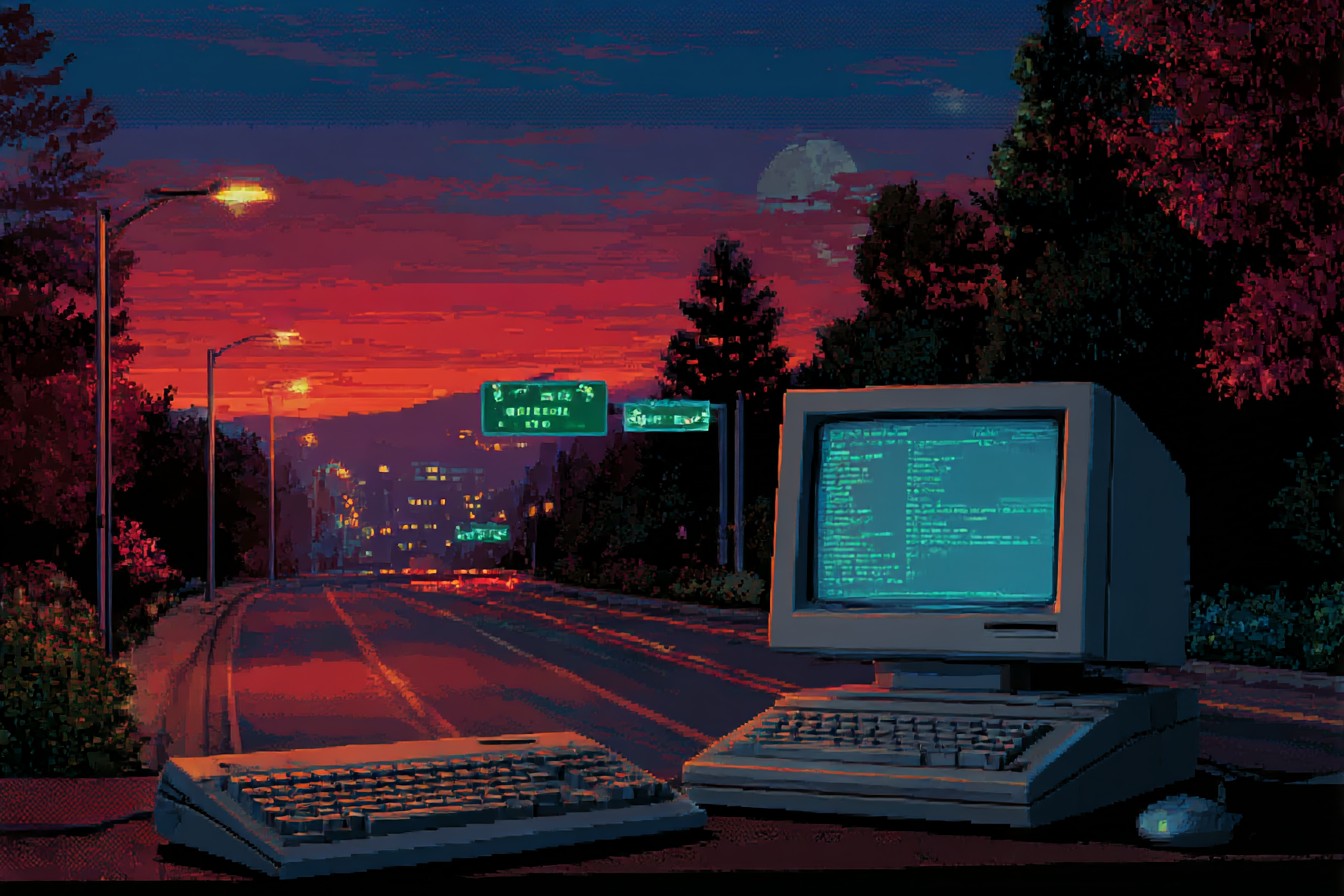
The Number Munchers series turned my ancient Apple IIe into a Pac-Man-style learning machine. Simple concept—guide your little green creature around a grid, eating correct answers while avoiding the scary Troggles. But man, those games made fractions and prime numbers feel urgent. You'd develop genuine panic when a Troggle cornered you, and genuine relief when you successfully identified all the multiples of seven on the board. The chunky 8-bit sound effects are still burned into my memory.
I remember the first time I played SimCity in our school's computer club. Mrs. Henderson presented it as an urban planning simulation, but to us kids it was basically digital LEGO with consequences. You learned about infrastructure, budgeting, and cause-and-effect relationships through trial and error. Build too many roads without proper funding? Bankruptcy. Ignore education and watch crime rates soar. The game never lectured you about civic responsibility—it just let you experience the consequences of your decisions firsthand.
Mavis Beacon Teaches Typing deserves special mention because it turned one of the most mundane skills imaginable into something approaching fun. That woman with her encouraging voice and her impossibly perfect posture made us *want* to improve our WPM scores. The games within the typing tutor—dodging falling letters, racing cars by typing faster—felt like legitimate entertainment. I spent so many lunch breaks trying to beat my personal best on the typing test that by high school I could touch-type at 80 WPM without thinking about it.
The Incredible Machine series was pure genius wrapped in cartoon physics. You'd spend ages trying to figure out how to get a bowling ball to trigger a mousetrap that would launch a rocket that would pop a balloon that would… well, you get the idea. These games taught engineering principles, logical thinking, and problem-solving skills through elaborate Rube Goldberg contraptions. Every failed attempt taught you something new about momentum, gravity, or timing.
What's funny is how these games respected our intelligence in ways that traditional educational materials often didn't. They assumed we could handle complex concepts if they were presented engagingly. Reader Rabbit didn't dumb down phonics—it made letter recognition feel like exploration. The ClueFinders didn't oversimplify science—they made experimentation feel like mystery-solving.

I think about my own kids now, growing up in an era of tablets and smartphones, and wonder if they'll ever experience that particular thrill of loading up a game on a shared classroom computer. There's something to be said for the communal aspect of those old educational games. We'd gather around a single monitor, taking turns, shouting advice, celebrating victories together. When someone finally made it past the Oregon Trail or cracked a particularly tough Carmen Sandiego case, the whole class knew about it.
The graphics were primitive by today's standards—chunky pixels, limited color palettes, synthesized sound that came through tiny built-in speakers. But those limitations forced developers to focus on gameplay and educational content rather than flashy visuals. The games had to be genuinely engaging to hold our attention.
Looking back, I realize those games shaped how I approach learning even today. They taught me that education doesn't have to be passive, that you can learn through doing rather than just memorizing. They showed me that failure is often just another attempt at success, and that complex problems usually have multiple solutions.
Sure, modern educational software is more sophisticated, with better graphics and more interactive features. But there's something pure about those early games that I miss. They didn't try to be everything to everyone—they just tried to make learning fun, one floppy disk at a time. And you know what? They absolutely succeeded.