Picture this: you're eight years old, Saturday morning, and your mate's older brother has just fired up Sonic the Hedgehog for the first time. That opening Green Hill Zone music hits – you know the one, that bouncy Yamaha FM synthesis that somehow sounds like liquid sunshine – and suddenly every other console sounds like it's playing through a tin can. That was my introduction to the Mega Drive, and honestly? It ruined me for life.
The thing about ranking Genesis games is that you're not just measuring pixels and gameplay mechanics. You're excavating memories that got burned into your brain at 50Hz refresh rate. I mean, I can still tell you exactly what my cousin's living room smelled like the first time we played Streets of Rage 2 (furniture polish and digestive biscuits, if you must know), and that's not information I consciously chose to store for thirty years.
But let's start with the obvious heavyweight: Sonic 2. Look, Sonic 1 was revolutionary, sure, but Sonic 2 was perfection in a plastic shell. The speed felt dangerous – like the console might actually explode if you hit a loop-de-loop wrong. And that two-player mode with Tails? Pure genius. My little brother could "help" without actually being able to mess anything up too badly. The spin dash alone changed everything. Where the original game sometimes felt like you were fighting the physics, Sonic 2 made momentum feel like a superpower you could actually control.
Tails, by the way, was the perfect player-two character before anyone knew that was a thing. Can't keep up with Sonic? No worries, you'll just teleport back into frame. Die constantly? That's fine too, you'll respawn. It was cooperative gaming that actually worked, which anyone who's tried to play Contra with their younger sibling will tell you is basically witchcraft.
Then there's Streets of Rage 2, which I'm convinced was designed specifically to make the SNES sound library weep with envy. Yuzo Koshiro's soundtrack doesn't just accompany the action – it IS the action. That bassline in the first stage… Christ, it's still rattling around in my skull decades later. The game made beat-'em-ups feel cinematic without needing fancy graphics or complex storylines. Just you, your mates, and the rhythmic satisfaction of coordinating special moves to clear a screen full of thugs.

I remember the first time someone showed me Gunstar Heroes. This was late in the console's life cycle, when everyone was supposedly focused on polygon counts and CD-ROM loading times. Treasure just rolled up and said, "Hold my beer," then proceeded to throw more sprites around the screen than should have been physically possible. The boss fights in that game are still bonkers – screen-filling mechanical monstrosities that transform mid-battle while maintaining silky-smooth framerates. It's the sort of technical showboating that makes you appreciate what developers could squeeze out of hardware when they really knew what they were doing.
Speaking of technical wizardry, can we talk about Phantasy Star IV for a minute? This thing was a 24-megabit cartridge when most games were still fitting into 8 or 16. The storytelling was leagues ahead of its time – proper character development, plot twists that actually meant something, animated cutscenes that didn't look like someone's first Flash experiment. The battle system managed to be both strategic and visually spectacular. Those combination attacks where your party members would team up for devastating special moves? Revolutionary stuff.
But here's where it gets interesting – some of the best Genesis experiences weren't the obvious blockbusters. Take Ristar, which showed up fashionably late to the party in 1995. Poor little starfish never stood a chance commercially, launching right as everyone was losing their minds over Donkey Kong Country and Virtua Fighter. But mechanically? Brilliant. The stretchy arm gameplay felt completely unique, and the level design was pure platforming poetry. Each world had its own personality, its own musical identity, its own gravitational quirks.
Thunder Force III deserves a mention here too, if only because it proved that horizontal shooters could be more than just "avoid the bullets, shoot the things." The weapon system was genius – multiple firing modes you could switch between on the fly, each one useful for different situations. And that soundtrack! The Genesis sound chip was basically designed for this sort of thing – all metallic percussion and synthesized orchestral stabs that made space combat feel properly epic.
I've got to give props to Contra: Hard Corps, even though it nearly destroyed several friendships in my household. Four different characters, each with completely different weapons and abilities, multiple branching paths through the campaign… it was almost too much choice for a genre that thrived on simplicity. But when you finally found your rhythm – when you and your co-op partner developed that telepathic coordination – it felt like being inside an '80s action movie. The difficulty was absolutely brutal, mind you. Save states weren't a thing back then, so every game session was a proper commitment.

And then there's the weird stuff. Toejam & Earl, which shouldn't have worked at all but somehow became this zen-like exploration experience. Wandering around those bizarre floating islands, hunting for ship parts while avoiding the Boogie Man and those shopping cart ladies… it was like nothing else. The funk soundtrack, the surreal humor, the way it managed to be both completely random and oddly meditative. Pure Sega weirdness at its finest.
The six-button controller deserves its own paragraph, honestly. When Capcom started porting Street Fighter II, that three-button setup suddenly felt woefully inadequate. Enter the six-button pad – ergonomically questionable but functionally brilliant. Those extra face buttons transformed fighting games on the system. Street Fighter II: Champion Edition played exactly like it should, no awkward button combinations required. It's funny how something as simple as three extra buttons could completely change your relationship with a genre.
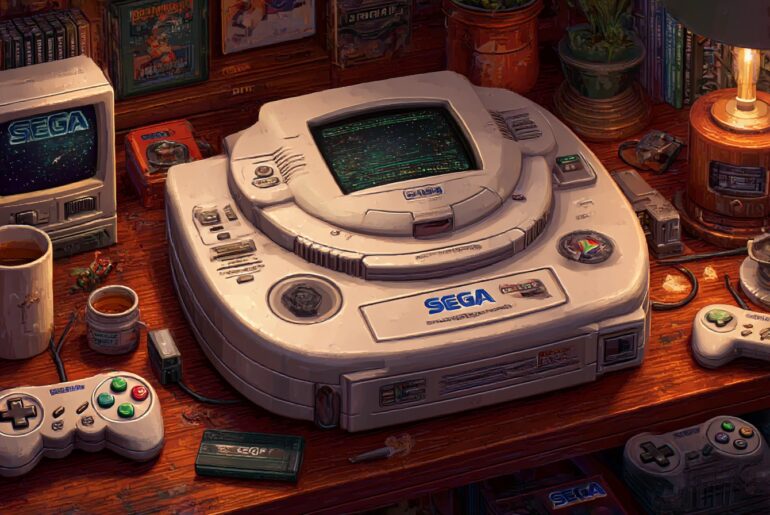
Looking back now, what strikes me most about the Genesis library is how willing developers were to experiment. The hardware was weird – that Motorola 68000 processor paired with a Z80 for sound duties, custom video chips that could pull off tricks Nintendo's setup couldn't quite manage. It wasn't the most powerful system, but it had personality. Character. Those FM synthesis drums that sounded like someone attacking a metal dustbin with enthusiasm. The way blast processing wasn't really a thing but somehow Sonic still felt faster than anything on competing hardware.
These games didn't just fill up our weekends – they shaped our understanding of what interactive entertainment could be. They taught us that music mattered, that personality could overcome technical limitations, that sometimes the best gaming experiences came from taking familiar concepts and just… pushing them further than anyone expected.