You know what’s funny? I’ve been gaming for over forty years now, and I can still remember the exact moment I realized helicopter games were something special. It was 1992, I was fifteen, and my friend Dave had just gotten Desert Strike for his Genesis. We’d spent most of that summer trading games back and forth, but when he popped this cartridge in and handed me the controller, everything changed.
Most games back then were pretty straightforward, right? Run to the right, jump on platforms, shoot the bad guys. Maybe dodge some bullets if you were feeling fancy. But Desert Strike? Man, this thing dropped you into these massive battlefields and basically said “figure it out.” No hand-holding, no obvious path forward. Just you, an Apache helicopter, and a whole lot of desert filled with people who really didn’t want you there.
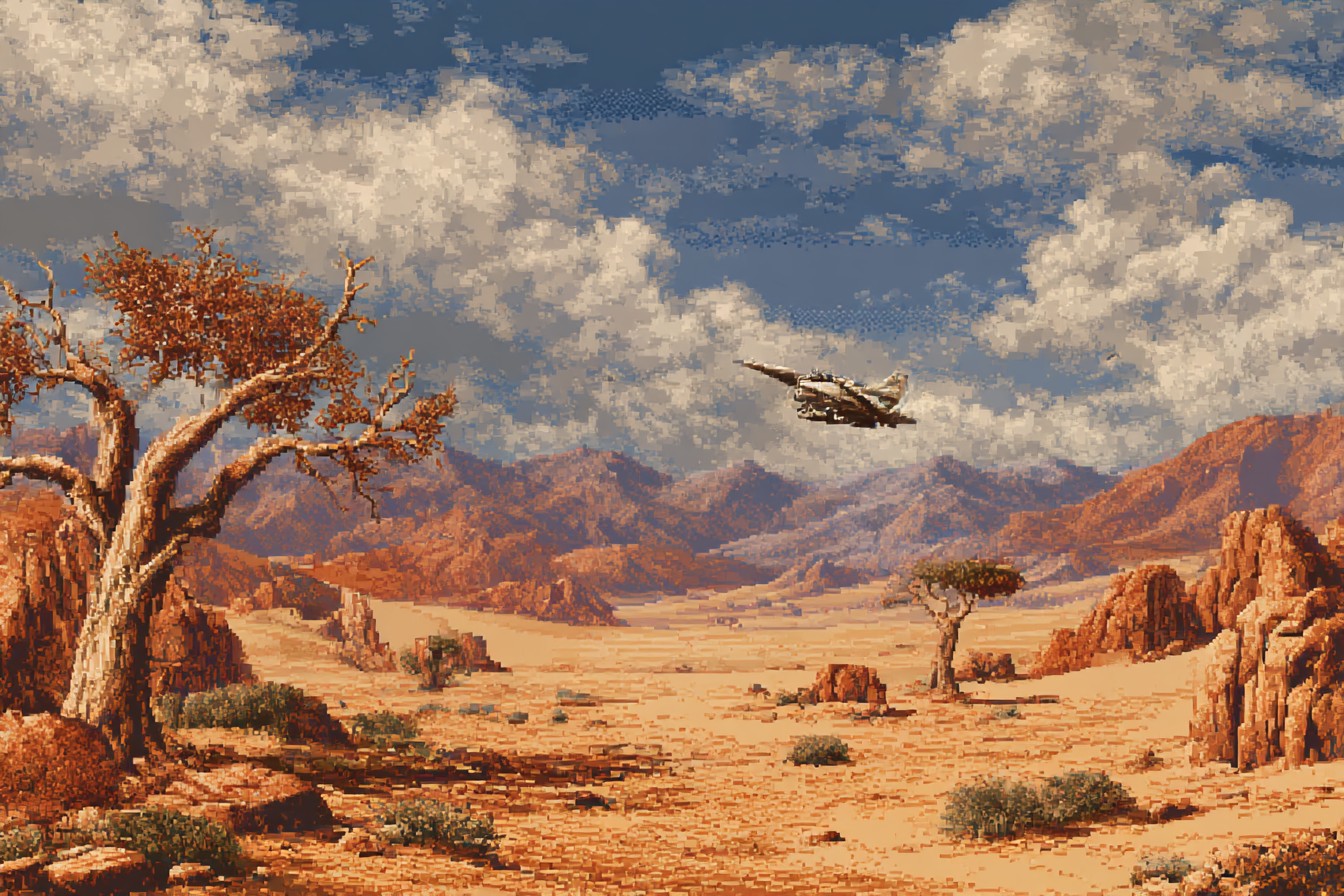
The first thing that grabbed me was how heavy everything felt. I mean, you’d pull back on the D-pad and the helicopter wouldn’t just instantly zip upward like some arcade game. It had weight, momentum, this sense that you were actually fighting physics to keep this machine in the air. I spent probably twenty minutes just flying around that first level, watching my shadow move across the sand, seeing how the rotor wash kicked up these little dust clouds. My mom kept yelling down the stairs asking if I was actually playing or just staring at the screen.
What really got me though was the fuel gauge. Sounds stupid now, but back then most games gave you infinite everything – infinite lives, infinite ammo, infinite time to figure things out. Desert Strike looked at that approach and said “nope, you’re getting a fuel tank and you better manage it properly.” I can’t tell you how many times I’d complete all my objectives, feeling like a total badass, only to watch that fuel warning start blinking red when I was still miles from base. Talk about pucker factor.
The missions felt like actual military operations instead of video game levels. They’d give you these satellite photos during briefings, mark targets with proper military precision, explain why each objective mattered. Find the SCUD launcher before it can fire on civilian targets. Extract downed pilots from behind enemy lines. Take out communications arrays to disrupt enemy coordination. It wasn’t just “blow stuff up because explosions are cool” – though the explosions were definitely cool.
I remember this one mission where I had to rescue some prisoners from an enemy compound. Simple enough, right? Fly in, waste the guards, pick up the good guys, fly home. Except when I got there, the place was crawling with anti-aircraft guns that started tracking me the second I showed up. Had to use the terrain to break their lock, come in from different angles, prioritize which threats to eliminate first. My little teenage brain was working overtime trying to think like an actual combat pilot.
The weapons system was brilliant too. You had Hydra rockets for heavy targets, chain gun for infantry and light vehicles, but everything was limited. Every shot counted. I’d hover there for ages sometimes, trying to decide if that tank was worth a rocket or if I should save it for something bigger down the road. Running out of ammo halfway through a mission wasn’t just inconvenient – it was game over, thanks for playing, try not to crash on your way out.
EA really pushed the Genesis hard with this one. Those scrolling battlefields looked absolutely incredible on our old Zenith TV set. The helicopter sprite had enough detail that you could actually see the individual weapon pods, and when something exploded, it really exploded. None of this wimpy puff of smoke nonsense. Tanks would erupt in these satisfying orange fireballs that made every successful attack feel earned.
But the sound design? Chef’s kiss. That constant whup-whup-whup of rotor blades became like white noise after a while, but in a good way. It anchored everything, made you feel like you were actually sitting in that cockpit. The chain gun had this rapid-fire staccato that was music to my ears, and rockets would scream before impact in a way that never got old. Your co-pilot would chime in with updates that actually mattered – “Enemy armor, two o’clock!” wasn’t just flavor text, it was tactical intelligence that could save your digital hide.
What separated Desert Strike from everything else was how much it respected your intelligence. This wasn’t some dumbed-down arcade shooter. You had to plan approach routes, study enemy positions, manage multiple resources simultaneously. The game assumed you were smart enough to figure things out without constant tutorial pop-ups or glowing arrows pointing you toward objectives.
The difficulty was perfectly calibrated too. Early missions taught you the ropes without being condescending about it, while later campaigns threw these complex multi-stage operations that required everything you’d learned. When you failed – and you would fail – it was usually because you’d made a tactical error, not because the game was being cheap. Running out of fuel two kilometers from base wasn’t frustrating; it was educational. You’d restart with a better understanding of consumption rates and more realistic mission planning.
I probably put more hours into Desert Strike than any other game that year, which is saying something because 1992 was absolutely stacked with great releases. But there was something addictive about the tactical planning, the resource management, the way every mission felt like a proper military operation rather than just another video game level.
Dave and I would trade off on difficult missions, one of us flying while the other called out threats and managed fuel calculations. His mom thought we were nuts, spending entire afternoons hunched over his TV set, debating approach vectors and target priorities like we were planning actual combat operations. Maybe we were a little nuts, but damn if it wasn’t the most engaging gaming experience either of us had ever had.
Even now, twenty-something years later, I’ll fire up Desert Strike on my original Genesis hardware when I want something that demands actual thinking. The graphics look pretty rough on modern displays, sure, but the gameplay is still rock solid. Every control input still feels meaningful, every tactical decision still carries weight. It’s one of those games that proves good design is timeless, even when the technology moves on.
EA created something genuinely special with Desert Strike – a military action game that demanded brains along with reflexes, wrapped in presentation that made you feel like a real combat pilot rather than just another video game hero. It showed that the Genesis could handle complex, open-ended gameplay just as well as fast-paced platformers, and it remains one of the finest examples of how to make helicopter combat feel authentic without sacrificing fun. Absolute classic, and I’ll defend it to anyone who says otherwise.

Samuel’s been gaming since the Atari 2600 and still thinks 16-bit was the golden age. Between accounting gigs and parenting teens, he keeps the CRTs humming in his Minneapolis basement, writing about cartridge quirks, console wars, and why pixel art never stopped being beautiful.