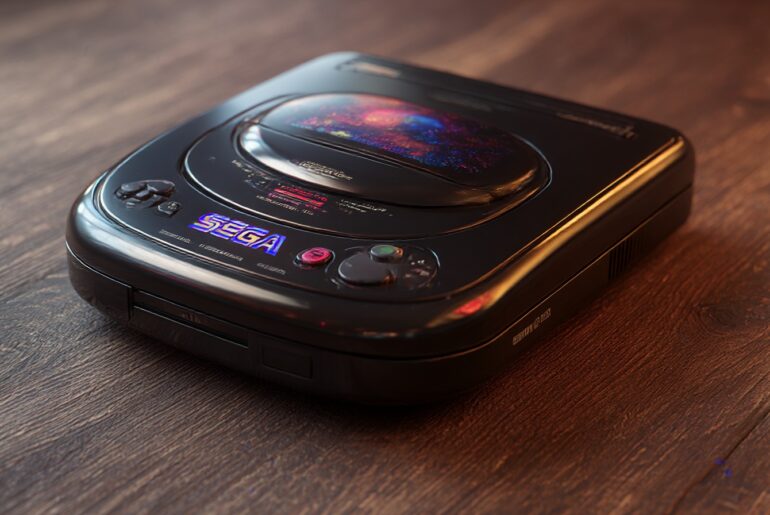
My mate Dave had this theory about movie games back in the day – they were all rubbish because developers got about six weeks and a photocopied script page to work with. Most of the time, he wasn't wrong. E.T. on the Atari 2600 nearly killed the entire industry, and don't get me started on Hudson Hawk for the NES. But then 1993 rolled around, Spielberg's dinosaurs were stomping across cinema screens worldwide, and Sega did something remarkable with their Jurassic Park adaptation. They actually made it brilliant.
I remember walking into Our Price that summer (yeah, the music shop that sold games in a tiny corner section) and seeing that distinctive yellow cartridge sleeve. The artwork alone had me hooked – proper menacing T-Rex, not some cartoon nonsense. Twenty-five quid lighter, I was home feeding it into my Mega Drive, and within minutes I knew something special was happening.
See, most movie tie-ins just lazily followed the film's plot beat for beat. Not Sega's Jurassic Park. BlueSky Software – remember them? – took Hammond's island and said "right, what if we made this an actual survival experience instead of just a bog-standard platformer?" The result was something that felt more like the Michael Crichton novel than the Hollywood spectacle, which sounds backwards but somehow worked perfectly.
You played as Dr. Grant, but this wasn't some invincible action hero version. You were genuinely vulnerable, armed with nothing but tranquilizer darts and your wits. The opening moments teach you everything you need to know – you're wandering through seemingly peaceful jungle environments when suddenly the music shifts, that distinctive Yamaha FM synthesis cranks up the tension, and a pack of Compsognathus comes skittering out of nowhere. Your first instinct is probably to run, which is exactly right.
The genius lay in how they structured the gameplay around actual dinosaur behavior rather than typical video game enemy patterns. Raptors hunted in coordinated packs, positioning themselves to cut off your escape routes. The Dilophosaurus would spit venom that temporarily blinded you – proper scary stuff when you're eight years old and playing in a darkened living room. And the T-Rex… bloody hell, the T-Rex was an event. You'd hear that earth-shaking footstep sound effect through your telly speakers, and every muscle in your body would tense up because you knew you had maybe three seconds to find somewhere to hide.
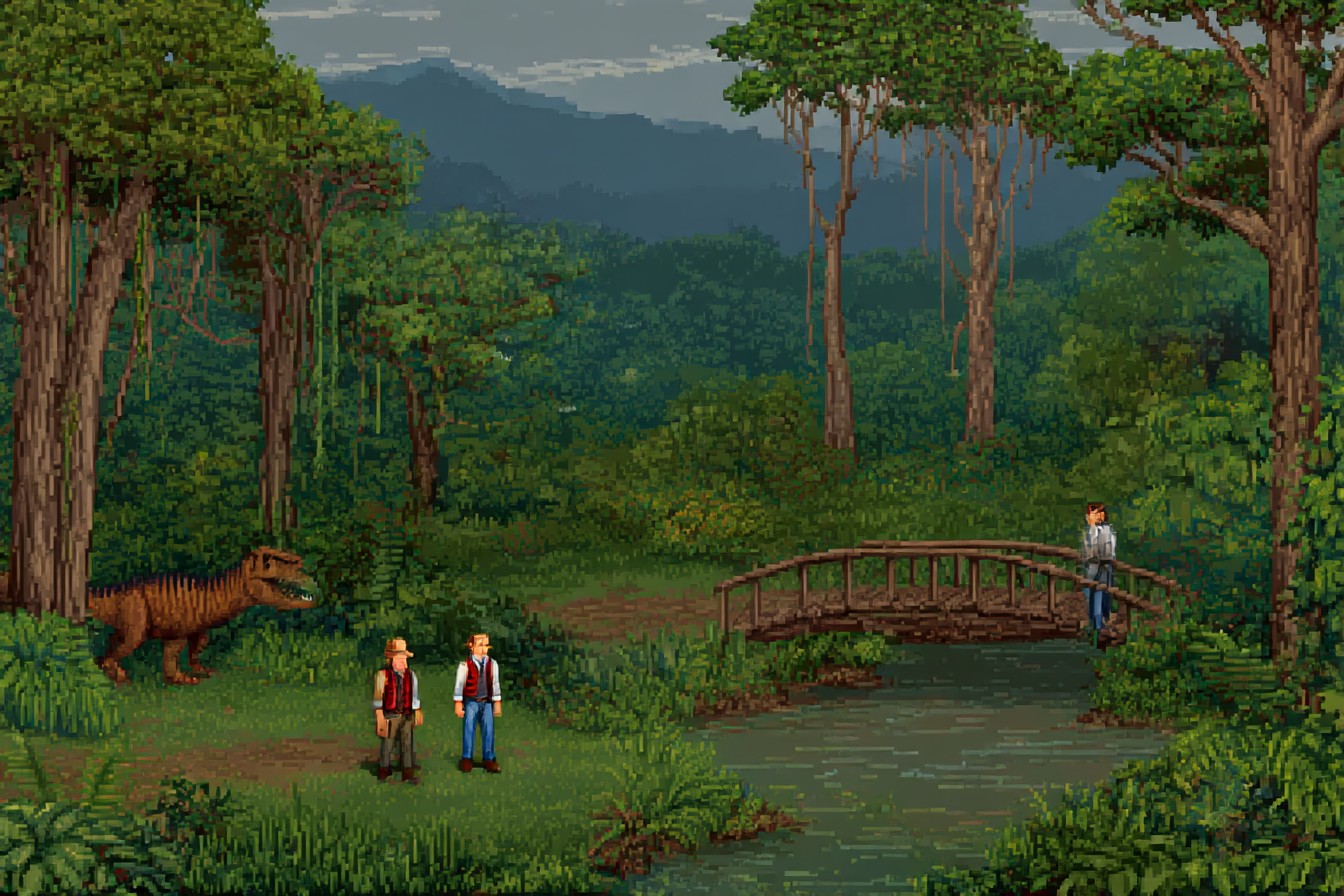
What really set it apart was the perspective switching. Most of the game played as a top-down exploration adventure, but certain sections would suddenly flip to first-person mode when you entered buildings. Walking through the visitor center in that claustrophobic view, hearing your own footsteps echo while knowing something nasty was probably lurking around the next corner – it was genuinely unsettling. The Game Gear version took this even further, being entirely first-person, though I never owned one myself. Too pricey, and the battery life was criminal.
The sound design deserves special mention here. This was 1993, remember – developers were still figuring out how to make the Mega Drive's sound chip sing. But Jurassic Park's audio was absolutely spot-on. Each dinosaur had distinctive calls that you'd learn to recognize and fear. The jungle ambient sounds created this constant sense of unease. And when danger approached, that music… Spencer Nilsen knew exactly what he was doing. It wasn't trying to replicate John Williams' orchestral score (thank goodness), but created something uniquely electronic and threatening.
I spent entire weekends mapping out Isla Nublar's layout on graph paper, marking safe routes and dinosaur territories like some sort of military strategist. The island felt genuinely large and maze-like, with multiple objectives scattered about. You weren't just running from left to right collecting power-ups – you had to think, plan, remember where you'd seen that keycard or which path led to the raptor nest.
The difficulty was perfectly pitched too. Not unfairly punishing, but demanding enough that every encounter felt meaningful. Getting caught by a pack of raptors wasn't just "oops, lost a life" – it was a genuine "oh no, I've made a terrible mistake and now I'm dinosaur lunch" moment. The tranquilizer darts had limited range and effectiveness, so you couldn't just blast your way through everything. Sometimes the smartest move was avoiding conflict entirely.
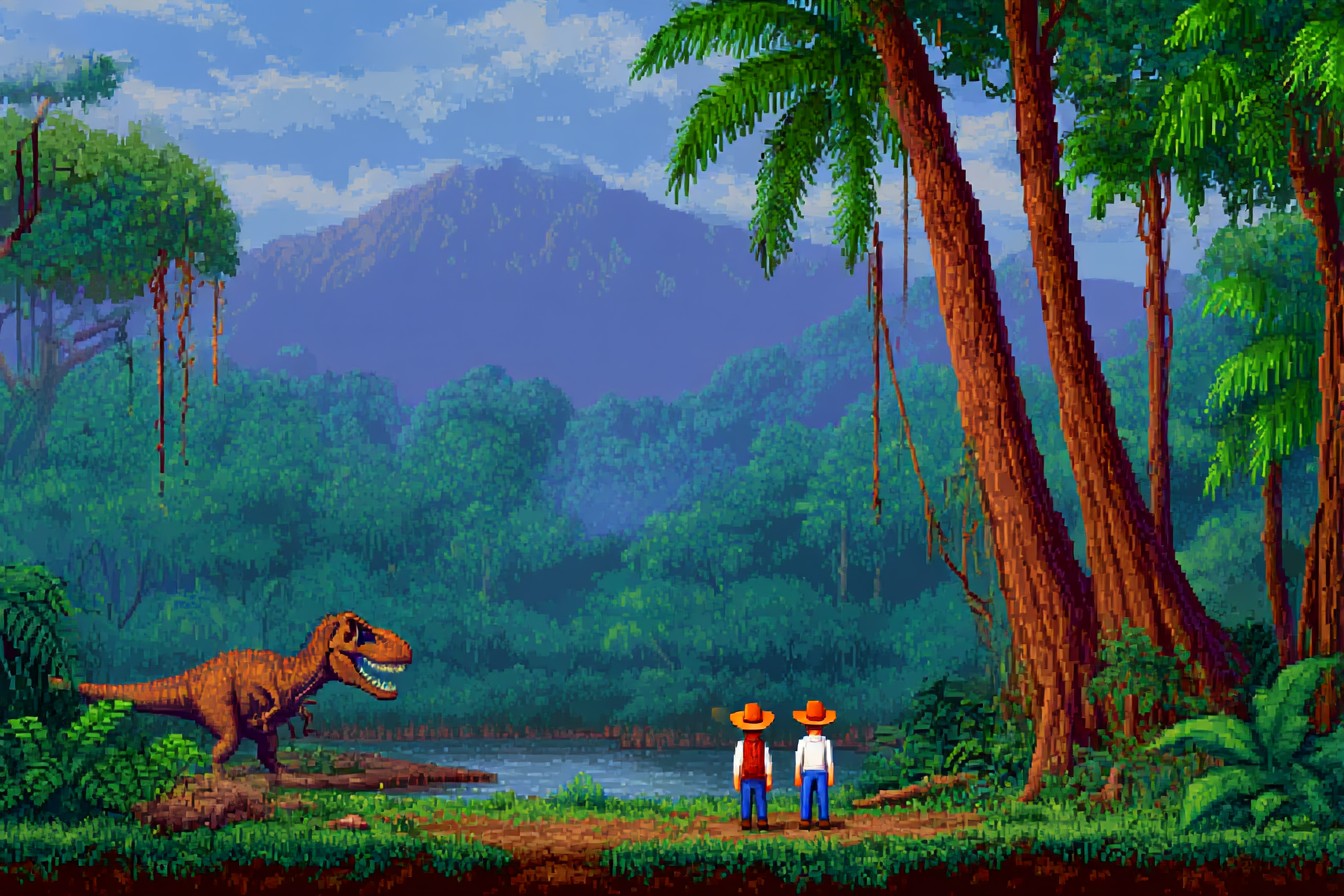
Comparing it to other movie games of the era makes Sega's achievement even more impressive. The SNES got their own Jurassic Park, developed by Ocean, and while it had prettier visuals, it felt more like a standard action-platformer. You could punch raptors to death, which rather missed the point of why they were terrifying in the first place. The Sega version understood that humans are squishy and vulnerable, and that's what made it so compelling.
Years later, I found out that BlueSky Software had actually visited Spielberg's sets during filming, which explains why their version felt so authentic. They weren't just working from promotional materials – they'd seen the actual animatronics, talked to the paleontological consultants, understood what made these creatures special. That respect for the source material shows in every pixel.
The legacy of Sega's Jurassic Park is fascinating. It proved that movie tie-ins didn't have to be quick cash-grabs if developers were given proper time and creative freedom. Modern survival horror games owe a debt to its tension-building mechanics. Even today, firing it up on my MiSTer setup, it holds up remarkably well. The graphics might look primitive compared to contemporary dinosaur games, but the atmosphere? Still absolutely electric.
It's criminal that we don't see more movie adaptations take this approach – treating the source material as inspiration for genuine interactive experiences rather than just digital recreation. Sega's Jurassic Park remains the gold standard for how to translate cinema into gaming while respecting both mediums. Twenty-five quid well spent, and Dave's theory? Well, every rule needs its exception.