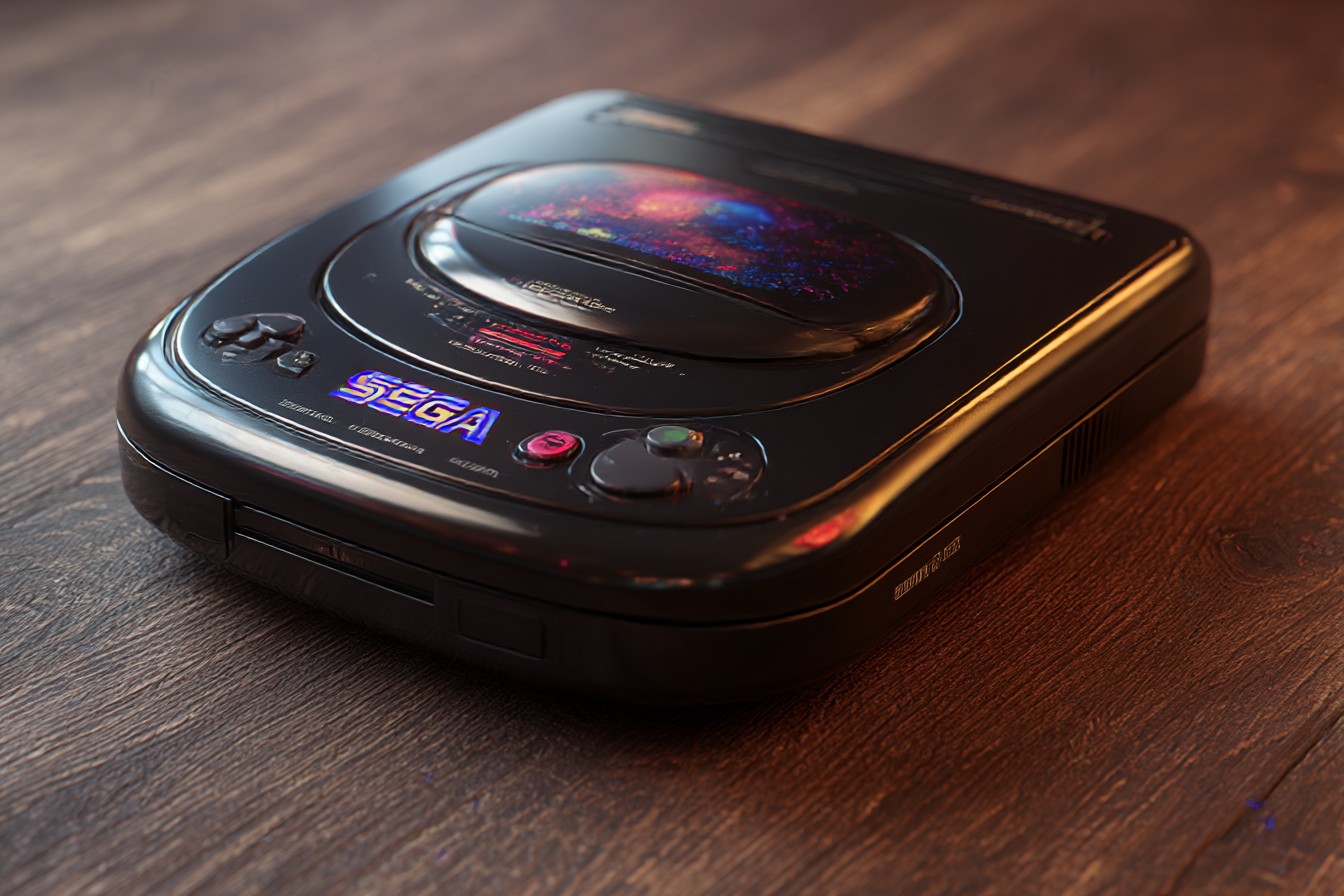
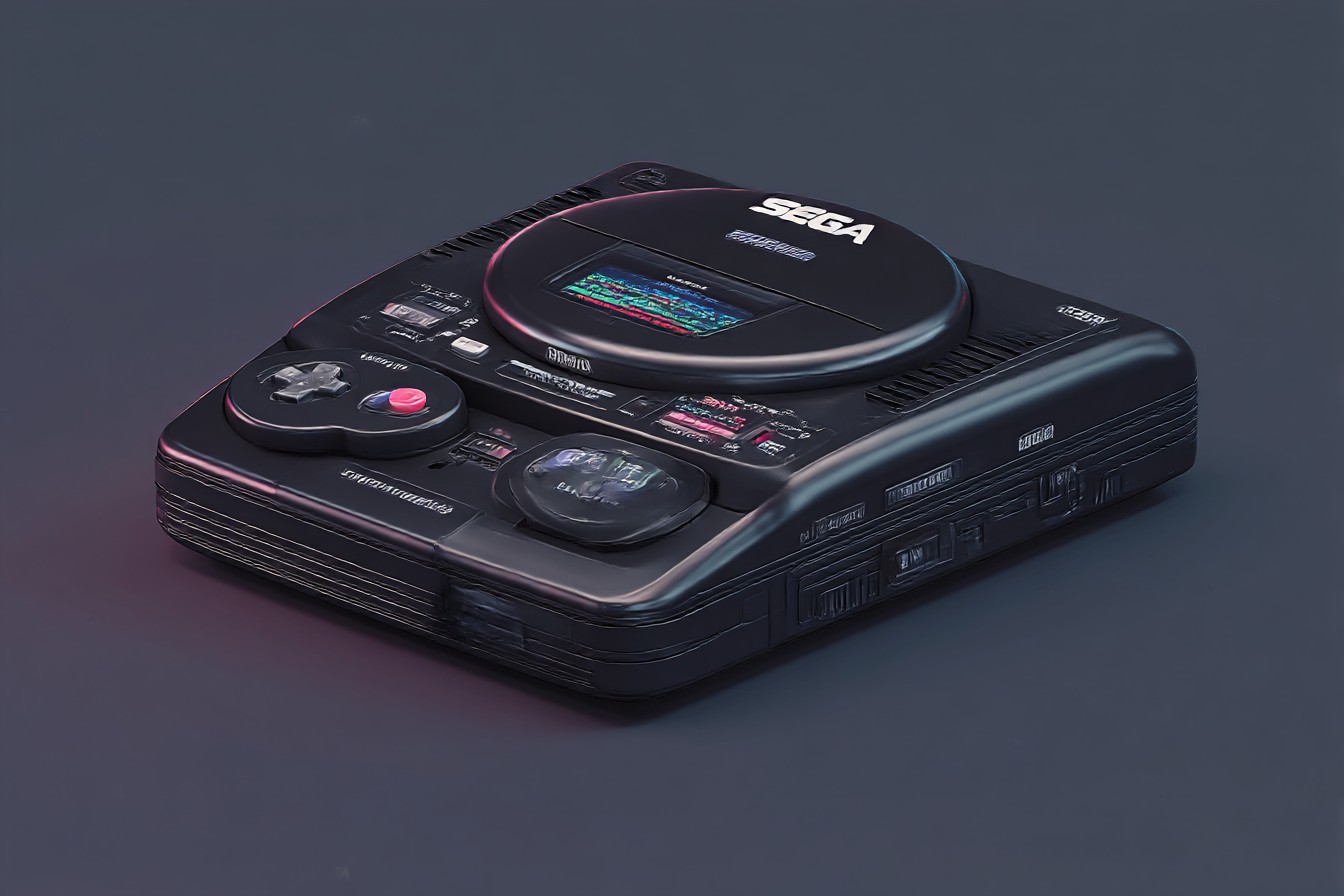
You know that feeling when you open a dusty cardboard box in your parents' loft and suddenly you're fifteen again? That's exactly what happened when I found my old Mega Drive last month, still wrapped in that horrible bubble wrap mum insisted would "keep the dust off." There it was—that sleek black wedge that absolutely demolished my Saturday mornings and pocket money throughout the early nineties.
I'm not being dramatic when I say this console changed everything. Not just for me, but for gaming as a whole. The Genesis (or Mega Drive, as we called it in the UK) didn't just compete with Nintendo—it declared war. And honestly? For a while there, it was winning.
Let me paint you a picture. It's 1991, I'm thirteen, and everyone at school is banging on about their Super Nintendo. Fair enough—Super Mario World was brilliant, no argument there. But then my mate Dave's older brother comes back from university with this… thing. Black, angular, aggressive-looking. Nothing like the friendly grey SNES that looked like it should be making toast instead of games.
The first thing I noticed wasn't even visual—it was the sound. That Yamaha YM2612 sound chip produced audio that was completely different from anything I'd heard. Grittier. More… metallic? Streets of Rage 2's soundtrack still gives me goosebumps. It sounded like the kind of club my parents definitely wouldn't let me into, which naturally made it approximately a thousand times cooler.
Then there was Sonic. Oh man, Sonic. I'd been playing Mario for years, carefully platforming through levels at what now felt like a snail's pace. Sonic was like someone had grabbed platforming by the collar and shaken it until it paid attention. Speed wasn't just encouraged—it was the entire point. The first time I saw Sonic tear through Green Hill Zone, collecting rings in a blue blur while that infectious music pumped away, I knew Nintendo had a serious problem on their hands.
But here's the thing everyone forgets about the Genesis—it wasn't just about speed and attitude (though it had both in spades). This console had proper arcade-quality games at home. Golden Axe felt like having a piece of the local arcade in my bedroom. Streets of Rage made me feel like a proper hard case, even though I was still asking mum for lifts to the cinema.
The marketing was genius too. "Genesis does what Nintendon't" wasn't just a slogan—it was a battle cry. And blast processing? Look, we all know now that blast processing was basically marketing nonsense, but back then? Back then it sounded like actual wizardry. My Genesis could process blasts. Could your SNES process blasts? I thought not.
I remember the exact moment I became a proper Sega fanboy. It was in Argos—you know, that catalogue shop where you'd circle items with a tiny golf pencil and hand over a slip of paper like you were placing a bet. Mum had finally agreed to let me get a console for my birthday, and I was torn between the SNES and Genesis. Then I saw the Genesis bundle with Sonic 2. Not just Sonic—Sonic 2. With Tails. And that soundtrack that sounded like pure electricity.
Twenty minutes later, I'm on the bus home with a carrier bag containing my destiny. The setup was a proper ritual—RF cables, channel tuning, that moment of breath-holding while you waited to see if everything would work. Then… SEGA. That voice that announced itself like it owned the place. I still get a little thrill when I hear it.
The games library was incredible, and I'm not just talking about the obvious hits. Sure, everyone knew about Sonic and Streets of Rage, but what about Gunstar Heroes? That game was like having a Saturday morning cartoon that fought back. Or Phantasy Star IV, which proved the Genesis could do proper RPGs when it wanted to. And don't get me started on Thunder Force IV—that soundtrack could power a small town.
Speaking of soundtracks, can we talk about how the Genesis made music that sounded like nothing else? That distinctive FM synthesis gave every game this unique sonic fingerprint. You could identify a Genesis game just by listening to it. The bass was punchy, the leads were sharp, and everything had this slightly rough edge that made it feel more… real somehow. More dangerous.
I spent entire weekends lost in that world. Mum would bring me cups of tea that went cold while I was deep in a Phantasy Star dungeon or trying to master Chun-Li's spinning bird kick in Street Fighter II. Yes, the SNES version had better colors, but the Genesis version had that raw energy that made every fight feel like a proper scrap.
The six-button controller was a thing of beauty too. After years of struggling with fighting games using a standard three-button pad, getting proper punch and kick buttons felt revolutionary. Street Fighter II suddenly made sense. King of Fighters was playable. My thumbs finally understood what they'd been training for their entire lives.
What really strikes me now, looking back, is how different the Genesis felt from everything else. Nintendo made family-friendly entertainment. Sega made… well, Sega made games that felt like they had a bit of an edge. Mortal Kombat with actual blood? Yes please. Night Trap causing moral panic among people who'd clearly never played a video game? Even better.
The Genesis didn't just compete—it expanded what gaming could be. It proved that consoles didn't have to be beige and safe. They could be black and a bit rebellious. They could make sounds that your parents didn't entirely approve of. They could have mascots with attitude problems and games that didn't necessarily have happy endings.
These days, I've got my old Genesis hooked up through a RetroTINK to a modern TV, and you know what? Those games still absolutely sing. The graphics might look a bit rough around the edges now, but that character—that distinctive Genesis personality—is still there in every synthesized drum hit and blast-processed pixel.
That console taught me that competition makes everything better. Without the Genesis pushing Nintendo, would we have gotten Super Mario World as quickly? Would Nintendo have bothered making the SNES sound chip as good as it was? Probably not.
My Genesis started a revolution, alright. A revolution that proved gaming could be cool, edgy, and unapologetically entertaining. Not bad for a black wedge that processed blasts.