The cartridge slot clicked with that familiar satisfying snap, and there I was again—standing in that cursed carnival town of Termina, watching the same three-day cycle begin anew. My mate Dave had warned me about Majora's Mask when he lent it to me back in 2001. "It's proper weird, this one," he'd said, tapping the gold cart like it might bite. "Not like normal Zelda."
He wasn't wrong. Where Ocarina of Time felt like an epic journey across a living world, Majora's Mask felt like being trapped inside someone else's nightmare. And I loved every twisted minute of it.
See, most people don't realize just how mental Nintendo went with this sequel. After Ocarina became this massive cultural phenomenon—you know, the game that made non-gamers suddenly understand why we'd been banging on about Zelda for years—they had a choice. Play it safe with another sweeping adventure, or do something completely barmy. Thank god they chose barmy.
The whole thing started as a joke, really. Miyamoto wanted to reuse Ocarina's engine and assets to create something quickly. One year development time. Mental deadline. But instead of churning out Ocarina 2: More of the Same, they created this bizarre fever dream about grief, acceptance, and the crushing weight of inevitability. Proper cheery stuff for the kids, eh?
I still remember the first time I put on that Deku Mask. The transformation animation—Link's screams as his body contorts, the wood bursting through his skin—genuinely made me uncomfortable. This wasn't Mario hopping into a Tanooki suit. This felt violent, painful, wrong somehow. The ESRB slapped an E rating on it, but honestly? Some of the imagery in Majora's Mask would make modern horror games think twice.
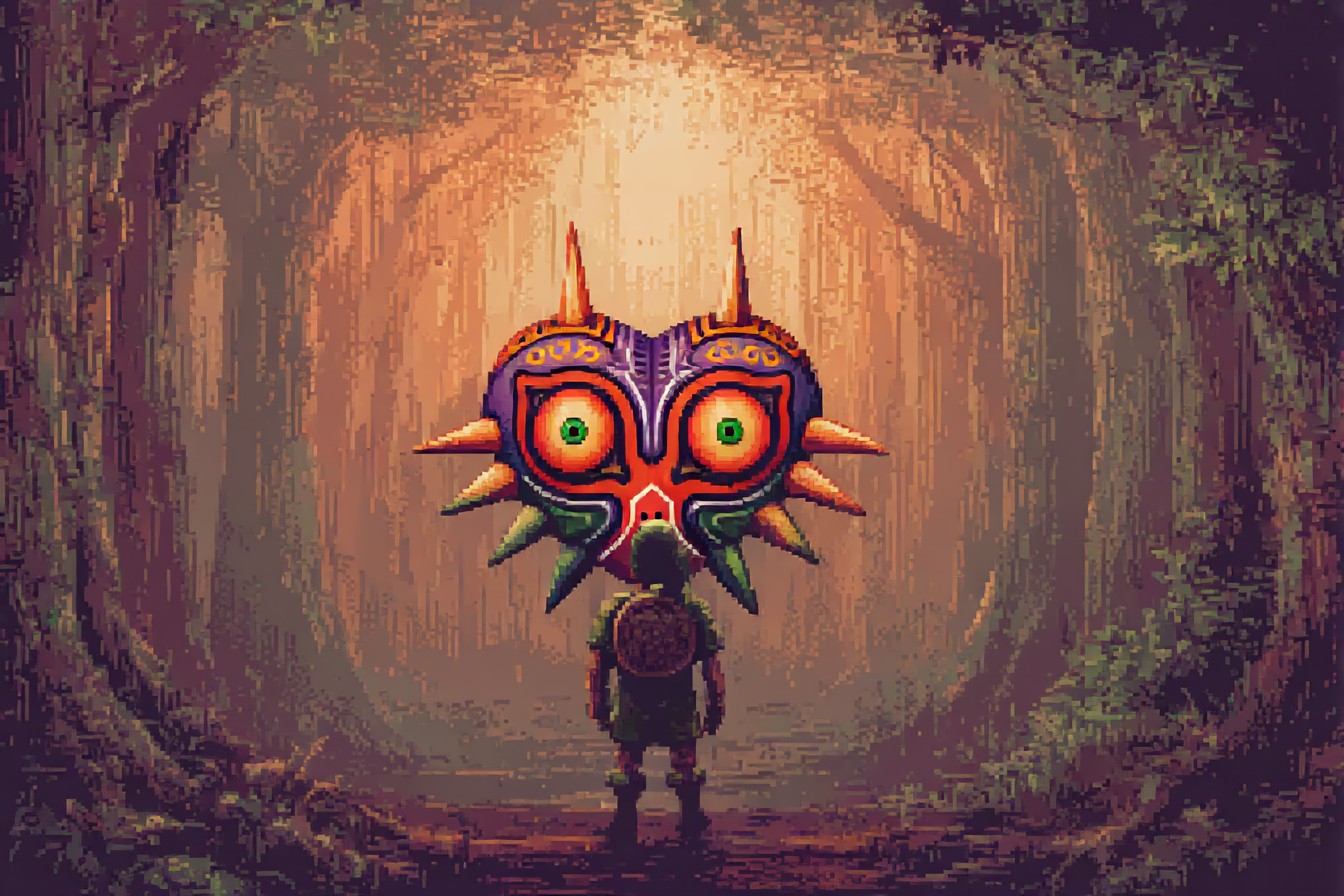
The time loop mechanic should've been annoying. Groundhog Day with a medieval twist. But Nintendo turned repetition into this brilliant narrative device. Every NPC in Clock Town follows their own three-day schedule, completely independent of Link's actions. The postman delivers his letters at exactly the same time each cycle. The couple planning their wedding goes through the same romantic drama. The bomb shop lady argues with her mother-in-law. All of it happening whether you're there to witness it or not.
I spent hours just… watching. Following different characters through their routines, learning their stories, understanding how their lives intersected. It was like being a ghost haunting a miniature world. The banker's son getting mugged on the second night. The ranch girl's desperate attempts to save her cows. The old woman sitting alone in the inn, waiting for someone who'd never come. Bloody hell, just writing about it gives me goosebumps.
And then there were the masks. Twenty-four of them, each one telling its own story of transformation and loss. The Captain's Mask belonged to a dead soldier whose spirit couldn't rest. The Romani Mask let you into the milk bar, but only after you'd witnessed a family's tragedy unfold. Even the silly ones—like the All-Night Mask that let you stay awake through boring conversations—had this underlying darkness. Who was the insomniac who originally wore it? What kept them up at night?
The bosses were mental too. Odolwa, that tribal dancer spinning around like he's at some nightmare rave. Goht, the mechanical bull charging through Snowhead Temple with those pounding industrial sounds. And don't get me started on Gyorg—that fish still gives me the willies. But the real villain was time itself. The countdown always ticking, the moon getting closer, that horrible face grinning down at you like a demented emoji.
Nintendo's artists went absolutely wild with the character designs. The Happy Mask Salesman with his twitching expressions and manic energy. The Skull Kid's tragic backstory hidden beneath layers of mischief and malice. Even familiar faces from Ocarina were twisted into new forms—the same actors playing different roles in this parallel universe theater production.
The music… Christ, the music. Zelda games always had brilliant soundtracks, but Majora's Mask was something else entirely. The Song of Healing with its melancholy melody that actually healed broken spirits. The Oath to Order summoning the four giants like some ancient apocalypse ritual. And that bloody Elegy of Emptiness—creating hollow shells of yourself, empty statues with vacant eyes. The whole soundtrack felt like it was composed in a minor key, even when it wasn't.
Playing it on original hardware was the only way, really. That Expansion Pak humming away, pushing the N64 beyond what it was supposed to handle. The frame rate chugged in places—Great Bay Temple, I'm looking at you—but it added to the oppressive atmosphere. Everything felt heavy, labored, like the console itself was struggling under the weight of this dark vision.
The save system was brutal by modern standards. Three days of progress lost if you didn't make it to a save statue. No autosaves, no hand-holding. You learned to respect time because the game never let you forget its passage. Those owl statues became sacred landmarks, beacons of hope in the endless cycle.

But here's the thing that really got to me—beneath all the darkness and weirdness, Majora's Mask was fundamentally about helping people. Not saving the world in some abstract way, but actually solving individual problems. Reuniting lovers, delivering letters, playing music for lonely souls. The Bombers' Notebook tracked it all, turning empathy into gameplay mechanics.
Twenty-odd years later, I fired it up on my 3DS—the remake's improved save system making it more accessible but somehow less intense. The original's unforgiving nature was part of its charm. Modern games hold your hand through tutorials and constant checkpoints. Majora's Mask threw you into the deep end and expected you to swim or drown trying.
That's what made it a masterpiece, though. Nintendo took their biggest franchise and used it to explore themes most adult media wouldn't touch. Death, depression, the cyclical nature of trauma. They disguised a meditation on mortality as a colorful adventure game and somehow got away with it.
Dave was right—it wasn't normal Zelda. It was something much stranger, much braver. A reminder that Nintendo's best work has always come from their willingness to be completely, utterly mad.