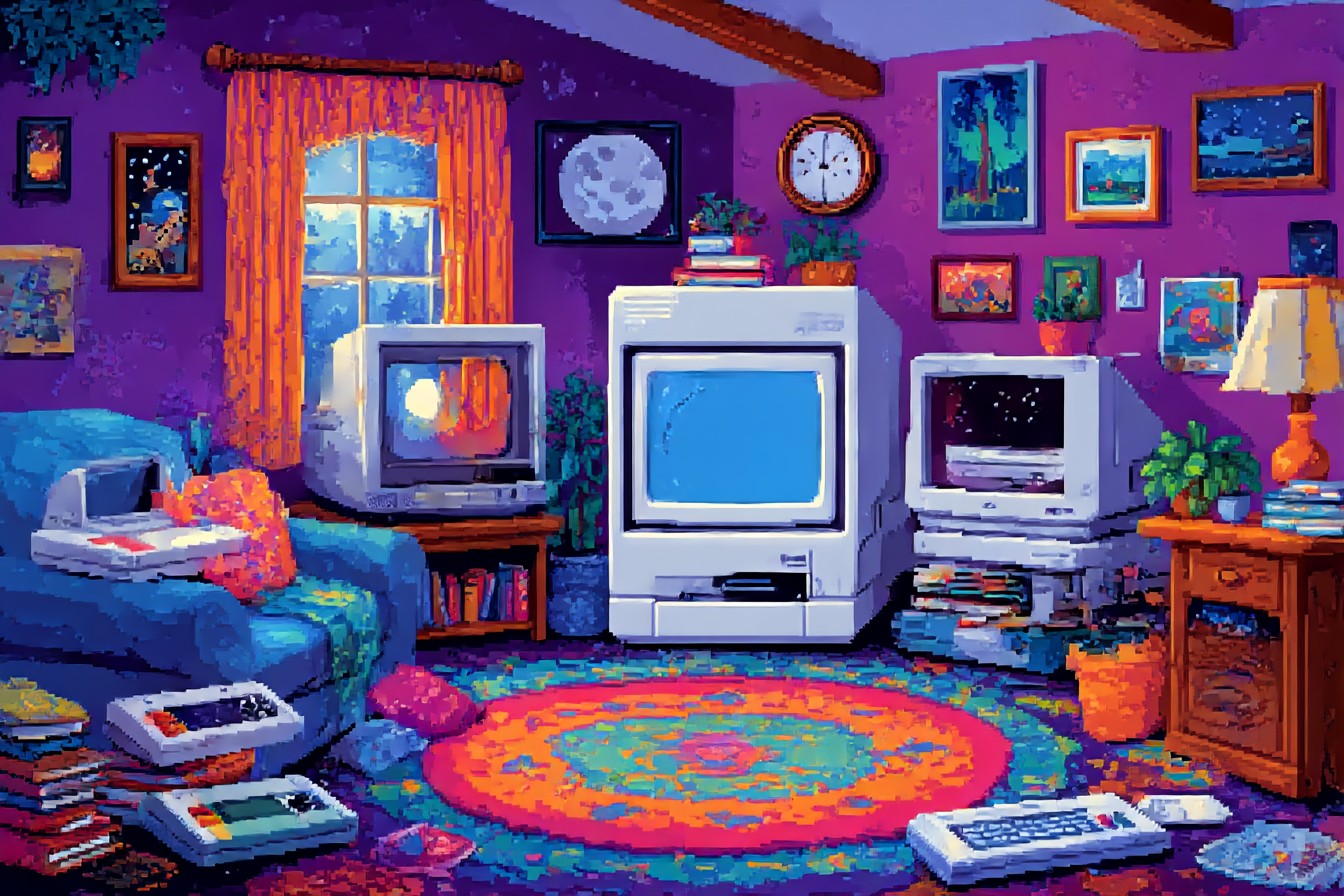
The smell of orange squash and the sound of a CRT warming up—that's what Saturday afternoons meant to me in the 90s. But there was something else competing for my attention between cartoon blocks and trying to convince mum to let me stay up past eight. Nickelodeon had figured out something brilliant: they'd turned getting messy into appointment television.
I'm talking about those game shows that made every kid secretly wish they could ditch their good school shoes and dive face-first into a pool of green goop. Double Dare wasn't just a show—it was a religious experience broadcast directly into our living rooms, complete with Marc Summers as the high priest of slime and Robin Marrella wielding that microphone like it dispensed actual magic.
My mate Dave and I used to practice. Seriously. We'd set up obstacle courses in his back garden using his dad's gardening equipment and whatever else we could nick from the shed without getting into proper trouble. The washing line became our "wringer," a couple of plant pots turned into targets for throwing tennis balls, and we'd time each other with his older sister's digital watch—the one that beeped every hour and drove his mum mental during Coronation Street.
The thing about Double Dare was how it made being covered in food seem like the ultimate achievement. These kids would get doused in chocolate syrup, buried in whipped cream, or have to fish around in a giant nose for the flag (yeah, that was an actual obstacle), and they'd emerge looking like they'd won the lottery. Meanwhile, I couldn't even get a grass stain on my trousers without getting the lecture about "good clothes don't grow on trees."
But the show knew exactly what it was doing. Every challenge was designed to trigger that primal kid response—the bit of your brain that wanted to make the biggest mess possible while someone else cleaned it up. Watching contestants slide down into vats of pudding or crawl through tubes filled with baked beans was like seeing all your forbidden playground fantasies played out on screen.
I remember one particular episode where they had this obstacle involving a giant sandwich. The kid had to crawl between two massive pieces of bread while someone dumped what looked like an entire delicatessen on top of them. Lettuce, tomatoes, mustard—proper industrial quantities of sandwich filling. Dave turned to me and said, "That's it. That's what I want to do when I grow up." His career ambitions lasted about a week, but the memory stuck.
The beauty of these shows wasn't just the mess, though. They had this weird educational angle that probably convinced parents it was acceptable viewing. Family Double Dare would throw in geography questions between the sliming sessions. "Name three countries that begin with 'B'" followed immediately by "Now stick your head in this tank of green jelly and find the rubber chicken." It was like someone had figured out how to make learning feel like the warm-up act for chaos.
And the prizes! Sweet mercy, the prizes were exactly what every 90s kid thought they needed to achieve happiness. Super Nintendo consoles, mountain bikes that looked like they belonged in a sci-fi movie, boom boxes with more buttons than the space shuttle, and always—always—the promise of a family holiday somewhere with a pool and room service. We'd sit there calculating whether we could convince our parents to apply for the family version, knowing full well that dad would rather eat his own shoes than appear on television wearing matching t-shirts.
Nick Arcade took this formula and added video games, which was basically cheating as far as my ten-year-old brain was concerned. Watching kids play actual arcade games for points while wearing those chunky early-90s headphones was pure torture. They got to play and potentially win the games I spent my pocket money feeding coins into down at the seaside arcade. The final round where they'd literally enter the game—running around a blue screen studio pretending to collect coins or avoid enemies—looked like the future had arrived and decided to be really, really cool about it.
The contestants always seemed so confident too. They'd stride up to Pac-Man or Street Fighter II like they'd been training for this moment their entire lives. Meanwhile, I couldn't get past the second level of Ghosts 'n Goblins without throwing a minor tantrum and asking for my money back.
What struck me rewatching these shows years later is how genuinely chaotic they were. The hosts would barely be able to keep control, kids would slip and slide everywhere, and half the time you couldn't tell if someone had won or lost because they were covered in so much gunk. It felt real in a way that modern game shows don't—less scripted, more genuinely unpredictable. When someone face-planted into a pie, it wasn't because the stunt coordinator had planned it that way. It was because pies are slippery and kids are clumsy, and television gold happens when those two facts collide.
The slime itself deserves its own paragraph. That green stuff wasn't just mess—it was Nickelodeon's signature, their brand made physical. Getting slimed was like being knighted, but stickier. Years later I found out it was mostly vanilla pudding, oatmeal, and green food coloring, which somehow made it simultaneously more and less appealing. More because vanilla pudding is delicious; less because oatmeal in your hair probably takes forever to wash out.
These shows captured something about being a kid in the 90s that I don't think exists anymore. We were the generation caught between analog and digital—still playing outside, still getting properly muddy, but also the first to grow up with video games as a normal part of childhood. Nick's game shows understood that balance perfectly. They gave us physical challenges that felt like playground games amplified to ridiculous proportions, wrapped up with enough technology and production value to feel like glimpse of the future.
Looking back, those Saturday afternoons shaped my understanding of what entertainment could be. Not everything had to be polite or neat or educational in the traditional sense. Sometimes the best television was just organized chaos with a timer attached. Sometimes getting covered in pudding really was the point.