I can still picture that moment in 1997 when I first wrapped my hands around the N64’s bizarre three-pronged controller and booted up Mario Kart 64 for the first time. My buddy Mike had managed to snag the system at launch – his job at Best Buy had its perks – and we spent that entire Saturday afternoon discovering what would become the definitive kart racing experience of our generation. Coming from Super Mario Kart on the SNES, which felt limited with its Mode 7 pseudo-3D graphics and four-character roster, Mario Kart 64 was like stepping into the future of competitive gaming.
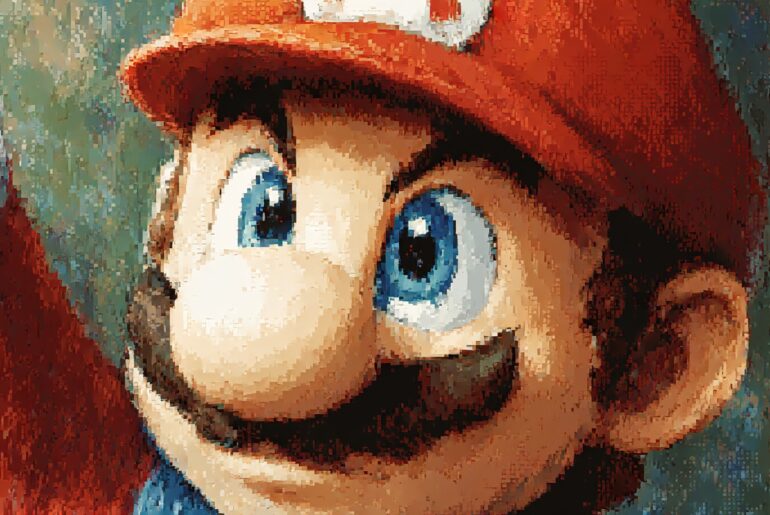
The character select screen hit different than anything we’d experienced before. Eight racers now, each with distinct personalities that came through not just in their stats but in how they actually felt to control. Mario and Luigi were the safe choices, the reliable brothers who’d been carrying Nintendo since the NES days. Mario felt balanced in that perfectly Nintendo way – decent acceleration, solid top speed, not spectacular at anything but never terrible either. He was the character you picked when you wanted consistency across different track types, though honestly, consistency is boring when you’re seventeen and looking to dominate your friends.
Luigi had this weird tendency to overcorrect on tight corners, which felt authentically Luigi somehow. The green plumber always seemed slightly less confident than his famous brother, and that translated directly into his driving characteristics. I’d watch computer-controlled Luigi absolutely bin it on Rainbow Road’s hairpin turns and think, yeah, that’s exactly what Luigi would do in a high-pressure racing situation.
Yoshi became my secret weapon on technical tracks. That green dinosaur had acceleration that felt almost unfair – rocket off the starting line, weave through traffic like he was built for it, corner with precision that made the heavyweight characters look like they were driving through molasses. His voice lines were pure enthusiasm, this infectious joy that made winning feel celebratory and losing feel like you’d disappointed a friend. The downside? Put Yoshi on a straightaway battle with Bowser or Donkey Kong and you’d get muscled around like a shopping cart in a parking lot.
Princess Peach – still Princess Toadstool in my original cartridge, which dates me more than I care to admit – was the character that made losing feel personal. Something about her calm, collected driving style made getting overtaken by her feel worse than any other character. She’d glide through corners with this effortless grace while everyone else was sliding into barriers and recovery wasn’t just about speed; it was about dignity. My friend Dave mained Peach specifically because he knew it psychologically messed with opponents when they got beaten by the princess in pink.
Toad was pure chaos energy compressed into a tiny mushroom package. His acceleration was mental, absolutely perfect for tracks that required quick recovery from mistakes or constant speed adjustments. Wario Stadium with its moving walls and tight sections? Toad territory. The problem was his voice – that high-pitched “I’m the best!” celebration could either pump you up or make you want to chuck your controller across the room. My younger brother claimed Toad as his main, which meant every four-player session ended with squeaky victory taunts echoing through our basement.
The heavyweight division was where Mario Kart 64 got properly tactical. Bowser was the absolute unit, the character you picked when you wanted to make a statement. Slow off the line, sure, but once he got rolling? Unstoppable freight train. Playing as Bowser meant committing to a completely different racing philosophy – positioning mattered more than reflexes, momentum was everything, and smaller karts would bounce off you like pinballs. His evil laugh when passing opponents was perfectly menacing, the kind of sound effect that made rivalry personal.

Donkey Kong occupied this interesting middle ground between the lightweights and Bowser. Heavy enough to throw his weight around, but not so sluggish that technical tracks became impossible. DK had the best landing animations – you could feel that satisfying thump through the controller when he hit the ground after jumps. His character design translated perfectly to 3D, maintaining that classic Donkey Kong personality while feeling modern and responsive. Obviously brilliant on DK’s Jungle Parkway, though picking your own character’s signature track always felt like mild cheating.
Wario was where things got nasty. Heavier than the balanced characters but with this evil personality that made every dirty racing move feel intentional rather than accidental. That purple and yellow color scheme was absolutely garish, but it worked – you could spot Wario approaching from three corners away, which was usually enough warning to brace for impact. His laugh was genuinely unsettling, the kind of sound that made Battle Mode feel properly competitive rather than casually fun.
The genius of Mario Kart 64’s character selection was how it created natural rock-paper-scissors dynamics. Lightweight characters dominated on technical tracks with lots of corners and elevation changes. Royal Raceway with its castle section and sharp turns? Give me Yoshi or Peach every time. But throw those same characters onto Wario Stadium’s straight-line sections and they’d get bullied by every heavyweight in the field. Medium characters like Mario got the worst of both worlds sometimes, but their consistency became genuinely valuable during longer Grand Prix sessions where track variety mattered.
Four-player split-screen battles turned character selection into psychological warfare. Everyone had their preferences, but they were also constantly adapting based on track selection and opponent choices. Mike always grabbed Yoshi first because he knew it wound up everyone else – classic Mike move. I usually ended up defaulting to Mario because reliability felt more important than specialization when pride was on the line, though I secretly preferred Wario for his pure nastiness factor.

Learning the advanced techniques revealed even more character depth. Power-sliding wasn’t just about holding the R button – it was about that perfect left-right-left rhythm that built up boost power. Different characters had slightly different timing windows, which meant muscle memory developed for Mario didn’t translate directly to Toad. Wario felt heavy and deliberate through the slides, requiring more deliberate inputs, while lighter characters felt twitchy and responsive, allowing for quicker adjustments but demanding more precision.
Battle Mode was where character personalities really shone through. Skyscraper with its multiple levels favored quick, maneuverable characters who could dart between floors efficiently. Block Fort rewarded patience and positioning, which suited heavier characters who could absorb punishment and retaliate effectively. Big Donut was pure chaos where character choice mattered less than luck, timing, and willingness to employ questionable tactics against friends.
The AI personalities were surprisingly well-developed too. Computer-controlled opponents didn’t just have different stats; they had different driving behaviors that felt authentic to their characters. Mario drove conservatively but consistently, always lurking in the rear-view mirror during long races. Peach maintained this calm precision that made her genuinely threatening on technical tracks. Bowser was aggressive and territorial, the kind of AI opponent who’d ram you off the track if given the opportunity.
Looking back twenty-five years later, Mario Kart 64’s eight-character roster achieved something that feels increasingly rare in modern gaming – perfect balance through imperfection. Every character had clear strengths and obvious weaknesses, but the gaps weren’t so dramatic that picking your favorite felt like accepting a significant handicap. The personalities came through in every race, from Yoshi’s enthusiastic celebrations to Wario’s menacing chuckles, creating emotional connections that went beyond simple stat optimization.
Those eight characters generated countless living room arguments, last-second comebacks, and friendships temporarily strained over questionable item usage. They transformed simple racing into complex social dynamics wrapped in rubber-burning, power-sliding perfection. Even now, firing up my original N64 or loading up an emulator for nostalgia sessions, that character select music still triggers this immediate grin. Not because the graphics hold up – they don’t – but because those eight personalities created gaming memories that absolutely do.

Samuel’s been gaming since the Atari 2600 and still thinks 16-bit was the golden age. Between accounting gigs and parenting teens, he keeps the CRTs humming in his Minneapolis basement, writing about cartridge quirks, console wars, and why pixel art never stopped being beautiful.