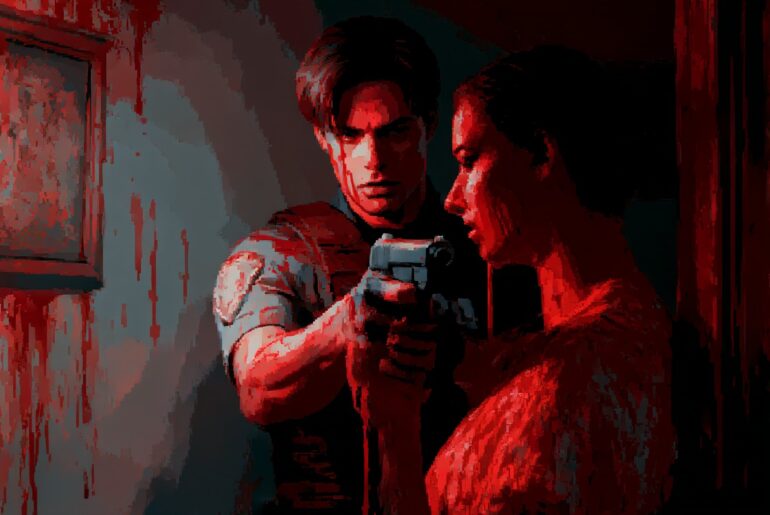
The N64 controller was in my hands, palms already sweating from anticipation. I'd just fired up Perfect Dark for the first time, and honestly? Nothing could have prepared me for what Rare had accomplished. This wasn't just GoldenEye's prettier sibling—this was something entirely different, something that pushed every single transistor in that grey console to its absolute breaking point.
I remember the exact moment it clicked for me. Joanna Dark was creeping through the Carrington Institute, and I'd just discovered you could dual-wield RCP-90s. The frame rate took a nosedive—we're talking slideshow territory—but I didn't care. The sheer audacity of what was happening on screen made my teenage brain short-circuit. Here was a game that said "screw hardware limitations" and decided to be brilliant anyway.
The AI in Perfect Dark wasn't just advanced for its time; it was honestly embarrassing compared to what most games are doing today. Simulants had personalities, actual tactical awareness. You'd set up a match with DarkSims on Villa, thinking you'd school some bots, and they'd systematically hunt you down like terminators. I watched my mate Dave—who could dominate any human player in GoldenEye—get absolutely demolished by a single PerfectSim on Facility. The thing was reading his movement patterns, predicting where he'd go next. It was beautiful and terrifying in equal measure.
But let's talk about the weapons. Sweet mother of pearl, the weapons in Perfect Dark were something else entirely. The Laptop Gun that transformed into an automated sentry? Pure genius wrapped in polygonal glory. I'd spend entire evenings just in the weapon testing range, experimenting with alt-fire modes that felt like discovering cheat codes that were actually intended features. The Dragon assault rifle's proximity explosive mode, the SuperDragon's wall-bouncing lasers—every gun felt like it had been designed by someone who understood that variety wasn't just about different damage numbers.
The Farsight XR-20 remains one of gaming's most wonderfully overpowered weapons. X-ray vision that let you see through walls, paired with perfect accuracy at any range. In multiplayer, it was basically a friendship-ending device. "No Farsights" became as standard a rule as "no Oddjob" had been in GoldenEye. I can still hear my younger brother screaming about wall-hackers, not understanding that the game literally encouraged it.

Weapon customization wasn't just about picking different guns—it was about understanding each tool's dual nature. Every single weapon had a secondary function that often completely changed its tactical application. The Cyclone's magazine-dumping mode turned it from a standard SMG into room-clearing insanity. The Phoenix's explosive shells could level entire sections of certain maps. Learning these alt-fires felt like earning a doctorate in fictional ballistics.
The Expansion Pak was absolutely essential for Perfect Dark, and I mean that in ways beyond just the technical requirements. Without it, you'd get this neutered version that felt like watching a movie through frosted glass. With it? The game transformed into something that genuinely felt next-generation. Those extra 4MB of RAM unlocked the full campaign, proper multiplayer, and performance that—while still occasionally chunky—was actually playable.
I distinctly remember saving up for months to afford that little red cartridge. Twenty-something pounds might not sound like much now, but when you're getting two quid pocket money and trying to balance sweet consumption with gaming hardware purchases, it represented serious commitment. The moment I plugged it in and Perfect Dark's main menu didn't immediately boot me out, I knew I'd made the right choice.
The single-player campaign was where Perfect Dark really showed off. DataDyne Central on Perfect Agent difficulty wasn't just challenging—it was a masterclass in level design that demanded you understand every weapon, every route, every AI behavior pattern. I spent weeks learning the optimal path through G5 Building, memorizing guard patterns, perfecting the art of silent takedowns with the CrossBow's tranquilizer darts.
Elvis, your alien sidekick, was brilliantly annoying in exactly the right way. His sarcastic commentary and genuinely useful tactical advice made him feel like a real character rather than just an exposition delivery system. When he'd mock your accuracy after a particularly poor showing, it stung because you knew he was right.
The Chicago level remains one of my favorite gaming memories. That section where you're sniping from the taxi while Elvis drives? Pure action movie gold. The fact that Rare managed to create convincing vehicle sequences on hardware that was already gasping for breath showed their technical wizardry. Sure, the frame rate occasionally resembled stop-motion animation, but the spectacle more than compensated.
Perfect Dark's multiplayer was where friendships went to die and be reborn stronger. Combat Simulator mode offered customization options that most modern games would envy. Creating a match with twenty Simulants on Complex, all armed with Rocket Launchers, wasn't just possible—it was encouraged. The game actively wanted you to break it in creative ways.

The challenges were genuinely challenging too. Getting gold on every single one required not just skill but deep understanding of the game's systems. I probably spent more time trying to perfect my run through Temple's Challenge than I did on entire other games. When I finally nailed that gold medal time, I may have done a small victory dance in my bedroom. Don't judge me.
Looking back now, Perfect Dark was basically Rare showing off. They'd mastered the N64 hardware so completely with GoldenEye that they decided to push it beyond all reasonable limits just to see what would happen. What happened was a game that occasionally struggled to maintain double-digit frame rates but delivered experiences that felt genuinely futuristic.
The fact that this game exists at all still impresses me. In an era where most developers were playing it safe, Rare created something that said "here's what the N64 can do if you're completely unreasonable about optimization." Perfect Dark wasn't just technically impressive—it was proof that ambitious game design could triumph over hardware limitations through sheer bloody-minded determination.
Even today, booting up Perfect Dark on original hardware feels like time travel. That distinctive N64 controller in your hands, the slight input lag, the way certain sections still chug along at what charitably could be called cinematic frame rates—it's all part of the experience. This wasn't just a great FPS; it was a statement about what gaming could become.