The RF switcher was warm under my fingers that Christmas morning in 1998, the familiar ritual of channel-hopping until the N64's signal locked in properly. Channel 36, usually. Sometimes 37 if the weather was being difficult. Mum was already warning about turkey prep time, but I had something more important to attend to—a rectangular grey cartridge that promised to let me pilot an X-wing through the Death Star trench run I'd memorized from VHS rewatches.
Rogue Squadron wasn't my first N64 game, but it might've been the most important one. I'd already worn grooves in Mario 64's castle floors and learned to fear the beep of GoldenEye proximity mines, but this was different. This was Star Wars, proper Star Wars, not some dodgy licensed cash-grab but something that actually understood what made those space battles sing.
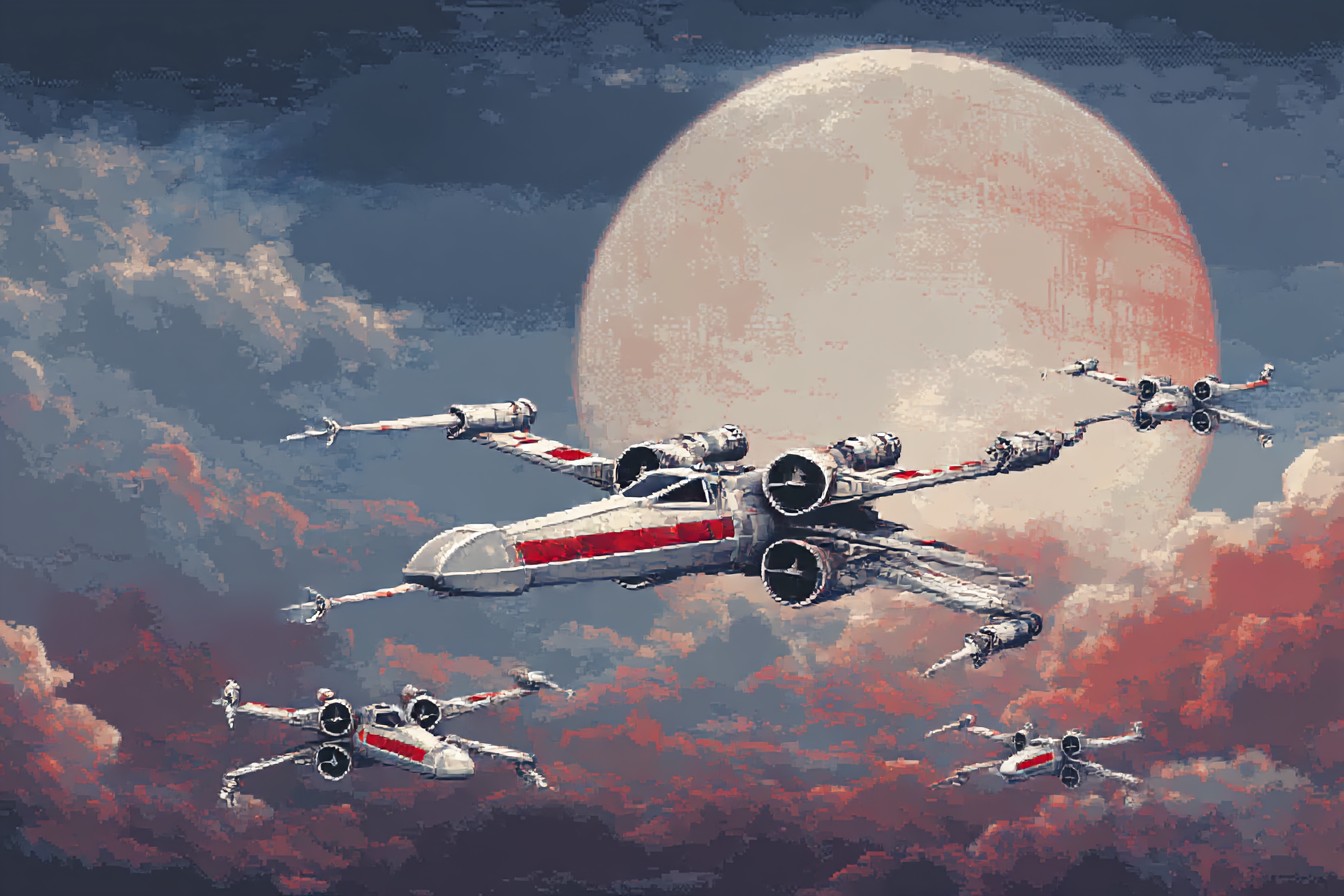
The opening sequence still gives me goosebumps. That familiar crawl, John Williams' score streaming through our tiny TV speakers, and then—wham—you're in the cockpit of Luke's T-65 X-wing, Tatooine stretching out below like a postcard from a galaxy far, far away. The way Factor 5 squeezed performance out of the N64 was borderline witchcraft. Those textures shouldn't have looked that crisp. That framerate shouldn't have held up during massive dogfights with TIE fighters swarming like angry wasps.
I remember the exact moment I realized this game was special. Mission two, I think—"Rendezvous on Barkhesh." You're supposed to protect some transports, routine escort duty, but then Imperial reinforcements drop out of hyperspace and suddenly the sky is full of Star Destroyers and TIE interceptors. The N64 controller, that weird three-pronged alien artifact we all learned to love, felt perfect for space combat. Z-trigger to accelerate, C-buttons for targeting, analog stick for that precise flight control that made you feel like you were actually piloting something with mass and momentum.
The sound design was what really sold it, though. Factor 5 had clearly done their homework—every laser blast, every engine whine, every Wilhelm scream was pulled straight from the films. When you fired your proton torpedoes, you heard that distinctive whoosh-thump from A New Hope. When TIE fighters screamed past, that unmistakable howl made you duck instinctively. The Yamaha sound chip in our old Mega Drive had been impressive, but the N64's audio capabilities made space feel alive in ways I hadn't experienced outside an actual cinema.
My younger brother and I developed a weird routine around Rogue Squadron. He'd sit on the floor with the strategy guide—one of those thick Prima books with the shiny cover that cost more than the game should've—calling out enemy positions and power-up locations while I flew. "TIE bomber at two o'clock! Shield generator behind the ridge!" We were like a proper rebel command team, him as my R2 unit, me as the hotshot pilot trying not to crash into canyon walls.
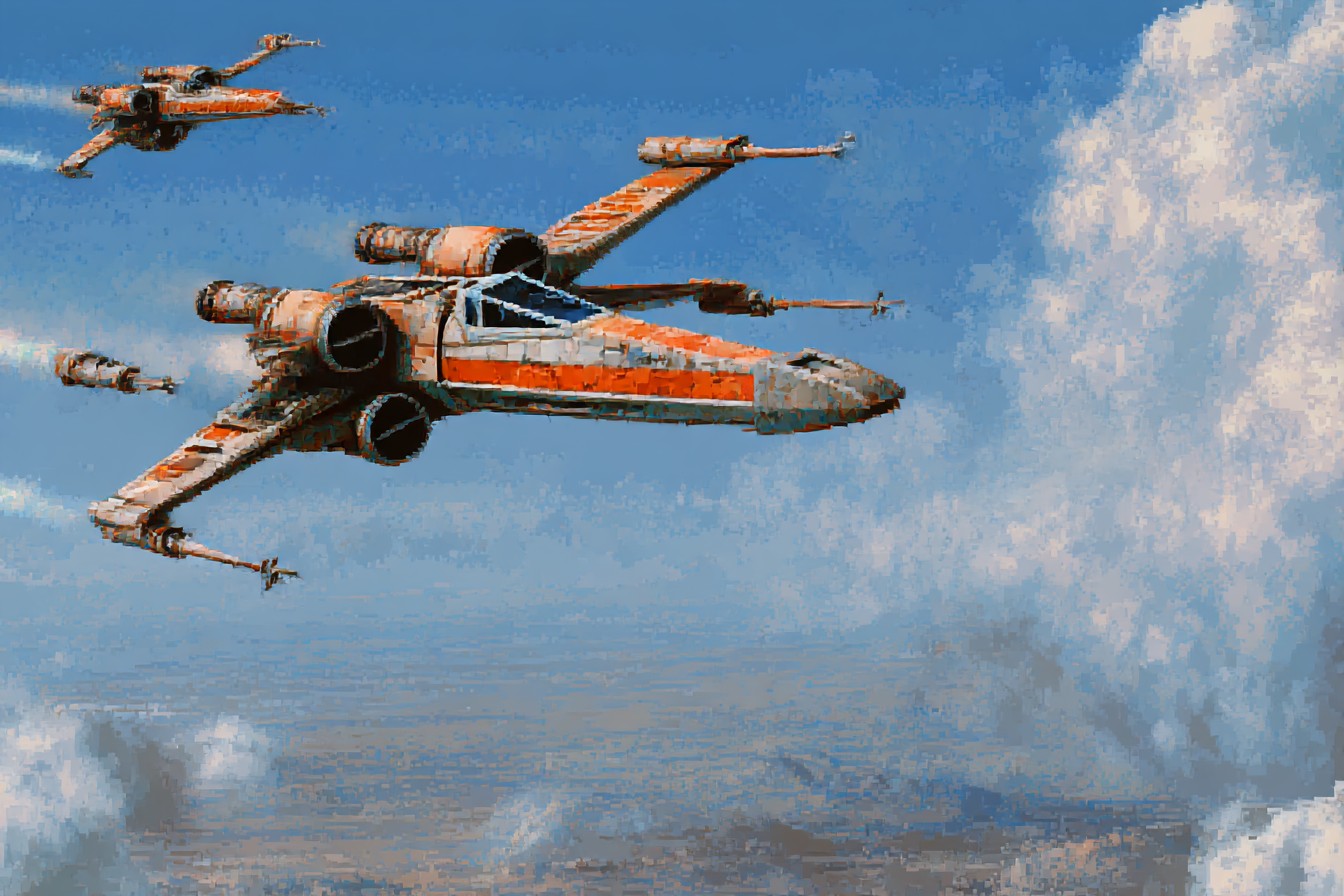
The variety kept us coming back for months. One mission you're recreating the Hoth battle, weaving between AT-AT legs in a snowspeeder with tow cables that actually worked like they did in Empire Strikes Back. The next you're piloting a Y-wing through an asteroid field, those sluggish bombers handling like flying refrigerators but packing enough firepower to crack capital ships. Then it's back to X-wings for precision strikes, A-wings for high-speed reconnaissance, even the odd B-wing mission that made you feel like you were flying a Swiss Army knife with engines.
But the Death Star trench run—bloody hell, the Death Star trench run. Every kid who'd grown up with Star Wars had imagined being Luke Skywalker in that final sequence, racing along the Death Star's surface while Vader's TIE advanced closes in. Factor 5 didn't just recreate that scene; they made you live it. The way the trench walls rushed past, the targeting computer's steady beep as you lined up the exhaust port, Vader's distinctive breathing over the radio as he gained on you—it was like being inside the film.
I must've played that mission fifty times, trying to nail the perfect run. The physics felt just right—you couldn't just point and shoot like an arcade game. You had to account for speed, angle, the X-wing's momentum as you dove into the trench. Miss the shot and you'd loop around for another pass while TIE fighters swarmed like hornets. Nail it perfectly and you'd get that satisfying explosion, that moment of triumph that never got old no matter how many times you'd seen the film.
The medal system kept us obsessed long after we'd finished the main campaign. Bronze was fine, silver was respectable, but gold? Gold medals required genuine skill, perfect knowledge of each mission's secrets and shortcuts. Some missions had hidden power-ups tucked behind rock formations or inside enemy installations. Others rewarded you for completing secondary objectives that weren't even mentioned in the briefing. Getting gold on every mission became our white whale, the sort of completionist challenge that defined summer holidays.
Years later, when I finally got my hands on a Dreamcast and tried Rogue Squadron's spiritual successor, I realized how special that original N64 version had been. Sure, the graphics weren't as polished, the textures were blockier, but there was something about the way it felt—the weight of the ships, the precision of the controls, the perfect balance between arcade accessibility and simulation depth.
Factor 5 understood something fundamental about Star Wars that many licensed games missed: it's not just about having the right ships and the right sound effects. It's about capturing that feeling of being part of something epic, that sense of desperate heroism against impossible odds. When you're limping home in a damaged A-wing with your shields down and half your squadron gone, that's proper Star Wars drama right there.
I still fire up Rogue Squadron occasionally, usually on winter evenings when nostalgia hits particularly hard. The N64 sits connected to our bedroom CRT, that faithful old Trinitron that weighs more than our washing machine but displays those chunky polygons with the sort of warmth modern displays can't quite match. The cartridge slot still has that satisfying click, the controller still fits my hands like a familiar tool, and Luke's X-wing still responds to my thumb movements like it's reading my mind.
Some games age gracefully. Others become historical curiosities. Rogue Squadron remains essential—not just as a piece of Star Wars memorabilia, but as a masterclass in how to make flying feel magical on hardware that shouldn't have been capable of such wizardry. Every time I hear that opening fanfare, I'm eight years old again, fighter pilot dreams intact, ready to save the galaxy one more time.