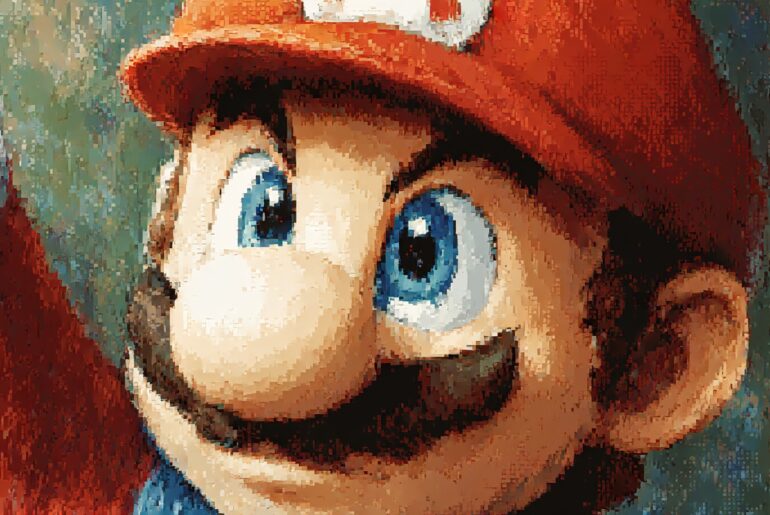
Picture this: there I was, controller in hand, wiggling that stubby little analog stick on my N64 pad and watching Mario's face stretch and morph in ways that shouldn't have been possible on hardware that cost less than my dad's monthly beer budget. That moment—the first time you grabbed Mario's nose and gave it a proper yank in the file select screen—that's when everything changed. Not just for me, but for gaming as a whole.
I'd been playing platformers since my Atari days. Hell, I'd mastered the art of pixel-perfect jumping in Pitfall!, memorized every pattern in Donkey Kong, and could navigate Mega Man's stages with my eyes closed. But Super Mario 64? That was like going from riding a bicycle to piloting a spaceship. Suddenly you weren't just moving left and right anymore—you had a whole world to explore, and it felt properly three-dimensional in a way that made my brain do little happy somersaults.
The thing about those early 3D attempts was that most of them felt like tech demos wearing game costumes. Remember Jumping Flash on PlayStation? Impressive for about five minutes, then you realized you were basically hopping around empty boxes. But Mario 64 had this magic quality where every single movement felt intentional, crafted. That first run around Princess Peach's castle courtyard wasn't just showing off—it was teaching you a new language of movement.
And that analog stick. Good grief, that analog stick. I know people love to joke about the N64 controller looking like it was designed by aliens, but holding it properly—left hand on the center prong, right hand on the right side—felt revolutionary once you got used to it. That little gray nub gave you 360 degrees of movement possibility, and Mario responded to every tiny adjustment. Tilt it slightly, he'd walk. Push it halfway, he'd jog. Slam it forward, and he'd take off running with this infectious enthusiasm that made you want to run alongside him.
The camera system drove everyone mental at first, though. I spent my first hour with the game wrestling with those yellow C buttons, trying to figure out why the view kept swinging around like a drunk cameraman. But once it clicked—once you realized you were essentially holding two controllers at once, one for Mario and one for the camera—it opened up this entirely new way of thinking about space in games. You weren't just playing Mario anymore; you were directing your own little movie about Mario.
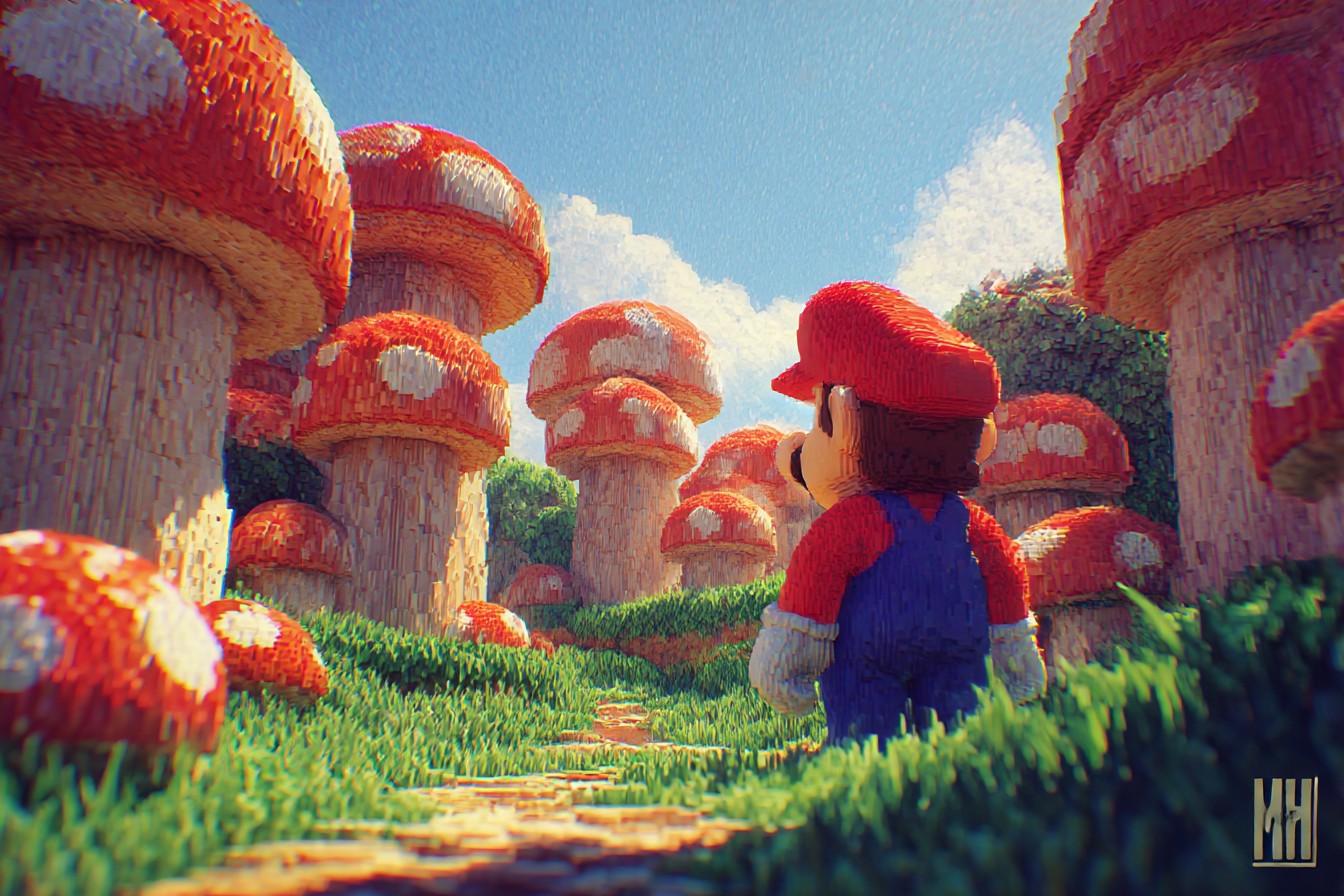
I remember the exact moment it all came together for me. I was in Bob-omb Battlefield, chasing around that massive King Bob-omb, when I accidentally triggered the cannon. Mario went flying through the air—properly flying, not just jumping in an arc—and I instinctively moved the camera to follow his trajectory. Suddenly I wasn't watching a character on a screen; I was piloting him through this living, breathing world. The physics felt real. The momentum felt right. When he landed with that satisfying "wahoo!" I knew I was experiencing something genuinely new.
What blew my mind wasn't just the 3D movement—it was how Nintendo had figured out the grammar of 3D platforming before anyone else even knew there was a language to learn. Every jump had weight to it. Mario's triple jump wasn't just a gimmick; it was a tool for covering distance and gaining height. The long jump let you clear gaps that seemed impossible. The backflip gave you that extra bit of vertical reach. Wall kicks opened up entirely new paths through levels.
And the levels themselves! God, those levels. Each painting in the castle was like stepping into a different world with its own rules and personality. Dire Dire Docks started as this underwater maze, then drained when you weren't looking, completely changing the geography. Tick Tock Clock moved at different speeds depending on what time you entered it—something I discovered by complete accident and spent the next hour testing obsessively. Cool, Cool Mountain had that penguin race that everyone remembers, but also hidden shortcuts and secret areas that rewarded exploration.
The star collection system was genius too. Instead of just reaching the end of a level, you had specific objectives that made you approach each world from different angles. One star might be about racing to the top, another about solving a puzzle, a third about finding a hidden area you'd never noticed before. It made every return visit feel fresh, not like you were just replaying the same content.
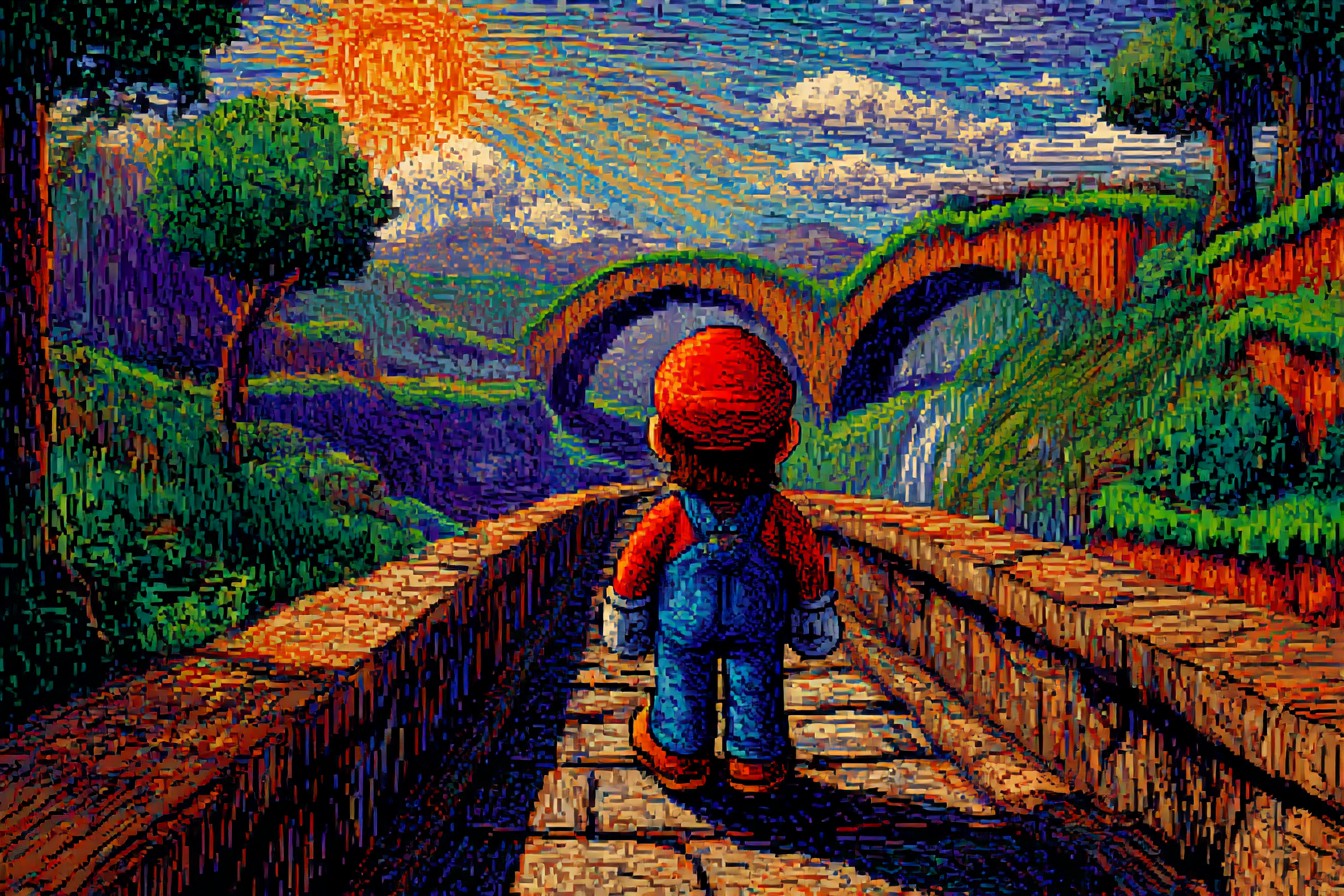
But here's what really separated Mario 64 from everything that came before: it trusted you to figure things out. There was no tutorial level explaining how to triple jump or wall kick. No on-screen prompts telling you where to go next. The game just presented you with this playground and let you discover its rules through experimentation. That kind of confidence in the player was rare then and feels almost impossible now.
The technical achievement still impresses me when I fire up my old N64. Yeah, the frame rate dips when things get busy, and the texture resolution makes everything look a bit muddy on modern screens. But the core mechanics, the way Mario moves and responds to your inputs, that all holds up perfectly. I've played the updated versions on Switch and 3DS, and while they're prettier and smoother, that original N64 version still has this raw energy to it, this sense of discovery that can't be replicated.
Playing it now, especially on original hardware with that slightly loose analog stick that develops its own personality over time, brings back not just memories of the game but memories of learning a new way to play. Every video game I've touched since then owes something to what Super Mario 64 established. The 3D platformers that came after—Spyro, Crash Bandicoot, even modern stuff like Mario Odyssey—they're all speaking the language that this game invented.
That's why I keep that old gray cartridge within arm's reach of my N64, even though I could easily play it on any number of modern devices. Sometimes you need to feel that original analog stick under your thumb, hear that particular audio chip working overtime, watch those polygons struggle but triumph on a proper CRT. That's where the magic lives—not just in the pixels and polygons, but in the memory of discovery, of learning to move in three dimensions for the very first time.