Christmas morning, 1998. I'm unwrapping what looks suspiciously like a console-shaped box when my dad mutters something about "not understanding why they made the controller look like a spaceship crashed into a telephone." Inside was my first N64, bundled with a golden cartridge that would absolutely ruin my understanding of what video games could be.
That first boot of Ocarina of Time? Still gives me goosebumps. Not just because of Zelda's lullaby drifting through our living room speakers, but because something fundamental shifted in my brain the moment I realized I could play music in a video game and the world would respond. Properly respond, not just trigger a cutscene or unlock a door. The ocarina wasn't a tool—it was an instrument, and suddenly Link wasn't just a character I controlled but someone I was genuinely performing through.
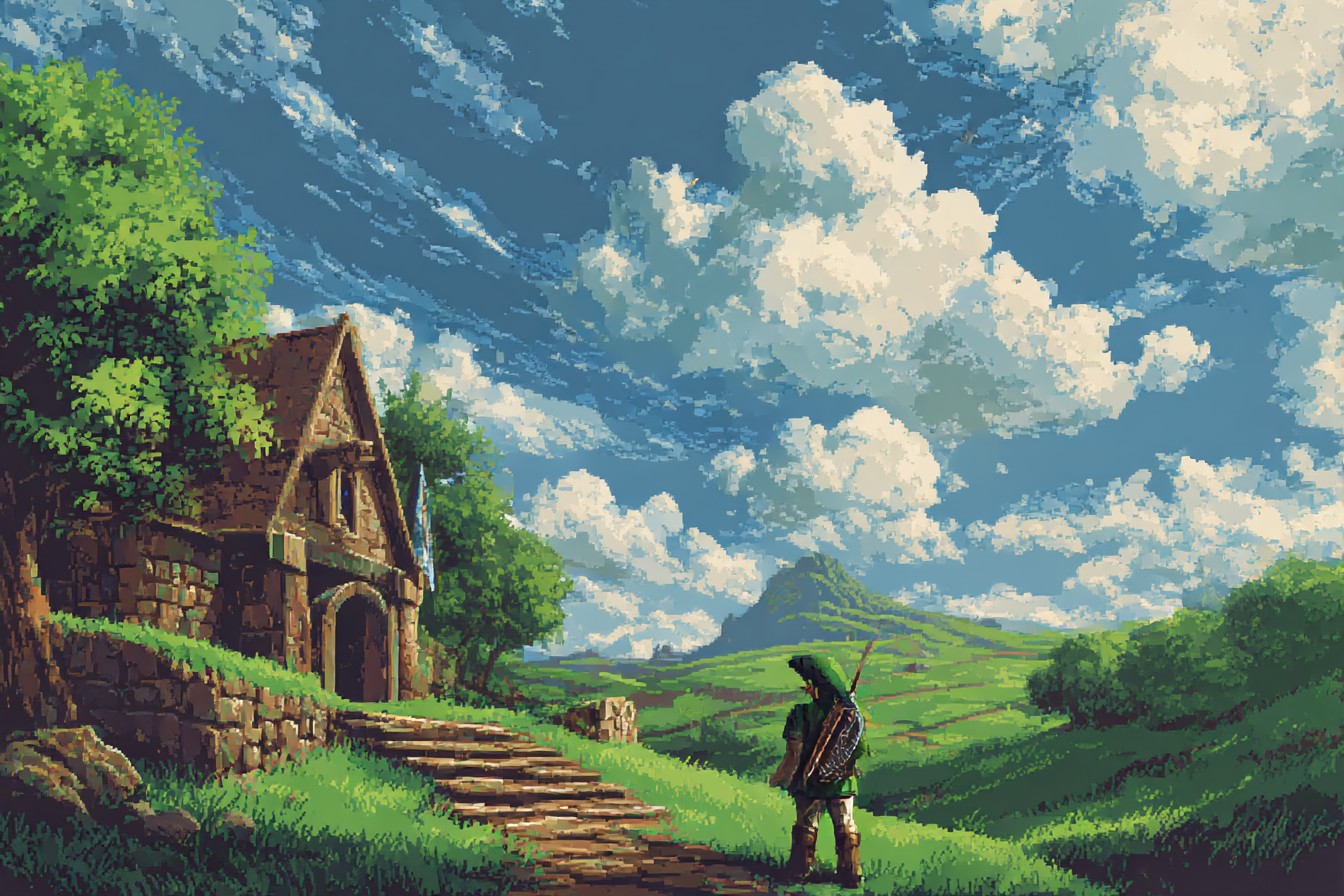
I'd played plenty of action-adventure games before. Link to the Past was brilliant, obviously. But walking into Hyrule Field for the first time in three dimensions felt like stepping through a portal. The draw distance was laughably short by today's standards—enemies would literally pop into existence about twenty feet away—but I didn't care. This felt infinite. When night fell and those skeletal stalchildren started emerging from the ground, I genuinely sprinted Link back toward Kokiri Forest because the darkness felt real and dangerous.
But here's the thing that still amazes me: Z-targeting wasn't just a mechanical solution to 3D combat. It was pure genius wrapped in a shoulder button. Before Z-targeting, fighting anything in 3D was like trying to sword fight while wearing a blindfold. You'd swing wildly, hoping to connect, constantly wrestling with camera angles that seemed determined to show you everything except what you needed to see. Then Nintendo goes and maps focus to a single button press. Suddenly, combat became a dance. Lock onto an enemy, circle-strafe, wait for an opening, strike. It felt tactical. It felt intentional.
I must've spent hours just practicing the basic moves in Kokiri Forest. Not because the game demanded it, but because it felt so satisfying. The way Link would automatically orient toward a locked target, how the camera would smoothly track the action—it was like they'd solved a puzzle I didn't even know existed. Every subsequent 3D adventure game borrowed this system, and rightfully so. It's one of those innovations that's so elegant you can't imagine gaming without it.
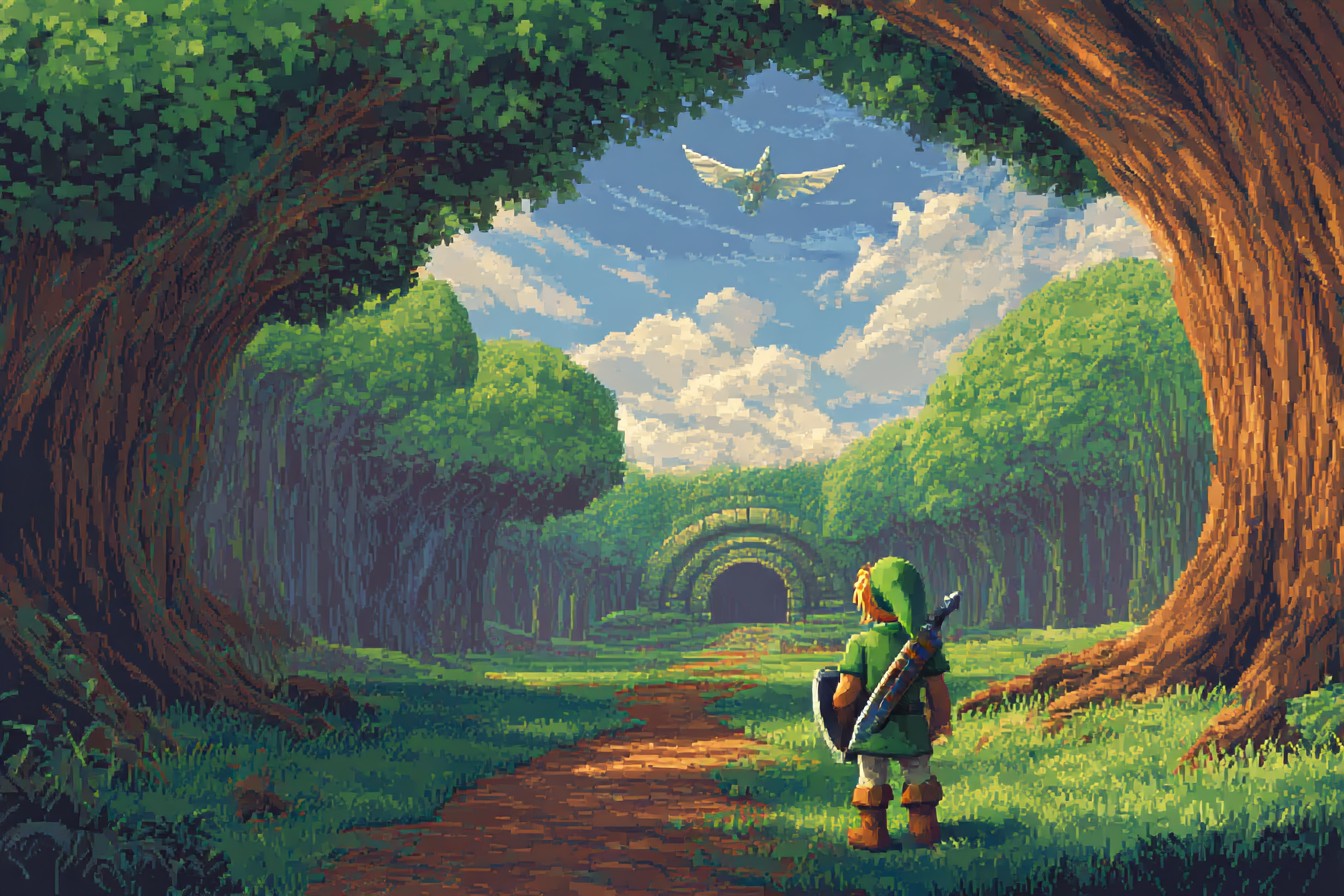
The music system, though. That was pure magic disguised as gameplay mechanics. Learning Zelda's Lullaby and watching the world recognize it? I nearly fell off our leather armchair. The game wasn't just acknowledging that I'd pressed the correct sequence of buttons—it was treating me like I'd genuinely performed something meaningful. When I played Epona's Song for the first time and this beautiful horse came galloping toward me, tail flowing, I actually got emotional. Still do, honestly.
My younger sister thought I'd lost my mind. She'd find me sitting cross-legged in front of the TV, carefully practicing song patterns on the controller like I was learning a real instrument. "It's just A, down-C, up-C," she'd say, rolling her eyes. But she was missing the point entirely. When you play the Song of Storms and it actually starts raining, when you play the Sun's Song and dawn breaks across Hyrule Field—that's not just pressing buttons. That's conducting reality.
The dungeons deserve a love letter all their own. Each one felt like a genuine puzzle box, not just a series of rooms connected by corridors. The Forest Temple with its twisted hallways and rotating chambers, the Water Temple that made me question my life choices (in the best possible way), the Shadow Temple that genuinely scared me stupid. I'd sketch maps on lined paper, trying to track which keys I'd used and which doors I'd unlocked. My school exercise books from that period are full of crude Zelda dungeon layouts tucked between math homework.
Speaking of the Water Temple—yes, it was frustrating. Yes, I spent an embarrassing number of hours trying to figure out where I'd missed raising or lowering the water level. But you know what? That frustration felt earned. The temple wasn't unfairly difficult; it was complex. There's a difference. It demanded you understand its logic, respect its structure. When I finally completed it, the sense of accomplishment was genuine. I'd conquered something that fought back.
The boss battles were theatrical events. King Dodongo breathing fire in perfectly choreographed patterns, Phantom Ganon emerging from paintings in the Forest Temple, that terrifying moment when you realize you have to play tennis with Ganondorf using the Master Sword. Each encounter felt less like a video game obstacle and more like a climactic scene from an adventure film. The Rumble Pak made every sword clash feel visceral, every explosion reverberate through my hands.
I remember showing the game to my uncle, who'd been skeptical about video games since Pong. Watching his expression change as he realized the scope of what he was seeing—this wasn't just moving pixels around a screen anymore. This was a world with weather systems, day-night cycles, characters with personalities, music that responded to player input. "It's like watching a film you can control," he said, and I knew he finally got it.
Ocarina of Time didn't just perfect the adventure game formula—it established the template that everyone else would follow for the next twenty-five years. Open world exploration, musical interaction, context-sensitive controls, cinematic presentation, puzzles that required genuine lateral thinking. Every modern adventure game owes something to this cartridge. Even today, when I'm playing something like Breath of the Wild, I can trace the DNA back to those first tentative steps into Hyrule Field.
The technical wizardry was remarkable too. Nintendo somehow coaxed a fairy tale out of hardware that was already showing its limitations. The Expansion Pak wasn't even required, yet they managed to create something that felt boundless. Sure, the textures were muddy and the framerate occasionally chugged, but the artistry transcended the technical constraints. Link's expressions during cutscenes, the way light filtered through the trees in the Lost Woods, the imposing grandeur of Hyrule Castle—it all felt impossibly beautiful.
Twenty-six years later, I still have my original golden cartridge. The label's a bit worn, the plastic's gone slightly yellow, but it boots every single time. Sometimes I fire it up just to hear that opening chime, to watch the Triforce assemble on screen, to remember what it felt like when games stopped being just games and started being worlds you could actually inhabit. That's perfection, right there.