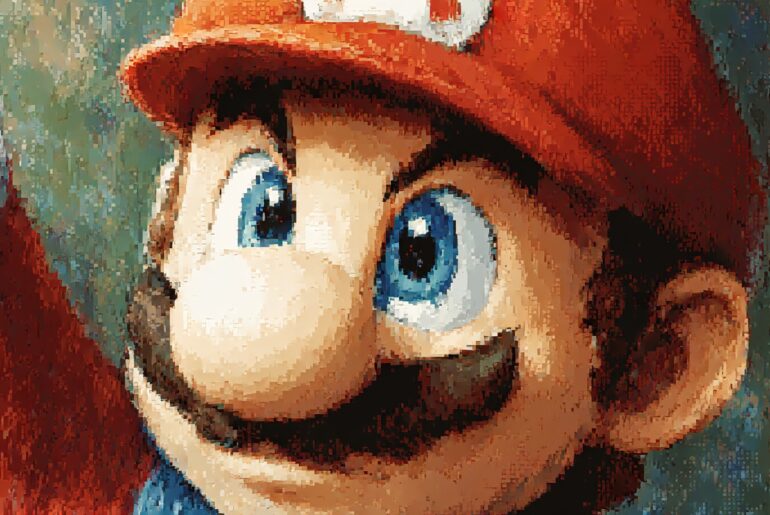
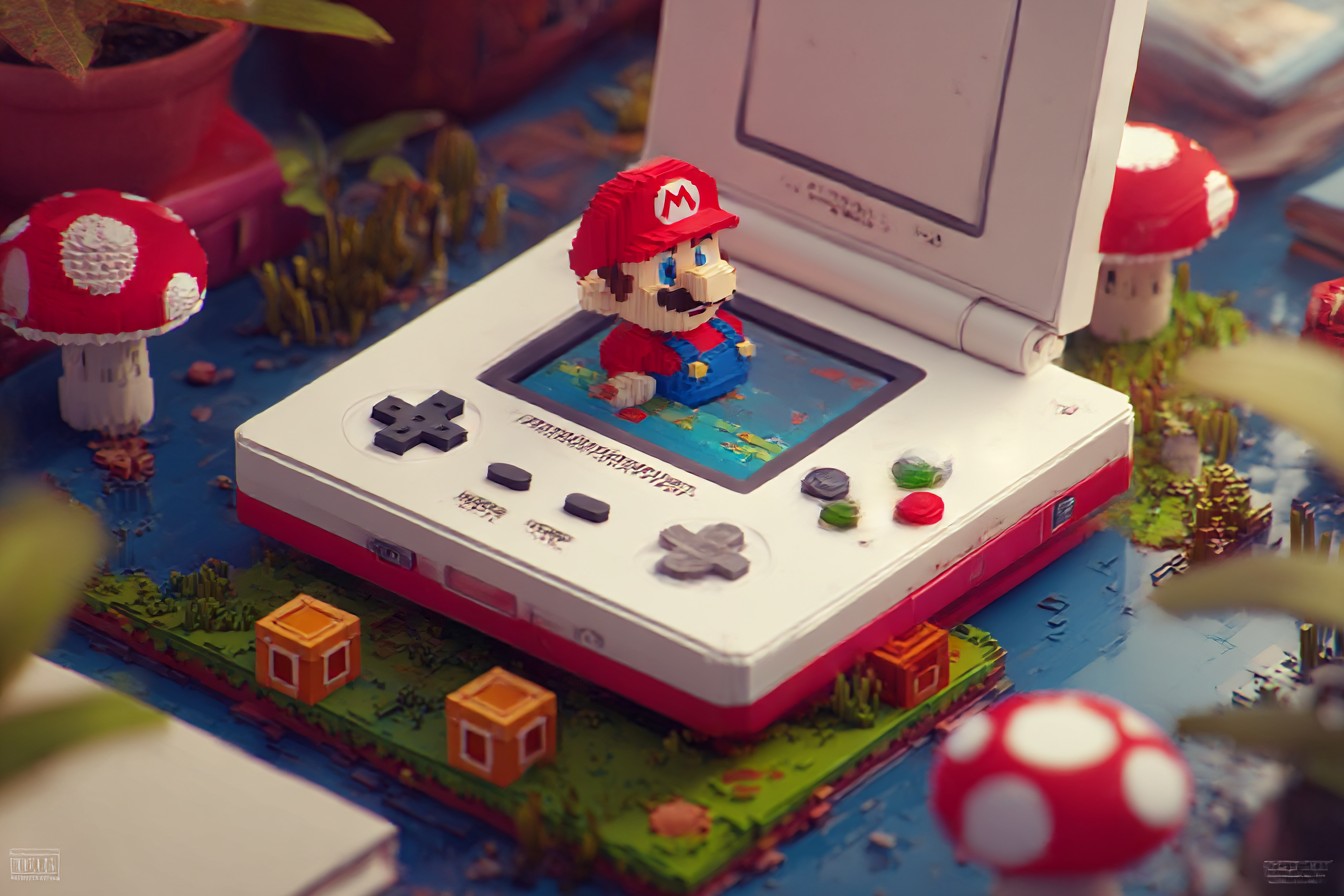
Saturday morning, 2005. I'm staring at what looks like a chunky grey sandwich with screens, wondering if Nintendo's lost their minds. The DS had landed, and with it came something I'd never expected—a portable version of the game that basically taught me how to exist in three dimensions. Super Mario 64 DS wasn't just a port, though. This was Mario's plumber crew getting the full treatment, and honestly? It changed everything about handheld gaming for me.
You've got to understand where we were back then. The Game Boy Advance was doing its thing—great 2D games, sure, but still fundamentally flat. Then Nintendo rocks up with dual screens and a stylus like they're reinventing the wheel, except the wheel now responds to finger pokes and comes with multiplayer modes that actually work. I remember thinking the stylus looked like something you'd fish out of a PDA from 1998, but then I started moving Mario around with it.
Now, let's get the obvious bit out of the way first—the analog stick was gone. That beautiful, springy N64 stick that made camera control feel like breathing? Replaced by either the D-pad (fine for purists, awkward for anyone who'd spent hundreds of hours with their thumb naturally curved around that yellow knob) or stylus control that felt like you were finger-painting Mario across Peach's castle grounds. But here's the thing—it worked. Not immediately, mind you. First few hours felt like trying to write your name with your non-dominant hand while wearing oven mitts.
The real revelation wasn't the controls, though. It was the characters. Yoshi, Luigi, and Wario had joined the party, each bringing their own moveset that actually mattered. Luigi could backflip higher than Mario—proper higher, not just cosmetic nonsense. Yoshi could flutter jump and eat enemies like he'd been doing it his whole career. Wario could break blocks with his bare hands like some sort of mustachioed demolition expert. Suddenly you're not just replaying Mario 64; you're solving the same platforming puzzles with completely different toolkits.
I spent an embarrassing amount of time in Bob-omb Battlefield with Yoshi, just eating Goombas and spitting them out because it felt like having a pet dinosaur in your pocket. Which, let's face it, is exactly what it was. The DS's bottom screen became this little window into a world where Mario wasn't the only star, and honestly, it made the whole experience feel bigger despite being crammed into a device that fit in my jacket pocket.
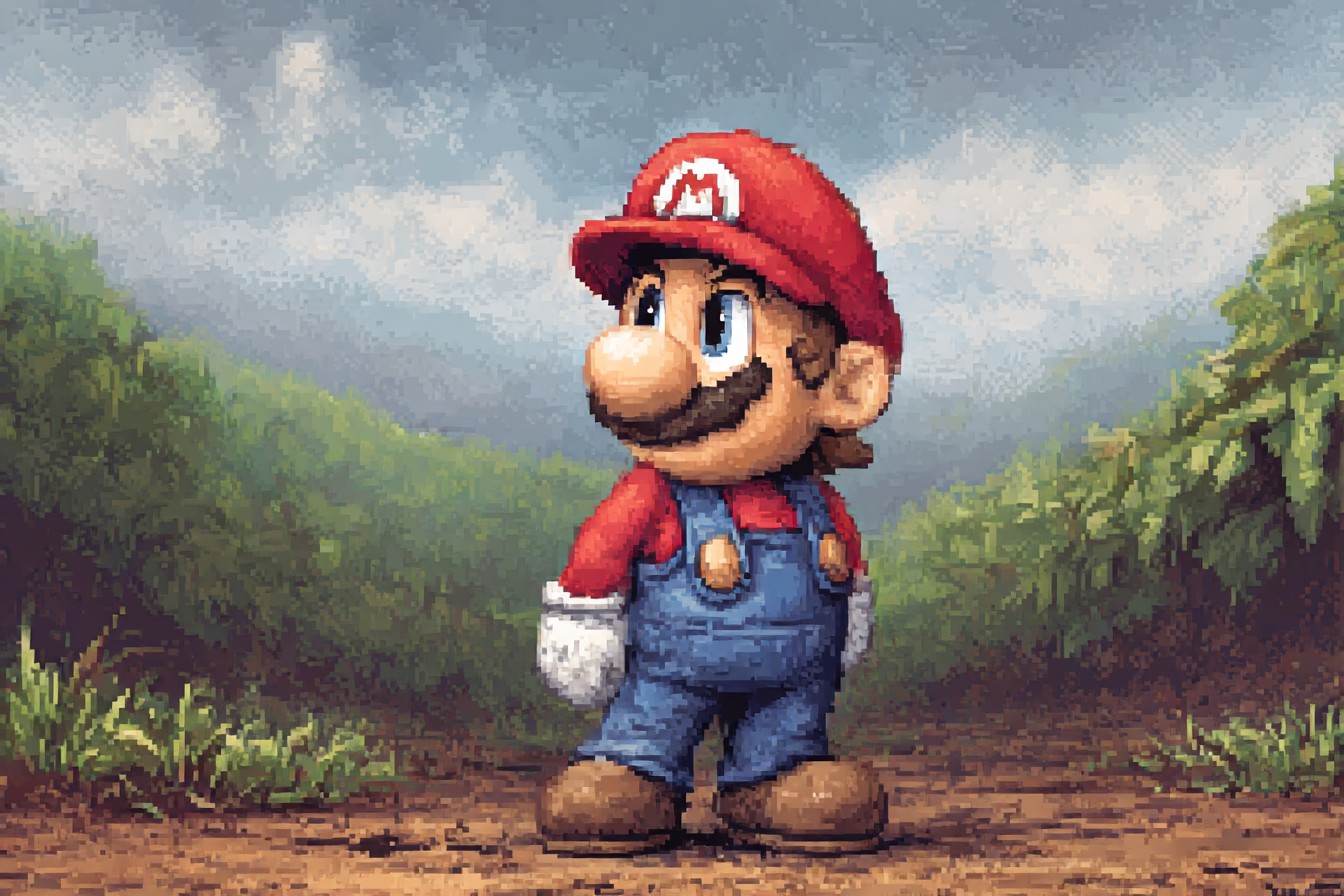
The touch controls weren't just gimmicky either—well, mostly. Moving with the stylus took some getting used to, but the camera control actually felt more precise than the C buttons ever did. You could swing the view around Castle grounds with little finger flicks, and it responded exactly how you'd expect. No more thumb gymnastics trying to get the perfect angle while simultaneously running and jumping. Just poke the screen where you want to look. Simple.
But those mini-games, though. Nintendo packed in a bunch of touch-screen diversions that had nothing to do with platforming but somehow made perfect sense. There was this poker game where you'd slide cards around with the stylus, feeling weirdly sophisticated playing virtual cards on a handheld. The multiplayer was where things got properly mental—four players sharing a single cartridge, passing the DS around like we used to do with Game Boys, except now we're all chasing stars in the same 3D space.
Speaking of multiplayer, the VS mode was brilliant chaos. Four different colored Marios (well, Mario, Luigi, Wario, and Yoshi) bouncing around tiny arenas, trying to collect more stars than everyone else. It was like Nintendo took the core platforming mechanics and turned them into a party game that actually worked. No split-screen issues, no performance drops—just four friends hunched over their own screens, occasionally glancing up to trash talk or celebrate a particularly sneaky star grab.
The graphics hold up surprisingly well, too. Sure, they're not going to win any technical awards, but there's something charming about seeing those polygonal environments squeezed down to handheld size without losing their essential character. The castle still feels like a place you want to explore. The paintings still beckon you to dive through them. Bowser still looks appropriately menacing despite being rendered on hardware that probably has less processing power than my current toaster.
What really got me was how Nintendo handled the extra content. This wasn't just Mario 64 with different characters bolted on—they'd gone back and redesigned sections, added new areas, threw in a bunch of additional stars to collect. Some of the new platforming challenges were genuinely tricky, requiring you to think about familiar spaces in completely different ways. Playing as Wario meant you could access areas that were previously decoration, breaking through walls that Mario could only stare at longingly.
The stylus movement, once you got the hang of it, actually offered more precision than traditional controls in some situations. Tight platforming sections where you needed pixel-perfect positioning became exercises in careful finger placement rather than thumb wrestling with a D-pad. Not better or worse, just different in a way that felt appropriate for a handheld experience.
Looking back, Super Mario 64 DS was probably the first time I realized that portable gaming didn't have to mean compromised gaming. Sure, you lost the big screen and the surround sound, but you gained the ability to play proper 3D Mario while hiding under your duvet at 2 AM, which is basically what handhelds were invented for anyway. The fact that it came with extra characters, new content, and genuinely innovative control options was just Nintendo showing off.
Even now, nearly twenty years later, I'll occasionally fire up my old DS and get lost in those castle corridors again. The magic's still there—that specific joy of discovering a new secret passage or finally nailing a tricky jump sequence. Except now I can do it on the bus, in bed, or anywhere else my adult life allows for brief moments of nostalgic joy.
Portable 3D Mario worked. Who knew?