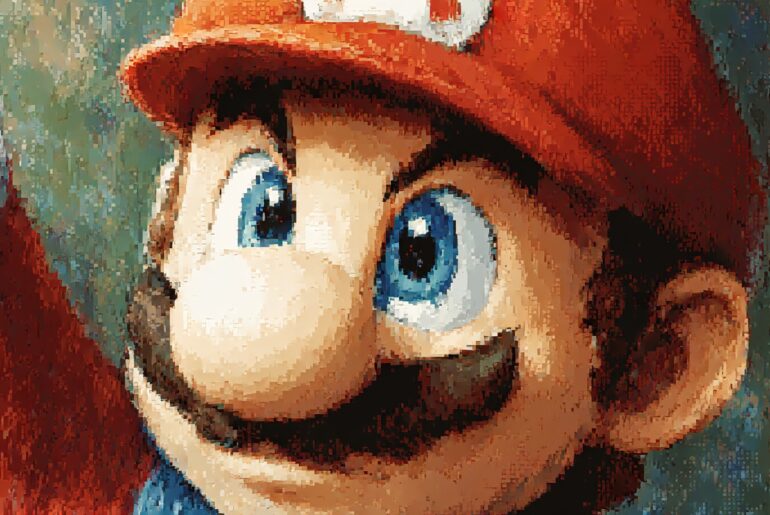
You know what still gets me? The way that little paper Mario would flutter when he jumped. There was something so perfectly Nintendo about taking their most famous character and flattening him like he'd been run over by a steamroller, then somehow making that limitation feel like pure magic.
I remember the exact moment I first saw Paper Mario running in that Mushroom Kingdom intro. My mate Dave had picked up a copy from Electronics Boutique—remember when EB actually had knowledgeable staff who'd argue about import Dreamcast games?—and we were skeptical as hell. Mario in an RPG? Nintendo doing turn-based combat? It felt like watching your dad try to breakdance. Probably going to end badly, but you couldn't look away.
We were idiots, obviously.
The thing is, by the time Paper Mario landed in August 2001, Nintendo had already proved they could do RPGs with the Super Mario RPG collaboration with Square back on the SNES. But that felt different somehow—Square was doing the heavy lifting on the RPG mechanics while Nintendo provided the characters and charm. Paper Mario felt like Nintendo saying "right, watch this then" and rolling up their sleeves properly.
What hooked me wasn't the paper gimmick, though that was brilliant. It was how Nintendo took all their platforming DNA and folded it—ha—into traditional RPG systems. The timed button presses during combat weren't just busy work; they were pure Mario muscle memory translated into a new genre. You'd hit A right as Mario's hammer connected, same timing as a jump in the main series games. Your fingers already knew what to do.

I spent an embarrassing amount of time in those early battles just marveling at how natural it felt. Dave kept telling me to hurry up and pass the controller, but I was having these little epiphanies about game design. Nintendo hadn't just stuck Mario in someone else's RPG template—they'd built their own from scratch, keeping what worked and binning what didn't.
The badge system was genius wrapped in simplicity. Instead of leveling up stats in traditional ways, you'd equip these badges that changed how Mario fought, moved, or interacted with the world. Want to be tankier? Equip damage reduction badges. Prefer speed? Stack up action command bonuses. It was like customizing a car, except the car was a paper plumber and the upgrades were found in treasure chests or bought from a sketchy Toad in an alley.
But here's what really sold me on Nintendo's RPG credentials: the writing. Paper Mario was genuinely funny in ways that most RPGs never even attempted. The Koopa Troopa who joins your party and immediately starts having an existential crisis about working for Bowser? Comedy gold. The way NPCs would react to Mario's silent protagonist routine by just assuming what he meant to say? Brilliant.
I remember laughing out loud when Kammy Koopa—Bowser's ancient magikoopa advisor—would constantly forget what she was doing mid-sentence. It wasn't just Nintendo being silly; they were poking fun at RPG tropes while simultaneously embracing them. Traditional RPGs took themselves so seriously, all doom and chosen ones and ancient prophecies. Nintendo said "what if we made an RPG where the villain literally builds a castle on top of your house because he's having a tantrum?"
The combat system deserves more credit than it gets, honestly. Turn-based fighting can feel slow and disconnected from the action, especially coming from platformers. But Nintendo made every attack interactive. Timing your button presses, spinning the analog stick for Tornado Jump, mashing A for rapid-fire hammer strikes—your hands were always busy, always engaged. Never once did I feel like I was just selecting menu options and watching animations play out.
Partner characters were where Nintendo really showed their RPG understanding. Each one had unique field abilities and combat moves, sure, but they also had proper character development. Goombario starts as this eager fanboy who knows way too much Mario trivia, then gradually becomes more confident as an adventurer. Kooper goes from following orders blindly to questioning authority. These aren't just gameplay mechanics with sprites attached—they're actual characters with arcs.
The world design blew me away too. Each chapter felt like a self-contained story that somehow contributed to the bigger picture. The desert chapter with the shy guy bandits, the jungle chapter with the flower spirits, that haunted mansion that was genuinely creepy despite being made of paper—Nintendo understood that RPGs live or die on world-building, and they built worlds worth exploring.
What really impressed me, looking back now with decades of hindsight, was how Nintendo ignored most RPG conventions without throwing out the genre entirely. No random encounters—enemies were visible on the overworld, and you could often avoid fights or get the jump on them. No grinding for levels—the game was balanced around story progression, not repetitive battles. No sprawling skill trees or equipment management—just enough depth to keep you engaged without drowning you in menus.
Dave and I ended up playing through the entire game together over a weekend, trading the controller after each chapter. We'd debate badge loadouts like they were football formations. He preferred defensive setups; I went full glass cannon with attack boosters. Both approaches worked because Nintendo had built multiple viable paths through their systems.

The final boss fight against Bowser—powered up by the Star Rod and absolutely massive—felt like Nintendo flexing everything they'd learned about making this RPG thing work. Multi-phase fight, different strategies required for each form, spectacular setpieces, and that perfect Nintendo difficulty curve where you feel challenged but never overwhelmed.
Paper Mario proved Nintendo could make RPGs, but more than that, it proved they could make their own kind of RPG. They didn't need to copy Final Fantasy's melodrama or Dragon Quest's traditionalism. They could take their existing strengths—tight controls, memorable characters, creative problem-solving—and build role-playing systems around those instead of despite them.
Twenty-plus years later, I still think Paper Mario represents peak Nintendo creativity. They saw a genre dominated by other companies and said "we can do that, but we'll do it our way." The paper aesthetic wasn't just visual flair—it was Nintendo giving themselves permission to be different, to bend the rules, to make something that felt unmistakably theirs.
That little paper Mario, fluttering through turn-based battles with a hammer and a heart full of optimism, opened doors Nintendo is still walking through today.