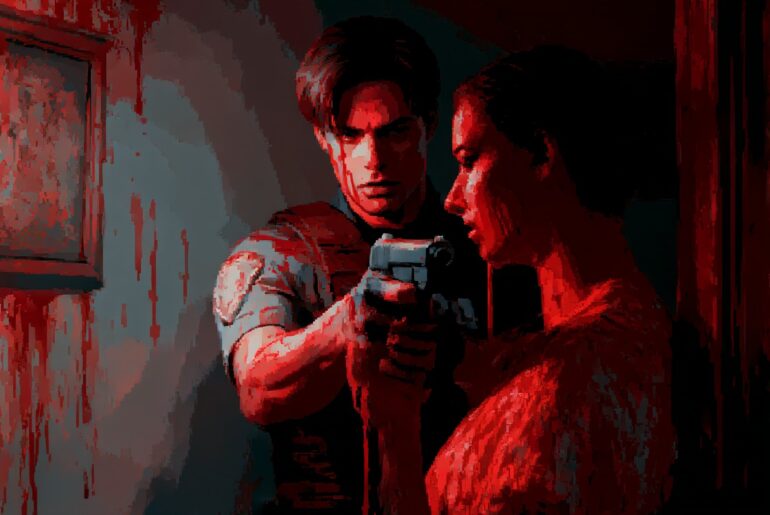
The controller felt wrong in my hands at first—that weird three-pronged alien design that made you hold it like you were operating some kind of spacecraft console. But once Perfect Dark loaded up and that haunting synth melody kicked in, everything clicked. This wasn't just another shooter. This was GoldenEye's older, smarter sibling who'd spent a gap year traveling and came back with stories that would blow your mind.
I remember the exact moment I knew Rare had outdone themselves. Christmas morning, 1999—I'd unwrapped the cartridge alongside an Expansion Pak (which cost nearly as much as the game itself, honestly). My parents were probably wondering why I needed more RAM to play what looked like "another one of those violent games," but they didn't understand. Perfect Dark wasn't just violent. It was revolutionary in ways that wouldn't become clear until years later.
The AI in Perfect Dark still makes modern games look primitive in comparison. I'm not talking about the enemy soldiers—though they were impressive enough, ducking behind cover and actually coordinating attacks. No, I'm talking about the simulants in multiplayer. These weren't your typical bot opponents that wandered around aimlessly. The PerfectSim would absolutely destroy you if you gave it half a chance, learning your camping spots and countering your strategies. Meanwhile, the MeatSim would stumble around like a drunk toddler, providing comic relief between intense matches. You could literally set up scenarios where a KazeSim (kamikaze simulator) would charge at enemies with explosives while a JudgeSim only attacked players who fired first.
That level of personality in artificial opponents? Nobody was doing that. Hell, most games today don't do it that well.
But what really set Perfect Dark apart was its weapon system. GoldenEye had given us the RCP-90 and the rocket launcher, sure. Perfect Dark handed us an arsenal that felt like it came from thirty years in the future. The Dragon assault rifle could be dual-wielded and turned into a proximity mine. The Laptop Gun—I mean, come on—literally transformed from a briefcase into a deployable sentry turret. You could slap it on a wall and watch it mow down enemies while you flanked around the other side.
The FarSight XR-20 was pure science fiction made playable. X-ray vision, wall-penetrating shots, and a targeting system that could lock onto enemies through multiple barriers. Using it felt like cheating, but it was so much fun that you didn't care. My mates and I would spend hours in complex custom matches, setting up elaborate scenarios with different weapon combinations just to see what chaos would unfold.
Speaking of custom matches—Perfect Dark's multiplayer options were staggering. You could tweak everything: team compositions, weapon sets, victory conditions, map rotations. Want a match where everyone spawns with Phoenix pistols (which exploded on impact) in a tiny room? Done. Prefer a more tactical experience with limited ammo and realistic damage? No problem. The game didn't just let you play; it let you become the game designer.
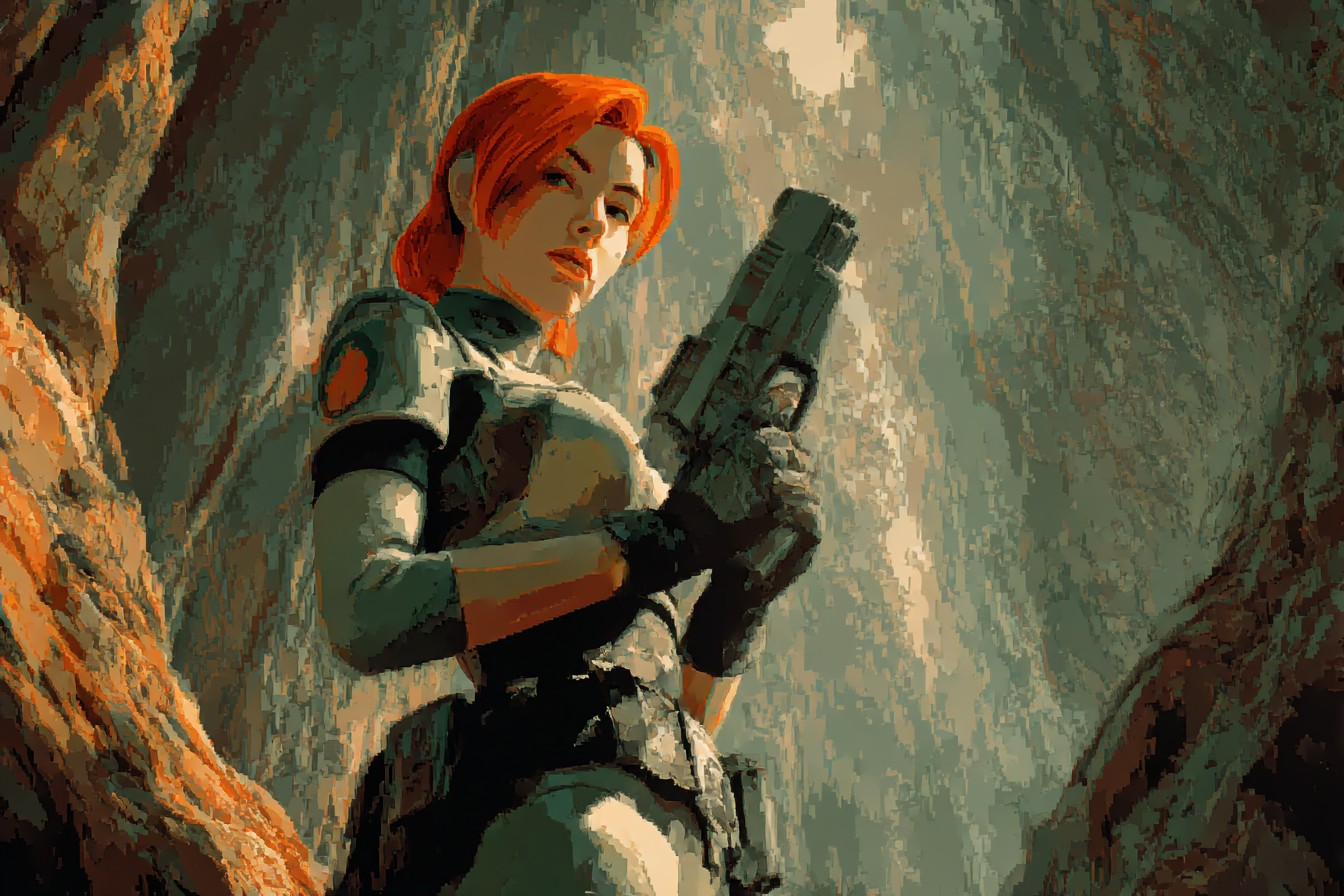
The single-player campaign deserves its own paragraph, really. Where GoldenEye followed Bond through familiar movie scenarios, Perfect Dark crafted its own cyberpunk narrative about corporate espionage and alien conspiracies. Joanna Dark wasn't just a female protagonist—though that was refreshingly rare at the time—she was a fully realized character with her own motivations and story arc. The missions ranged from stealthy infiltrations to all-out alien warfare, each one introducing new mechanics and challenges.
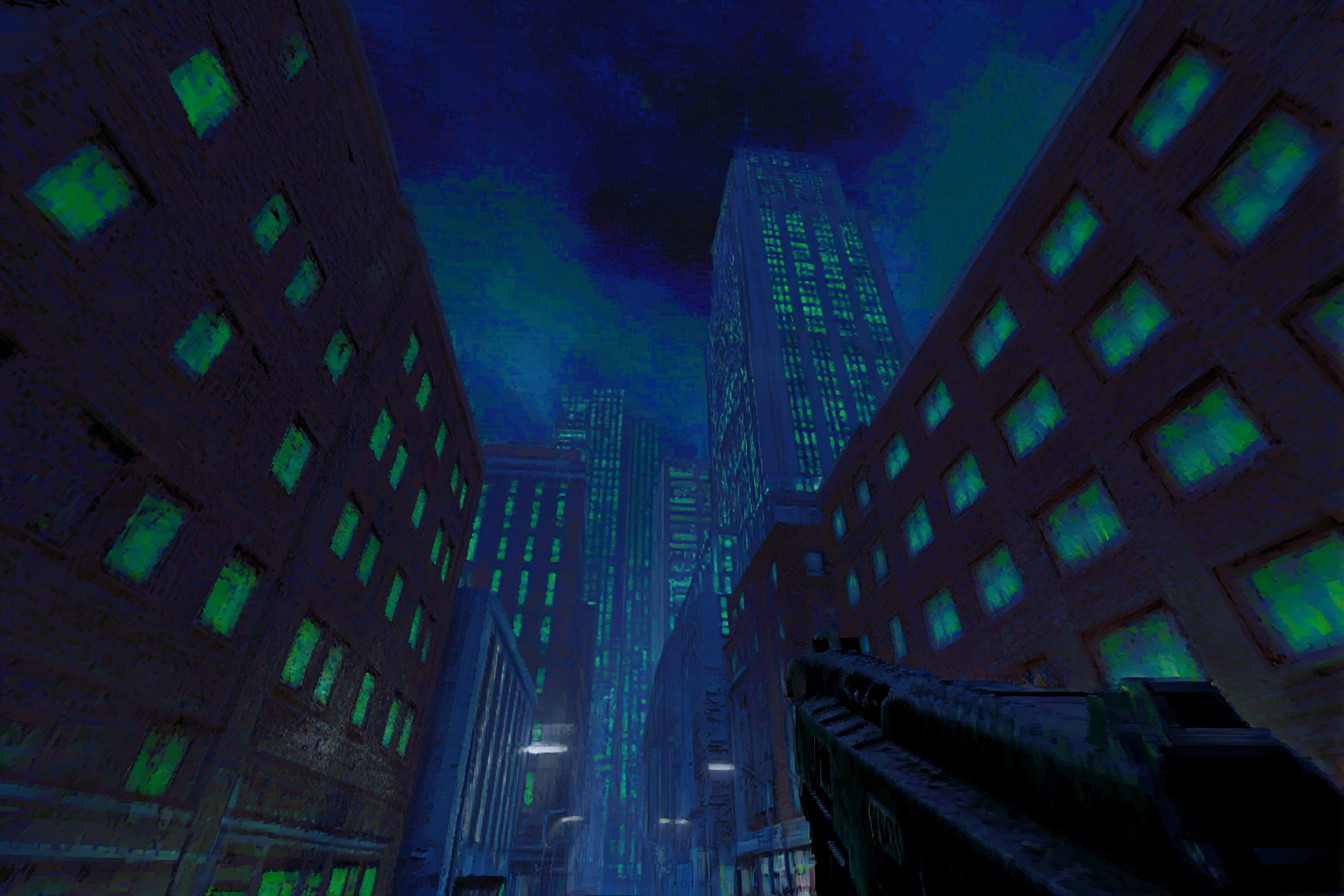
I still get goosebumps thinking about the Chicago level, sneaking through that neon-soaked urban landscape while trying to avoid detection. Or the alien spacecraft sequences that felt like playing through a proper sci-fi movie. The variety kept you guessing, and the difficulty curve was perfectly calibrated. Well, mostly. Some of those Perfect Agent challenges were absolutely brutal, but in a way that made victory feel earned.
The graphics were pushing the N64 to its absolute limits. Yes, it chugged at times—especially in four-player split-screen with all the visual effects going off—but when it worked, it was breathtaking. The lighting effects, the particle systems, the detailed character animations. Rare had figured out how to make that little gray box sing in ways that shouldn't have been possible.
And the sound design! The music was this perfect blend of electronic and orchestral that gave every level its own distinct atmosphere. The weapon effects were punchy and satisfying—each gun had its own sonic signature that made it immediately recognizable even in the chaos of a firefight. The voice acting was surprisingly good for the era, with proper lip-syncing and believable performances throughout.
What really gets me, though, is how ahead of its time Perfect Dark was in terms of accessibility and player choice. You could play the entire campaign in co-operative mode with a friend—something that wasn't standard practice back then. The counter-operative mode, where one player controlled enemies trying to stop the other, was genius. It was asymmetrical multiplayer before anyone called it that.
The customization options extended to the controls too. You could completely remap everything, adjust sensitivity settings, and even create custom control schemes for different play styles. For a console game in 2000, this level of player agency was remarkable.
I've played through Perfect Dark countless times over the years—on original hardware, through emulation, and even on the Xbox 360 remaster (which looked gorgeous but somehow felt slightly off). Each playthrough reveals new details, new strategies, new appreciation for what Rare accomplished. It wasn't just evolution from GoldenEye; it was revolution disguised as iteration.
The tragedy is that Perfect Dark arrived at the tail end of the N64's lifespan. By the time most people discovered its brilliance, everyone was already looking ahead to the next generation of consoles. It deserved to be a system-seller, but instead became a swan song—a perfect demonstration of what the N64 could achieve when pushed by developers who truly understood the hardware.
Even now, twenty-five years later, Perfect Dark remains uniquely ambitious. Modern shooters have better graphics, sure, but how many let you program AI teammates and enemies to behave exactly how you want? How many give you weapons that are essentially three different tools in one? How many trust players enough to hand over complete control of the multiplayer experience?
Perfect Dark wasn't just GoldenEye perfected—it was a glimpse of gaming futures that we're still trying to catch up to.