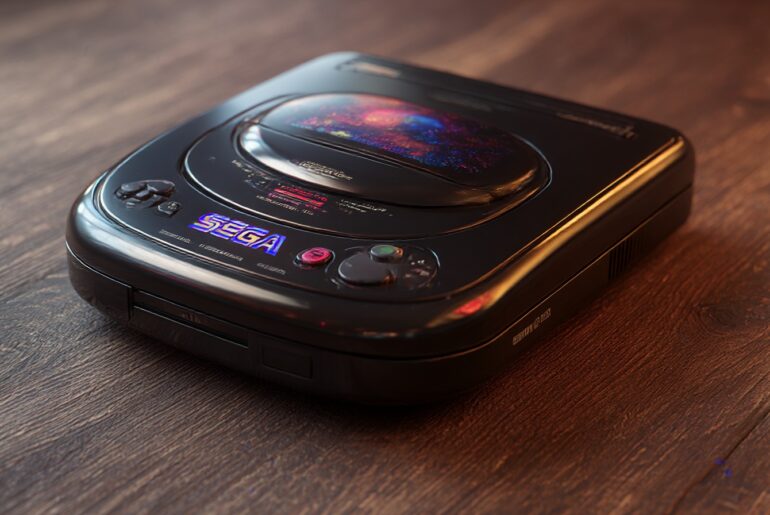
You know that feeling when you're standing in Electronics Boutique, clutching a twenty-pound note that's burning a hole in your pocket, and some marketing wizard in a shiny suit is trying to convince you that what your perfectly good Mega Drive really needs is a CD drive the size of a small coffee table? That was me in 1993, staring at the Sega CD display unit like it was alien technology—which, honestly, it might as well have been.
I'll admit it straight up: I was a complete mug for that thing. The promise of "full motion video" had my teenage brain doing cartwheels. Finally! Games that looked like proper films! No more sprites pretending to be people—we'd have actual actors, proper soundtracks, the works. The marketing materials showed these incredible screenshots that looked nothing like the chunky pixels I was used to. Course, they didn't mention that those "incredible" FMV sequences would run at about twelve frames per second and look like they'd been filmed through a pint glass smeared with Vaseline.
But here's the thing—and this might sound mad considering I just spent a paragraph slagging off the tech—some of those Sega CD games were absolutely brilliant. Not all of them, mind you. Half the library was shovelware with badly compressed video slapped on top. But the gems? They justified every penny I spent on that ridiculous mushroom-shaped add-on.
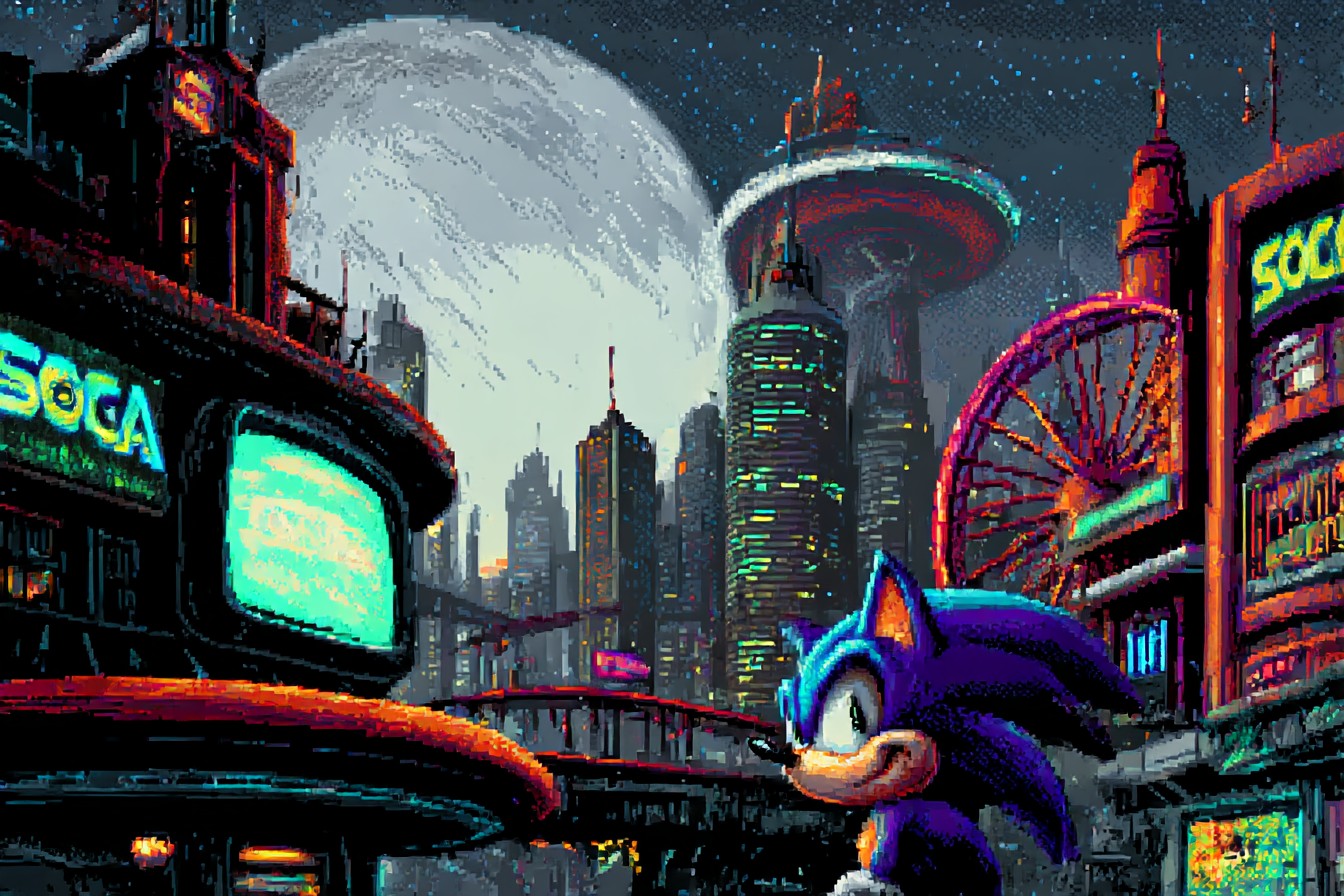
Sonic CD still makes my ears happy. I remember the first time I heard that opening theme blasting through my dad's stereo speakers (the Mega Drive was permanently connected to the hi-fi, obviously). It wasn't just better sound—it was like someone had replaced the school orchestra with the London Symphony. The time travel mechanic felt revolutionary too, even if I spent most of my time just running fast and hoping for the best. Those animated sequences between levels? Pure magic. Proper Saturday morning cartoon quality, not the usual slideshow affair we were used to.
Then there was Lunar: The Silver Star. Good grief. I'd never experienced anything like it. Here was a proper RPG with voice acting, animated cutscenes, and a story that didn't end with "thank you Mario, but our princess is in another castle." I spent entire weekends glued to that thing, completely absorbed in Alex's journey. The Working Designs translation was spot-on too—funny without being stupid, dramatic without being overwrought. I still hum those melodies sometimes when I'm cleaning the kitchen.
Snatcher nearly broke my brain. Kojima before he was capital-K Kojima, you know? This cyberpunk detective story that felt like watching Blade Runner and playing it at the same time. The voice work was proper Hollywood quality—well, Hollywood B-movie quality, which was exactly what it needed. I remember calling in sick to college just to see how the story ended. Worth every guilt-ridden minute.
But the real revelation was Night Trap. Not because it was good—let's be honest, it was rubbish. Five awkward cameras, timing that would make a Swiss watchmaker weep, and acting that made Neighbours look like Shakespeare. But it was rubbish that felt important. This was what all those congressional hearings were about? This campy horror nonsense that wouldn't scare a moderately brave hamster? I felt like I was getting away with something, even though what I was getting away with was essentially playing the world's most expensive game of Simon Says.
The thing about the Sega CD is that it arrived at this weird moment when nobody quite knew what CD-ROM games were supposed to be. Were they interactive movies? Enhanced versions of cartridge games? Something completely new? Most developers went with "let's add some video and call it revolutionary," which is why we ended up with things like Corpse Killer and Double Switch—games that were less interactive than a particularly engaging screensaver.
Ecco the Dolphin CD, though—now there was something special. Take an already atmospheric game, add CD-quality whale songs and Spencer Nilsen's haunting soundtrack, and you've got something that felt less like a game and more like swimming through a fever dream. I used to play it with the lights off and proper headphones, completely transported to those underwater caverns. Terrifying and beautiful in equal measure.
Road Rash, the CD version, understood the assignment perfectly. It didn't try to reinvent the wheel—it just took the brilliant Mega Drive version and cranked everything up to eleven. Better music, more speech samples, smoother animation. Sometimes the best use of new technology isn't revolutionary; it's just making the thing you already love even better.
I spent months trying to convince my mates that the Sega CD was worth it. Most of them weren't having it. "Why would I pay three hundred quid for slightly better sound?" they'd ask, which was a fair point. The loading times didn't help—nothing kills the momentum of Sonic quite like waiting thirty seconds for the next level to load. And don't get me started on the disc swapping. Final Fight CD needed two discs. Two! For a fighting game that originally fit on a single arcade board.
The irony is that some of the best Sega CD games barely used the CD technology at all. Silpheed looked incredible, but it was essentially a Mega Drive game with a CD soundtrack. Lords of Thunder was the same—brilliant shoot-em-up action with absolutely banging metal tracks. Sometimes restraint was the better part of valor.
Looking back now, with my collection of flash carts and FPGA systems, I can appreciate what Sega was trying to do. They saw the future—CD-ROM was obviously where gaming was heading. But they arrived too early, with hardware that wasn't quite ready and an install base that wasn't quite convinced. The 3DO would make the same mistake a year later, and the Saturn would repeat it with different technology.
But those games that got it right? They're still worth playing today. I fire up Sonic CD on my MiSTer sometimes, just to hear that soundtrack through proper speakers. The graphics might look quaint now, but the ambition still shines through. These weren't just games—they were glimpses of a future where our entertainment could sound like the movies and feel like interactive fiction.
The Sega CD taught me that sometimes the most interesting gaming experiences come from the weird transitional moments—when developers are figuring out new technology and occasionally stumbling onto something magical.